





Answer-First Summary: To write a job application email, use a clear subject line with the job title and your name, a professional greeting, a brief opening that states the role, a body that highlights relevant experience, and a polite closing with your attachments. Keep it concise, tailor it to the job, proofread carefully, and follow up after one to two weeks if you have not heard back.
Landing a job interview often starts with the first message you send. A job application email is more than a delivery note for your resume—it is your first professional impression, your chance to show interest, and a quick way to demonstrate that you understand the role. For baseline formatting and message structure, Purdue OWL's job search letter guidance is a useful noncommercial reference.
If you are wondering how to write a job application email, the goal is simple: make it easy for the hiring manager to see who you are, what role you want, and why you are a strong fit. This guide walks through the structure, the subject line, the body, common mistakes, and the follow-up.
What Is a Job Application Email?
A job application email is a formal email sent to a recruiter, hiring manager, or employer to apply for a job. It usually introduces you, mentions the position, and includes your resume and cover letter as attachments.
A strong email does three things.
- Introduces you clearly so the recipient knows who you are and what you are applying for.
- Shows genuine interest in the company and role.
- Highlights relevant qualifications without repeating your entire resume.
Think of it as the short version of your application story. It should be brief, tailored, and professional.
What Are the Essential Components of a Job Application Email?
A good job application email follows a simple structure. Leaving out key parts can make your message look rushed or incomplete.
| Component | What to Include |
|---|---|
| Subject line | Clear job title, your name, and sometimes a reference number |
| Greeting | Professional salutation such as “Dear Hiring Manager” or the person’s name |
| Opening paragraph | State the role you are applying for and where you found it |
| Body paragraph(s) | Connect 1–3 relevant skills or achievements to the job |
| Closing paragraph | Thank the reader, mention attachments, and express interest in next steps |
| Signature | Your full name, phone number, and LinkedIn profile if appropriate |
| Attachments | Resume and cover letter, usually as PDFs |
How Should You Write the Subject Line?
The subject line is one of the most important parts of the email because it affects whether the message gets opened quickly. Keep it short, specific, and easy to scan.
Good subject line formulas
- Application for [Job Title] – [Your Name]
- [Job Title] Application – [Your Name]
- Referred by [Name]: [Job Title] Application
- Application for [Job Title], Job ID #[Number] – [Your Name]
Subject line tips
- Include the exact job title whenever possible.
- Add your name so the email is easy to identify.
- Use the job ID if the posting has one.
- Avoid vague subjects like “Job Inquiry” or “Resume Attached.”
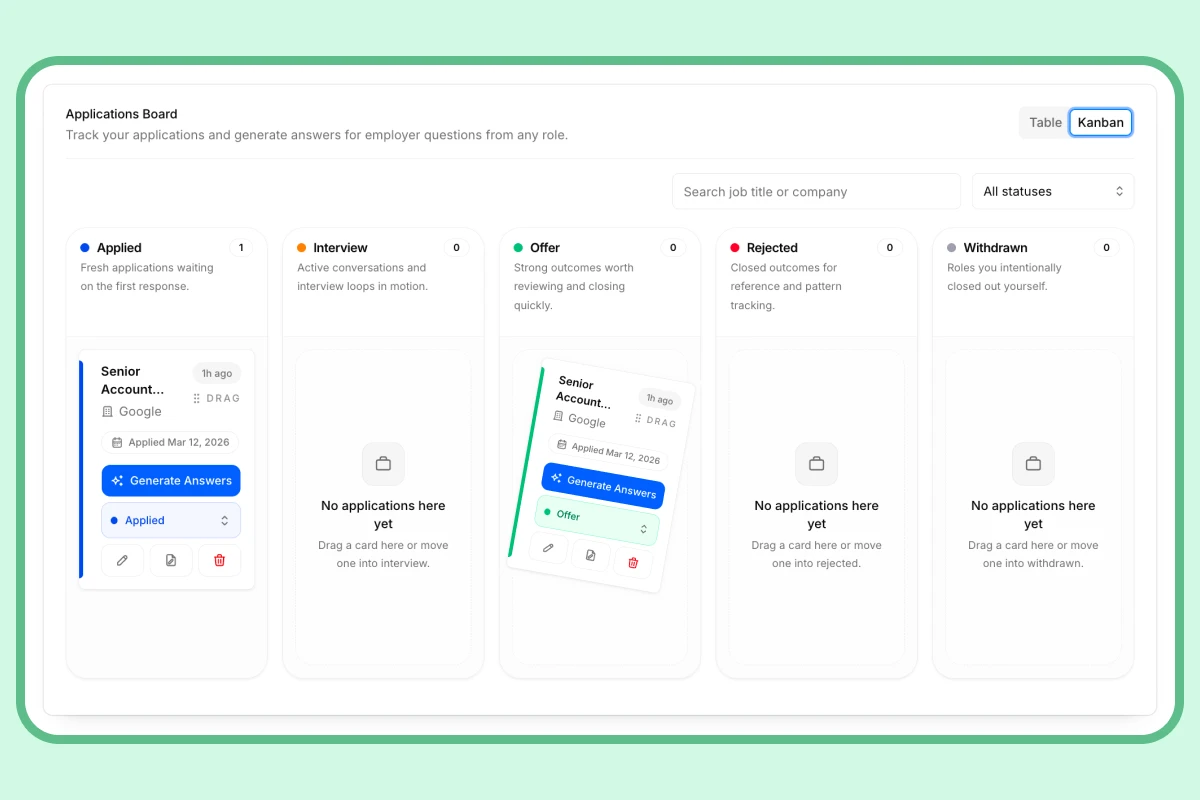
Application Tracker
Applying to 10+ jobs? You need a real system.
No more spreadsheets or lost threads. Track every role, stage, deadline, and follow-up in one dashboard — so you always know exactly where you stand.
How Do You Start the Email?
Your opening should be direct and professional. Do not make the reader search for the point of your message.
A simple opening can look like this:
Dear Hiring Manager,
I am writing to apply for the Marketing Coordinator position posted on your careers page. With three years of experience in digital content and campaign support, I am excited about the opportunity to contribute to your team.
If you know the hiring manager’s name, use it. If not, “Dear Hiring Manager” is acceptable. Avoid overly casual greetings.
What Should the Body of the Email Include?
The body is where you make your case. Keep it focused on the skills and experience most relevant to the role.
A strong body usually answers these questions:
- Why are you interested in this job?
- What experience makes you a good fit?
- What results or achievements support your claim?
Example body structure
Paragraph 1: Mention your background and fit for the role.
Paragraph 2: Highlight one or two achievements that match the job description.
Paragraph 3: Tie your interest to the company and role.
Example:
In my previous role as a sales associate, I consistently exceeded monthly targets by 15% and helped improve customer retention through better follow-up and service. My experience working with clients, solving problems quickly, and supporting team goals would make me a strong fit for this opportunity.
Keep the tone confident but not exaggerated. You are not writing a full cover letter, so aim for 3–5 short paragraphs total.
What Should You Say in the Closing?
The closing should be polite, brief, and action-oriented.
A strong closing usually includes:
- A thank-you
- A mention of attached documents
- A brief statement of interest in an interview
- Your contact information
Example:
Thank you for your time and consideration. I have attached my resume and cover letter for review. I would welcome the opportunity to discuss how my background and skills could contribute to your team.
Finish with a professional sign-off such as:
- Sincerely,
- Best regards,
- Kind regards,
Then add your full name and contact details.
What Are the Best Practices for Writing a Job Application Email?
If you want to improve your chances of getting noticed, follow these job application email tips:
- Customize each email. Mention the company name, job title, and a detail that shows you understand the role.
- Keep it concise. A hiring manager should be able to scan it quickly.
- Use a professional email address. Ideally, it should include your name.
- Proofread carefully. Spelling and grammar mistakes can hurt your credibility.
- Attach the right files. Include your resume and cover letter, and make sure the filenames are clear.
- Use PDFs when possible. PDFs help preserve formatting across devices.
- Match your tone to the company. Stay professional even if the workplace culture feels casual.
- Check formatting on mobile. Short paragraphs are easier to read on phones.
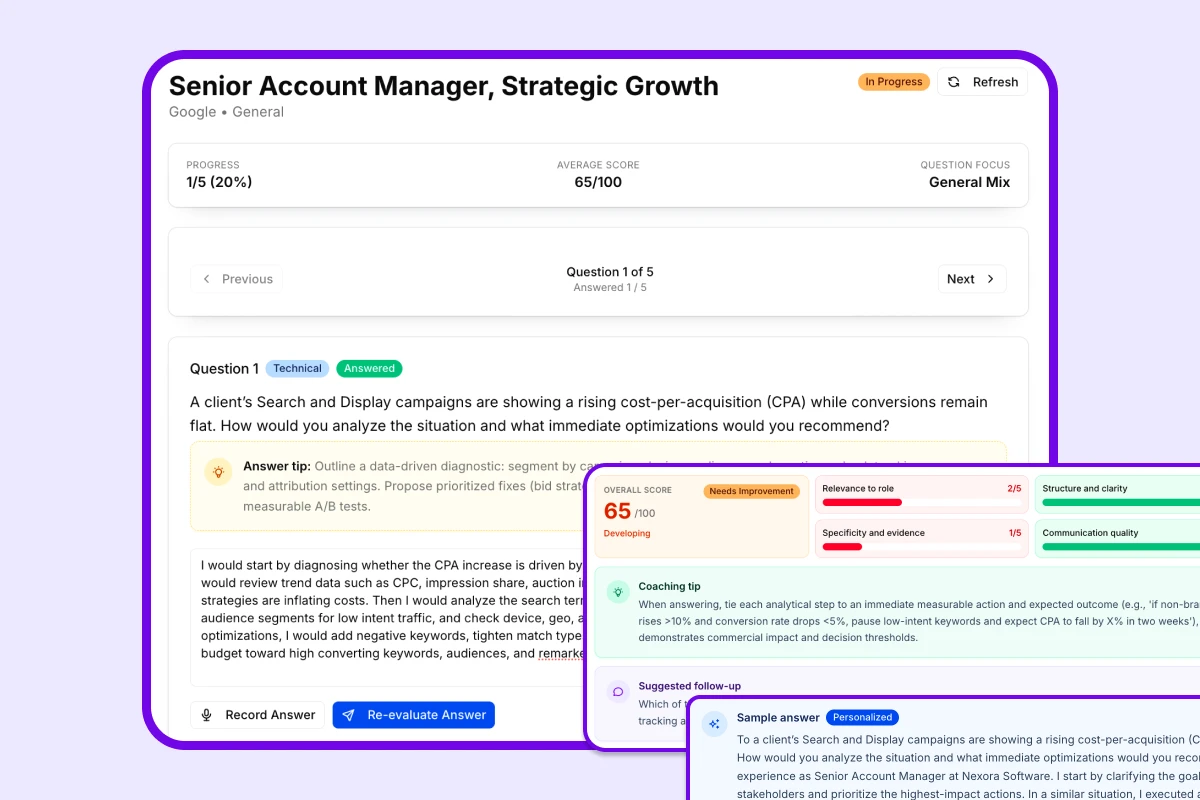
AI Interview Prep
Got the interview? Now make sure you're ready.
Practice the exact questions likely to come up for your target role. Get scored on clarity, structure, and relevance — so you walk in sharp, not winging it.
What Common Mistakes Should You Avoid?
Even a strong candidate can weaken an application with avoidable errors.
Common mistakes
- Sending a generic email to every employer
- Forgetting to mention the position you want
- Addressing the wrong person
- Writing too much detail or a full biography
- Using slang, emojis, or informal language
- Sending attachments with unclear file names
- Forgetting to include contact information
A clean, well-organized email shows attention to detail, which is valuable in almost every role.
How Do You Write a Job Application Email for Different Scenarios?
Different job search situations call for small adjustments in tone and structure.
For an advertised job posting
Be direct. State the role, where you found it, and why you are a fit.
For a referral
Mention the person who referred you, with their permission. This adds context and credibility.
For a cold application
Focus on why you are reaching out and what you can offer. Keep the message brief but specific.
For a remote or freelance role
Emphasize communication skills, self-management, and experience working independently.
What Is a Simple Job Application Email Example?
Here is a straightforward example you can adapt:
Subject: Application for Graphic Designer – Jordan Lee
Dear Hiring Manager,
I am writing to apply for the Graphic Designer position at Bright Studio. With five years of experience creating brand visuals, social media assets, and marketing materials, I am excited about the opportunity to contribute to your team.
In my current role, I manage design projects from concept to delivery and collaborate closely with marketing and product teams to create visuals that support business goals. I also improved campaign engagement by redesigning key assets for digital channels.
I have attached my resume and cover letter for your review. Thank you for your time and consideration. I would welcome the opportunity to discuss my qualifications further.
Best regards, Jordan Lee (555) 123-4567 jordan.lee@email.com
What Should You Do After Sending the Email?
Sending the email is only part of the job application process. A simple follow-up strategy can help you stay organized and show continued interest.
- Track the application. Record the company, role, date sent, and contact person.
- Wait about one to two weeks. Unless the posting gives a different timeline.
- Send a polite follow-up. Keep it short and respectful.
Example follow-up:
Dear Hiring Manager,
I wanted to follow up on my application for the Marketing Coordinator position submitted on [date]. I remain very interested in the opportunity and wanted to ask whether there is any additional information I can provide.
Thank you again for your time and consideration.
A strong job application email supports your overall job search strategy by making it easier for employers to understand your value quickly and take the next step.
Frequently Asked Questions
What is the best length for a job application email?
Most job application emails should be short enough to scan quickly, usually around 3–5 short paragraphs.
Should I attach a cover letter?
If the job posting requests one, yes. If not, attaching a cover letter can still help depending on the role and industry.
Can I use the same email for every application?
It is better to personalize each email. Even small changes can improve relevance and response rates.
Is it okay to email a resume without a cover letter?
Sometimes yes, but a brief email should still explain why you are applying and why you are a fit.
When should I follow up after applying?
A good rule is to wait one to two weeks before sending a polite follow-up unless the employer gives a different timeline.
By treating the email as part of your application strategy—not just a file delivery message—you give yourself a stronger chance of moving from inbox to interview.
Explore this category
Job Applications
Browse the full job applications category for more related playbooks, examples, and tactical guides.
Browse Job Applications articles →One workflow. Resume to offer.
Build ATS-ready resumes, track every application, and practice interviews — all in one place. Free to start, no credit card needed.
✓ Free plan forever · ✓ No card needed
Related articles
Email Subject for Job Application: A Practical Guide
Your email subject line is the first thing a hiring manager sees. Learn how to write a clear, concise, professional subject for a job application that gets opened and makes your intent obvious.
How to Follow Up on a Job Application Email Template: Tips and Email Examples
Need a professional way to check in after applying? This guide explains when to follow up on a job application, what to include in your email, and how to use ready-to-send templates that keep your candidacy top of mind.
How Many Jobs Should I Apply For? 2025 Job Search Strategy and Weekly Application Targets
Wondering how many jobs you should apply for? This guide breaks down weekly and total application targets, explains when to prioritize quality over quantity, and shows how to build a smarter job search plan for your timeline.