





In the modern job market, your cover letter is your opening argument. It's your first, and sometimes only, chance to make a human connection and argue why you're the solution to a hiring manager's problem. This isn't about repeating your resume. It's about providing context, demonstrating fit, and showing proactive enthusiasm. This guide cuts through the noise to give you a pragmatic, step-by-step playbook for crafting a cover letter that gets you noticed.
For related next steps, use job search checklist.
Answer-First Summary: A winning cover letter in 2026 follows a clear structure: a professional header, personalized greeting, engaging introduction, a body that links your quantifiable achievements to the company's needs, a confident closing, and a proper sign-off. It must be tailored to each specific job, avoid simply repeating your resume, and be formatted cleanly for both human readers and digital systems. Despite trends, a well-written cover letter remains a critical tool for standing out.
What is the Standard Structure for a Cover Letter?
Think of your cover letter as a persuasive, one-page business letter. A clear structure ensures your key points land effectively. Here is the proven framework.
- Professional Header: Your contact information (name, phone, email, LinkedIn URL, portfolio link if relevant), the date, and the employer's contact details.
- Personalized Greeting: Always aim for "Dear [Mr./Ms./Mx. Last Name]." If the name is unknown, "Dear [Department] Hiring Team" or "Dear [Company Name] Recruiter" are acceptable. Avoid "To Whom It May Concern."
- Engaging Introduction (First Paragraph): State the specific role you're applying for and where you saw it. Immediately hook the reader with a concise, powerful statement that shows you understand the company's mission or a key challenge and how you can contribute. This is your elevator pitch.
- Persuasive Body (One to Two Paragraphs): This is the core of your argument. Don't just list duties from your resume. Select 2-3 of your most relevant achievements and connect them directly to the job requirements. Use the Problem-Action-Result (PAR) method: Briefly state a challenge you faced, the action you took, and the quantifiable result you delivered. Align this with keywords from the job description.
- Confident Closing (Final Paragraph): Reiterate your enthusiasm for the role and the company. Confidently state that you believe your skills make you a strong fit. Mention that your resume provides further detail and express your desire to discuss your application in an interview.
- Professional Sign-Off: Use "Sincerely," "Best regards," or "Kind regards," followed by your full name. In a digital document, you can type your name; for a printed letter, leave space for a signature.
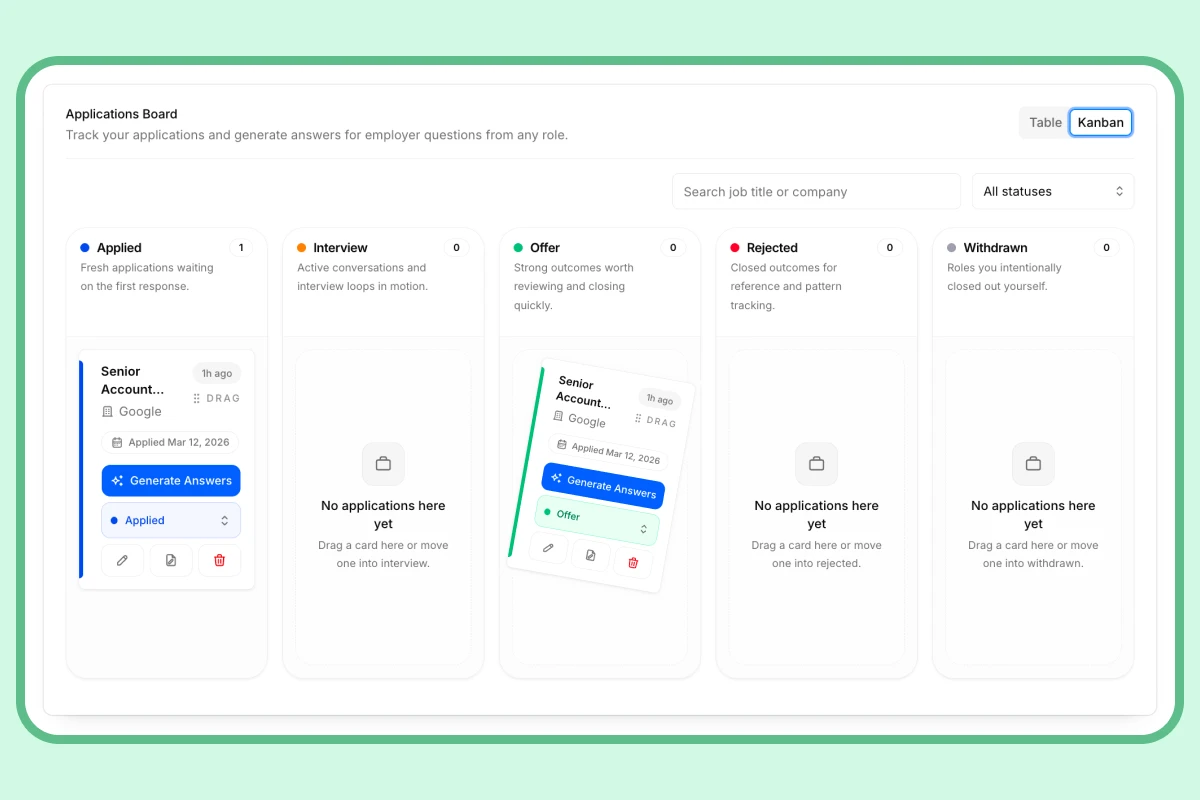
Application Tracker
Applying to 10+ jobs? You need a real system.
No more spreadsheets or lost threads. Track every role, stage, deadline, and follow-up in one dashboard — so you always know exactly where you stand.
Do You Really Need a Cover Letter in 2026?
Yes. While Applicant Tracking Systems (ATS) scan resumes for keywords, the cover letter is your primary tool for human readers. It answers the critical questions hiring managers have: "Why this company?" and "Why are you really interested?" A tailored cover letter demonstrates effort, research, and communication skills that a resume alone cannot. It's your opportunity to explain career transitions, highlight transferable skills, or express passion for the company's work. As noted by career experts, a cover letter allows your voice and personality to come through in a way a resume does not (HBR, 2022).
How Do You Tailor a Cover Letter to a Specific Job?
Generic cover letters are instantly recognizable and often discarded. Tailoring is non-negotiable. Follow this process:
- Decode the Job Description: Highlight the key skills, qualifications, and action verbs. What problems is this role meant to solve?
- Research the Company: Go beyond the homepage. Read recent news, press releases, the company's "About Us" page, product updates, and role-specific context. Understand their mission, culture, and current initiatives.
- Map Your Experience: For each key requirement from the job description, identify a specific achievement from your past that proves you can deliver. Use similar language.
- Connect the Dots: In the body paragraphs, explicitly link your proven achievements to the company's stated needs. For example: "Your job description emphasizes the need for improving user retention. In my previous role, I developed a customer onboarding workflow that reduced 30-day churn by 15%."
What Are the Critical Formatting and Style Rules?
Professional presentation is key. Poor formatting can undermine brilliant content.
| Element | Recommendation |
|---|---|
| Length | One page, absolute maximum. Aim for 250-400 words. |
| Font | Professional, readable fonts like Arial, Calibri, Georgia, or Times New Roman. |
| Font Size | 10.5 to 12 points for body text. |
| Margins | 1-inch margins on all sides. |
| Alignment | Left-align all text. Do not justify. |
| File Format | Save as a PDF (unless instructions specify a.docx) to preserve formatting. Name the file professionally: YourName_CoverLetter_Company.pdf. |
Style Tips: Use a confident, active voice. Be concise and avoid clichés ("hard-working team player," "think outside the box"). Quantify your achievements wherever possible (e.g., "increased efficiency by 20%," "managed a budget of $500K").
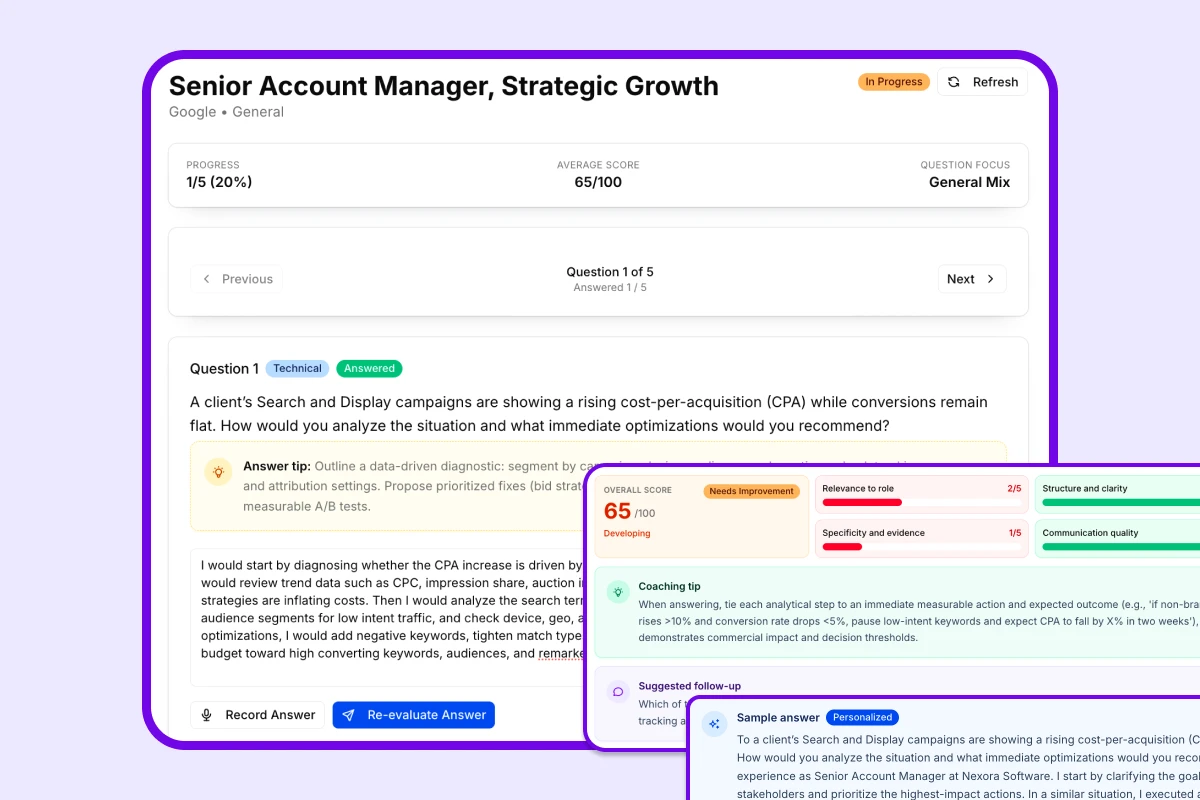
AI Interview Prep
Got the interview? Now make sure you're ready.
Practice the exact questions likely to come up for your target role. Get scored on clarity, structure, and relevance — so you walk in sharp, not winging it.
How is a Cover Letter Different from a Resume or CV?
This distinction is fundamental. Your resume (or CV) is a comprehensive, structured record of your professional history, skills, and education. It's a fact sheet, often scanned by software first.
Your cover letter is a targeted, persuasive narrative. It provides the "why" and the "how" behind the "what" on your resume. It connects the dots for the reader, explains your motivation, and tells a short story about your most relevant experience. This is where you can show a bit more personality and directly address how you fit the specific role and culture.
What Are the Most Common Cover Letter Mistakes to Avoid?
Steer clear of these pitfalls:
- Rehashing Your Resume: The cardinal sin. Use the cover letter to add context and narrative, not to list duties.
- Being Too Generic: Failing to mention the company name, role, or specific details from the job posting.
- Focusing on Yourself Too Much: Frame your achievements around how they benefit the employer. Shift from "I want" to "I can deliver."
- Including Irrelevant Information: Personal details, salary expectations (unless asked), or reasons for leaving past jobs do not belong here.
- Having Typos or Errors: Proofread meticulously, then have someone else review it. An error here suggests carelessness.
- Using a Weak Opening: Starting with "My name is... and I am applying for..." wastes precious space. Start with impact.
Where Can You Find Quality Examples and Inspiration?
Studying strong examples is one of the best ways to learn. Look for examples that:
- Start with a compelling hook.
- Clearly match skills to job requirements.
- Use quantifiable results.
- Sound professional yet authentic.
Sample cover letters can help you understand structure and tone, but never copy them verbatim. Your letter must be original, specific, and personal.
Putting It All Together: A Quick-Start Checklist
Before you hit send, run through this list:
- Header includes your contact info and the employer's info/date.
- Greeting is personalized to a name or specific hiring team.
- First paragraph names the role, source, and has a strong opening hook.
- Body paragraphs use the PAR method with quantifiable achievements tied to job needs.
- Closing paragraph reiterates interest and prompts the next step (interview).
- Formatting is clean, professional, and consistent (font, margins, alignment).
- File is saved as a PDF with a professional filename.
- Entire letter has been proofread for spelling, grammar, and clarity.
- The letter is tailored specifically to this one job at this one company.
Your cover letter is a strategic document. By following this framework—prioritizing research, tailoring your narrative, highlighting measurable results, and presenting it flawlessly—you transform it from a bureaucratic hurdle into a powerful asset that opens doors.
Explore this category
Job Applications
Browse the full job applications category for more related playbooks, examples, and tactical guides.
Browse Job Applications articles →One workflow. Resume to offer.
Build ATS-ready resumes, track every application, and practice interviews — all in one place. Free to start, no credit card needed.
✓ Free plan forever · ✓ No card needed
Related articles
Do You Need a Cover Letter? A 2025 Decision Framework
Do you need a cover letter? The answer depends on the job, the application system, and your goals. This guide explains when to submit one, when you can skip it, and how to write a strong cover letter fast.
How Long Should a Cover Letter Be? Word Count, Page Length, and Examples
A strong cover letter is usually 250-400 words, fits on one page, and uses 3-5 concise paragraphs. This guide explains the ideal length, when to adjust it, and how to avoid common mistakes.