





A methodical job search is the difference between frantic effort and focused execution. This comprehensive Job Search Checklist is designed to help you move through the process in a clear sequence, reduce guesswork, and stay organized from first prep step to final offer. By treating your job hunt as a structured project, you can manage stress, track progress, and significantly improve your outcomes.
What are the foundational steps before starting a job search?
Before you apply to a single role, take time to build a solid foundation. These early steps make the rest of the process easier and more effective, ensuring you're not just applying, but applying with purpose.
1. Conduct a career audit Take stock of your current position. Which skills are strongest? What achievements are you proud of? What gaps do you need to close for the roles you want? A quick audit helps you identify the story you want your resume and interviews to tell. This self-assessment is crucial for targeting the right opportunities and articulating your value.
2. Update your core documents Your resume and LinkedIn profile should work together as a cohesive professional package. Tailor your resume summary, accomplishments, and skills to the direction you want to go. On LinkedIn, make sure your headline, About section, and experience entries align with your resume and include relevant role-specific keywords. This consistency is vital for passing through Applicant Tracking Systems (ATS) and making a strong impression on recruiters.
3. Define your target criteria Clarity saves time and prevents wasted effort. Set your priorities for job title, industry, company size, location, salary range, culture, and work setup (onsite, hybrid, or remote). If it helps, create a short list of dream companies so your search stays focused. This step transforms a vague desire for a "new job" into a targeted job search strategy.
How should you organize and track your applications?
A strong tracking system is one of the most useful parts of any Job Search Checklist. When applications pile up, organization keeps you from missing deadlines, follow-ups, or interview details. This is where many job seekers falter, but a good system provides clarity and control.
4. Set up a job application tracker Use a detailed spreadsheet, a dedicated notebook, or a specialized job search tool to record each opportunity. Essential fields to include are.
- Company name
- Job title
- Date applied
- Posting URL
- Contact person (recruiter/hiring manager)
- Application status (Applied, Interview Scheduled, Offer, Rejected)
- Next step and due date
- Notes on company research or specific application details
Your tracker should make it easy to see where every application stands at a glance, enabling efficient follow-ups.
5. Create smart job alerts Don’t rely on one job board or daily manual searches, which are time-consuming and easy to miss. Set up saved searches and automated alerts on major job boards, company career pages, and niche boards relevant to your industry. Experiment with different keyword combinations and Boolean searches to uncover a wider range of opportunities. This proactive approach ensures new, relevant postings come to you.
6. Build a company research file For each target company, save detailed notes on their mission, products, recent news, financial performance, leadership team, and company culture. This research provides invaluable material for tailoring cover letters, preparing for interviews, and determining cultural fit. Organize this in a separate document linked to your main tracker.
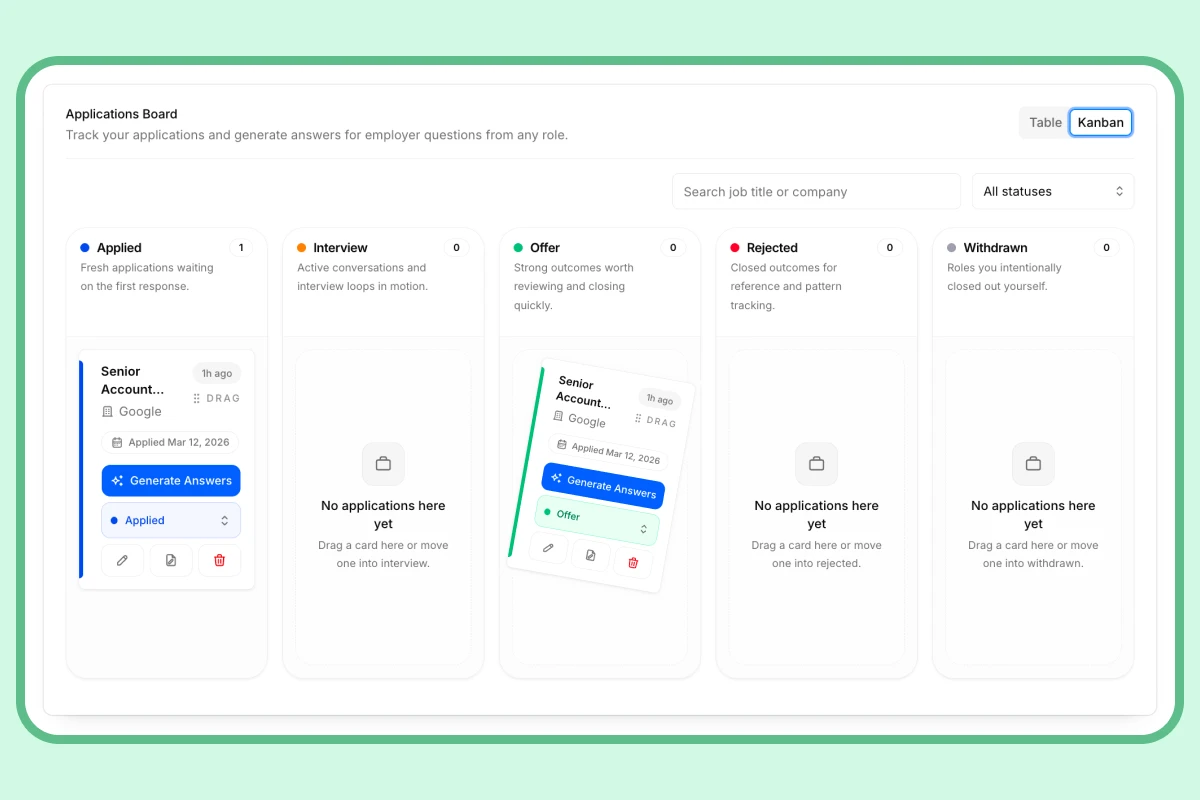
Application Tracker
Applying to 10+ jobs? You need a real system.
No more spreadsheets or lost threads. Track every role, stage, deadline, and follow-up in one dashboard — so you always know exactly where you stand.
What does an effective daily or weekly job search routine look like?
Consistency matters more than short, intense bursts of effort. A simple weekly structure can keep your search moving forward steadily without leading to burnout. Treat your job search like a part-time job with scheduled hours and tasks.
| Day | Primary Focus | Suggested Tasks & Time |
|---|---|---|
| Monday | Research and Planning | 1–2 hours to review your tracker, set weekly goals, identify new target companies, and plan your networking outreach for the week. |
| Tuesday–Wednesday | Active Applying | 2–3 hours per day to tailor resumes and cover letters, and submit strong, customized applications. Focus on quality over quantity. |
| Thursday | Networking and Follow-ups | 1–2 hours to reach out to new connections, follow up on pending applications or interviews, and engage with your network on LinkedIn. |
| Friday | Skill Development and Admin | 1–2 hours to learn a new relevant skill, organize your tracker and documents, and reflect on the week's progress to adjust your strategy. |
This kind of routine balances the immediate need of submitting applications with the long-term career growth activities that make you a more competitive candidate.
How can networking be integrated into a checklist-driven search?
Networking works best when it is planned and consistent, not accidental or sporadic. Make it a regular, scheduled part of your Job Search Checklist so it becomes a productive habit instead of an anxiety-inducing afterthought.
7. Reactivate and map your network Systematically review your LinkedIn connections and make a list of former coworkers, managers, alumni, and industry contacts. Categorize them (e.g., strong ties, weak ties, industry experts). Reach out with a short, warm, and specific message that references your shared connection or a genuine detail about their recent work or post.
8. Schedule informational conversations Aim for one or two brief (20-30 minute) informational calls each week. Prepare thoughtful questions about career paths, team culture, industry trends, and skills in demand. The primary goal is to learn, build authentic relationships, and increase your visibility—not to directly ask for a job. These conversations often lead to referrals organically.
9. Engage strategically with industry content Comment thoughtfully on posts from influencers and professionals in your field. Share useful articles with your own short, insightful perspective. This helps you stay visible, demonstrates your expertise, and signals active professional engagement to your network and potential employers.
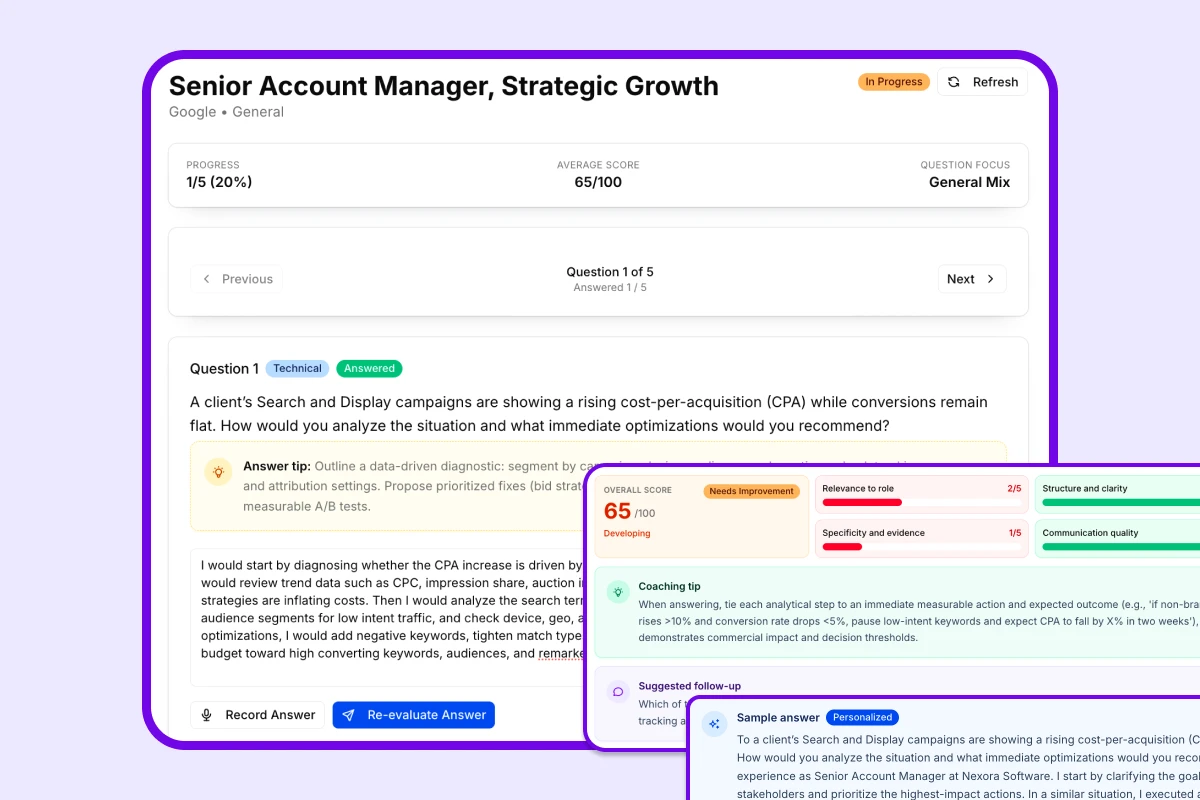
AI Interview Prep
Got the interview? Now make sure you're ready.
Practice the exact questions likely to come up for your target role. Get scored on clarity, structure, and relevance — so you walk in sharp, not winging it.
What are the critical steps between application submission and offer?
Submitting an application is only the beginning. The final stages of the process require meticulous follow-up, deep preparation, and careful decision-making. This phase separates prepared candidates from the rest.
10. Prepare for interviews thoroughly For each interview, create a dedicated preparation document. Include:
- Research on the company and interviewers
- Likely behavioral questions (practice using the STAR method)
- Technical or role-specific questions you anticipate
- Your own thoughtful questions for the interviewer
- A summary of why you are a great fit for the role and company Practice your answers aloud, ideally with a friend or using recording tools to review your delivery.
11. Send a strong, personalized follow-up Within 24 hours of an interview, send a personalized thank-you email to each interviewer. Mention a specific topic you discussed to show you were engaged and listening, and briefly reiterate your enthusiasm and fit for the role. This simple step significantly boosts your chances of being remembered favorably.
12. Evaluate offers carefully against your criteria When you receive an offer, compare it systematically against your original target criteria defined in Step 3. Look at the total compensation package (salary, benefits, bonus, equity), career growth potential, work-life balance, team dynamics, and company stability. Use employer-posted ranges and public labor-market data to inform any negotiation.
13. Close the loop professionally If you accept an offer, or if you choose another path, notify other employers you are engaged with politely and promptly. Thank recruiters and contacts who helped you along the way. A respectful and gracious close preserves important professional relationships for the future.
Advanced Job Search Checklist tips for staying consistent and effective
These advanced Job Search Checklist tips can help you maintain momentum and refine your approach:
- Weekly Document Updates: Keep your resume and LinkedIn profile updated weekly, incorporating new keywords from job descriptions you're targeting.
- Quality Over Quantity: Tailor every single application to the specific role and company. Generic applications have a very low success rate.
- Proactive Follow-up Tracking: Log follow-up dates in your tracker as diligently as application dates. Set calendar reminders to prompt action.
- Set SMART Goals: Set Specific, Measurable, Achievable, Relevant, and Time-bound weekly goals (e.g., "Apply to 5 tailored roles," "Have 2 networking calls") instead of vague intentions.
- Conduct Weekly Reviews: Every Friday, review your tracker. Analyze what's working (e.g., which types of applications get responses) and what isn't. Adjust your strategy accordingly for the following week.
- Leverage Technology: Consider using job search organizers or browser extensions that can help automate tracking from multiple job boards, though a well-maintained spreadsheet is often equally effective.
How do you know if your job search strategy is working?
A successful job search strategy should produce clear, measurable signals over time. Key performance indicators (KPIs) for your search include:
- Application-to-Response Rate: Are you getting initial screening calls or emails for a reasonable percentage (e.g., 10-15%) of your applications?
- Interview-to-Offer Rate: Are you progressing past first-round interviews?
- Network Engagement: Are people responding to your outreach and agreeing to informational chats?
If you are getting interviews, referrals, or positive responses to outreach, your materials, targeting, and job search strategy are likely effective. If not, it's time to diagnose the issue:
- Low response to applications? Revisit your resume for ATS optimization, improve targeting, or increase customization.
- Getting interviews but not offers? Dedicate more time to mock interviews, refining your storytelling using the STAR method, and improving your follow-up communications.
How can job application help make the search less stressful?
Job application help is fundamentally about reducing friction and cognitive load. The easier it is to track opportunities, customize materials, and follow up, the more sustainable and less stressful your search becomes. Even simple systems—like using email templates for follow-ups, setting up tracker fields, and blocking time for specific tasks—can make a profound difference in managing the process.
The ultimate goal of a detailed Job Search Checklist is not just to keep you busy, but to help you work with intention, stay organized, and move through each phase of the process with confidence and clarity. By breaking down a daunting endeavor into manageable, sequential steps, you transform a stressful, reactive hunt into a proactive, professional campaign.
Remember, the most effective job search is a marathon, not a sprint. Use this checklist as your playbook to stay focused, reduce missed opportunities, systematically build your network, and significantly improve your odds of landing the right role for your career.
Explore this category
Job Applications
Browse the full job applications category for more related playbooks, examples, and tactical guides.
Browse Job Applications articles →One workflow. Resume to offer.
Build ATS-ready resumes, track every application, and practice interviews — all in one place. Free to start, no credit card needed.
✓ Free plan forever · ✓ No card needed
Related articles
Email Subject for Job Application: A Practical Guide
Your email subject line is the first thing a hiring manager sees. Learn how to write a clear, concise, professional subject for a job application that gets opened and makes your intent obvious.
How Many Jobs Should I Apply For? 2025 Job Search Strategy and Weekly Application Targets
Wondering how many jobs you should apply for? This guide breaks down weekly and total application targets, explains when to prioritize quality over quantity, and shows how to build a smarter job search plan for your timeline.
How to Apply for Jobs: A Step-by-Step Job Search Strategy
Applying for jobs works best as a structured process, not a guessing game. This guide shows how to research roles, customize each application, track your progress, and follow up professionally to improve your results.