





The interview question "Can you work under pressure?" is one of the most common behavioral interview questions candidates face. It may also appear in slightly different forms, such as "Tell me about a time you worked under pressure" or "How do you handle pressure at work?" No matter the wording, the interviewer is looking for more than a simple yes. They want proof that you can stay calm, think clearly, and keep producing good work when deadlines, challenges, or unexpected problems show up. For a neutral preparation baseline, CareerOneStop's interview tips reinforce the same focus on examples, practice, and clear communication.
Answer-first summary: The best way to answer pressure-related interview questions is to use a specific real example, preferably in the STAR method format: Situation, Task, Action, Result. Focus on how you stayed organized, made decisions, and delivered results under pressure. Avoid generic statements like "I work well under pressure" unless you can support them with a concrete story.
Why Do Employers Ask, "Can You Work Under Pressure?"
Employers ask this question because pressure is part of many jobs. Even roles that seem routine can involve tight deadlines, shifting priorities, demanding customers, or sudden changes. Hiring managers use this question to evaluate several important skills at once.
Skills employers are assessing
- Stress management: Can you stay composed instead of becoming flustered?
- Problem-solving: Can you identify the real issue and choose a practical response?
- Decision-making: Can you act quickly without losing judgment?
- Time management: Can you prioritize what matters most when everything feels urgent?
- Adaptability: Can you adjust when plans change or new information arrives?
- Resilience: Can you recover from setbacks and keep moving forward.
In other words, the interviewer is not just asking whether you can survive stress. They are asking whether you can manage pressure in a productive way.
How to Answer "Can You Work Under Pressure?"
A strong answer should be specific, honest, and structured. The easiest way to do that is with the STAR method.
Use the STAR method
S — Situation Set up the context briefly. What was happening, and why was it high pressure?
T — Task Explain your responsibility. What were you expected to do?
A — Action Describe the exact steps you took. This is the most important part of the answer because it shows your judgment and habits under pressure.
R — Result Share the outcome. If possible, include a measurable result or a clear positive impact.
Example STAR answer
"In my previous role as a project coordinator, we were preparing to launch a client website when a major security issue was discovered two days before go-live. My job was to coordinate communication between the development team, the security lead, and the client while helping keep the launch on track. I immediately scheduled a triage meeting, helped prioritize the fix, and coordinated updated timelines so everyone knew what to expect. I also supported the team by keeping status updates clear and frequent. As a result, we delivered the patch within 36 hours and launched only one day behind schedule, with the client appreciating our transparent communication."
This answer works because it shows calm action, collaboration, and a clear result.
Interview Questions Can You Work Under Pressure: Strong Answer Examples
If you want to prepare for interview questions can you work under pressure and answers, it helps to have a few example scenarios ready. Your own story should be true to your experience, but these common situations can help you choose the right type of example.
1. Tight deadline
This is one of the most common pressure examples.
Sample angle: "I had to finish a quarterly report a day earlier than planned because leadership needed it for an urgent decision. I broke the work into priorities, focused on the most critical data first, and communicated progress throughout the day. We delivered the report on time, and the leadership team used it in their meeting."
2. High-stakes project
Use this when your work had major visibility or consequences.
Sample angle: "I supported a presentation for senior leadership, and the team had very little time to refine the final version. I checked the content carefully, resolved last-minute issues, and coordinated with the presenter so the message stayed consistent. The presentation went smoothly and helped the team move forward with approval."
3. Resource constraints
This works well if you had to deliver results with limited time, staff, or information.
Sample angle: "We had fewer team members than expected during a busy period, so I reorganized the workload by urgency and complexity. That helped us stay focused on the highest-value tasks and still meet our commitments."
4. Scope change or last-minute shift
This is a strong choice if your work required adaptability.
Sample angle: "A client changed the project requirements shortly before launch, which meant we had to revise several deliverables quickly. I helped the team reset priorities, communicate the new plan, and stay aligned on the revised deadline."
5. Crisis or emergency
This is appropriate when the pressure came from an urgent issue, like a system outage or major client concern.
Sample angle: "When a system issue disrupted service, I worked with the right stakeholders to confirm the cause, communicate updates, and keep the response organized. That reduced confusion and helped us resolve the issue faster."
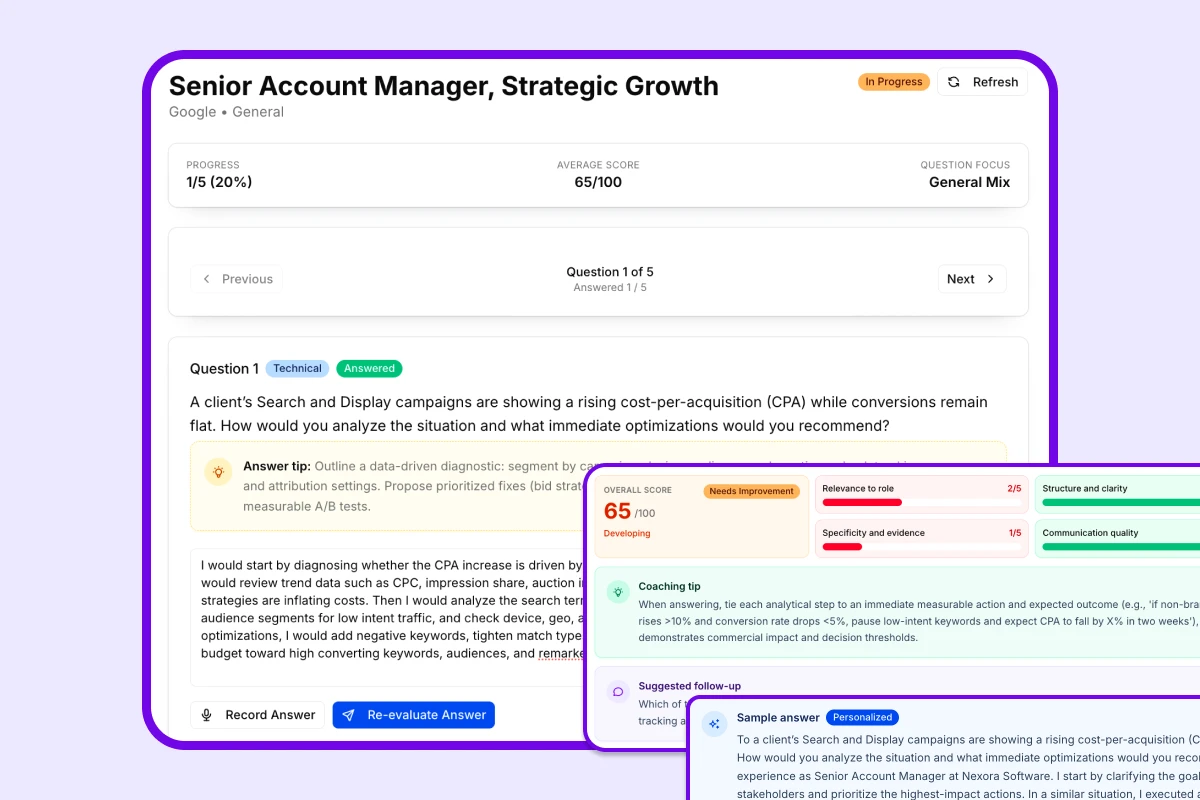
AI Interview Prep
Got the interview? Now make sure you're ready.
Practice the exact questions likely to come up for your target role. Get scored on clarity, structure, and relevance — so you walk in sharp, not winging it.
Common Interview Questions About Working Under Pressure
Here are related common interview questions you may encounter:
- Can you work under pressure?
- How do you handle pressure at work?
- Tell me about a time you worked under pressure.
- Describe a stressful work situation and how you handled it.
- What do you do when you have too much to do at once?
- How do you prioritize when deadlines conflict?
Preparing for these variations helps you answer naturally instead of memorizing one scripted response.
What If You Struggled Under Pressure in the Past?
It is acceptable to mention a time when pressure was difficult, as long as you show growth.
The key is to avoid sounding helpless or unprepared. Instead, explain what you learned and what you do differently now.
Growth-focused example
"Early in my career, I sometimes felt overwhelmed when multiple deadlines landed at once. I realized I needed a more structured approach, so I started using a priority matrix and blocking focused work time in my calendar. Since then, I have been much more effective at breaking down large tasks and staying calm when pressure builds."
This type of response works because it shows self-awareness, learning, and improvement.
What Not to Say in Your Answer
Avoid these common mistakes when answering interview questions about pressure.
-
Giving a generic claim Saying "I thrive under pressure" without evidence is not convincing.
-
Blaming others Do not make the story about difficult teammates, a bad manager, or a chaotic company.
-
Making yourself sound unrealistically perfect Avoid superhero-style answers where you single-handedly saved everything.
-
Skipping the result The interviewer wants to know what happened because of your actions.
-
Sounding stressed while answering Your tone, pacing, and body language matter. You are demonstrating composure in real time.
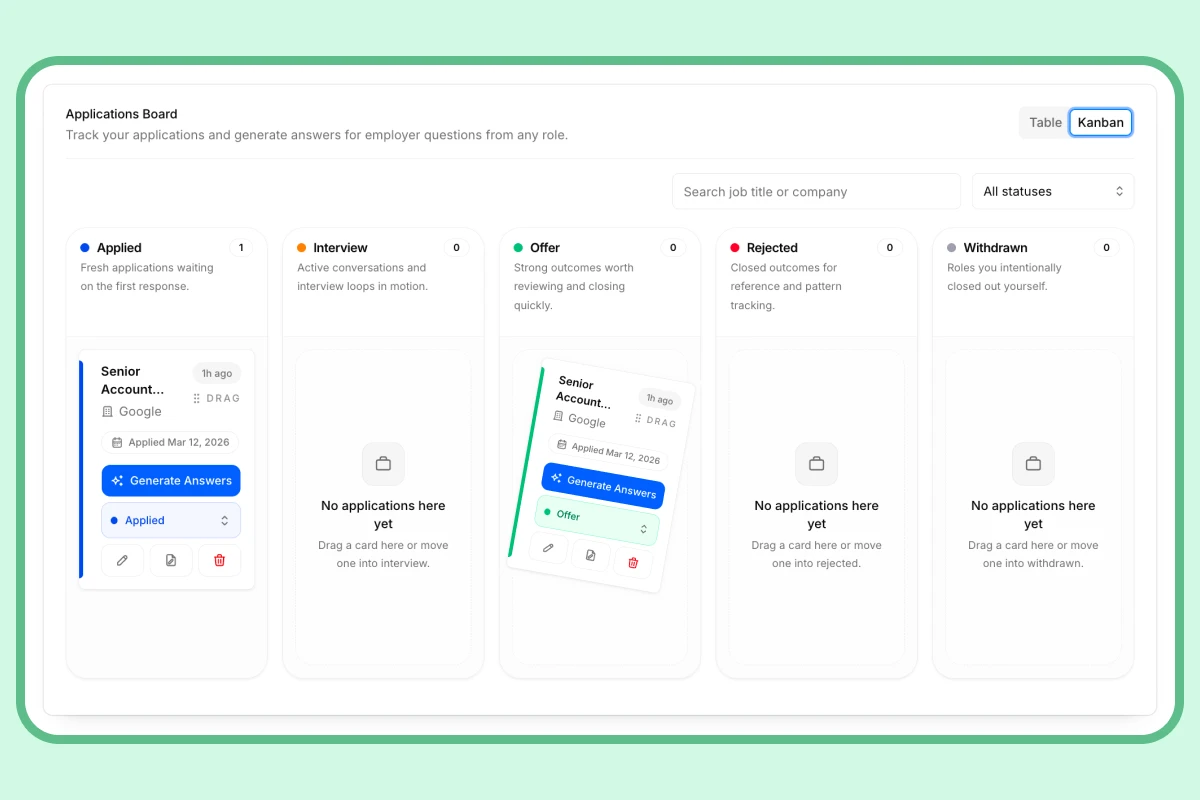
Application Tracker
Applying to 10+ jobs? You need a real system.
No more spreadsheets or lost threads. Track every role, stage, deadline, and follow-up in one dashboard — so you always know exactly where you stand.
How to Show You Work Well Under Pressure During the Interview
Your interview itself is a test of how you handle pressure. Use the conversation to show the same qualities you are describing.
Simple ways to demonstrate composure
- Pause briefly before answering.
- Ask for clarification if needed.
- Speak clearly and steadily.
- Keep your answer organized.
- Use positive body language.
For example, if the interviewer asks a broad question, you can say:
"Yes, I can. I can share an example if you'd like, or I can describe my general approach first."
That response shows confidence and control.
A Simple Formula You Can Reuse
If you need a quick way to prepare, use this format:
"Yes, I can work under pressure. In one example, [situation]. My responsibility was [task]. I handled it by [action]. As a result, [result]."
This formula keeps your answer focused and easy to follow.
Best High-Pressure Examples to Prepare Before Your Interview
If you are preparing for interview questions can you work under pressure examples, choose examples that are:
- professional
- specific
- believable
- relevant to the role
- resolved with a positive outcome
Good options include:
- a tight deadline
- a product launch
- a client escalation
- a system outage
- a staffing shortage
- a changing project scope
- a last-minute presentation
Pick one or two examples in advance so you are ready for different versions of the question.
Final Takeaway
The best answer to "Can you work under pressure?" is not a slogan. It is a short, specific story that proves you can stay calm, solve problems, prioritize well, and deliver results. Use the STAR method, choose a strong example, and keep your tone composed. If you do that, you will turn a common interview question into a strong opportunity to show your value.
Quick FAQ
Why do employers ask this question?
They want to know whether you can stay effective when deadlines, challenges, or changes create stress.
Should you use STAR?
Yes. The STAR method is one of the best ways to keep your answer clear and complete.
Is it okay to say you struggled in the past?
Yes, if you focus on what you learned and how you improved.
What should you avoid?
Avoid vague answers, blame, and stories that do not show a clear result.
Explore this category
Interview Prep
Browse the full interview prep category for more related playbooks, examples, and tactical guides.
Browse Interview Prep articles →One workflow. Resume to offer.
Build ATS-ready resumes, track every application, and practice interviews — all in one place. Free to start, no credit card needed.
✓ Free plan forever · ✓ No card needed
Related articles
The Complete Guide to Behavioral Interview Questions: How to Prepare and Answer with Confidence
Behavioral interview questions are a critical part of the hiring process, designed to predict your future performance based on past experiences. This guide breaks down the most common types, provides actionable strategies for crafting compelling answers, and helps you turn interview anxiety into confidence.
Situational Interview Questions: Examples, Answers, and STAR Method Tips
Situational interview questions ask how you would handle hypothetical, job-related scenarios to evaluate problem-solving, judgment, and critical thinking. This guide explains what they are, how they differ from behavioral questions, and how to answer them with a simple framework and real examples.