





Your interview has just begun. After the initial greetings, the interviewer says, "Tell me about yourself." This is not a casual icebreaker. It is your first chance to shape how the interviewer sees your background, your strengths, and your fit for the role.
For related next steps, use common interview questions guide, behavioral interview questions guide, and situational interview questions guide.
A strong answer can build trust quickly. A weak answer can sound unfocused or overly generic. The best responses are clear, concise, and tailored to the job.
Answer-First Summary
The best way to answer "Tell me about yourself" in an interview is with a 60-90 second professional narrative that connects your present role, past experience, and future goals to the position you want. Keep it relevant, specific, and easy to follow. Avoid giving your life story or reciting your resume line by line.
Why Interviewers Ask This Question
Interviewers are not asking for personal trivia. They want to understand how you think, how you communicate, and whether your background matches the role expectations.
What the interviewer is evaluating
- Communication skills: Can you explain your experience clearly?
- Preparedness: Have you researched the role and company?
- Self-awareness: Do you understand your strengths and career path?
- Fit: Can you connect your experience to the employer's needs?
- Direction: Do you know why you want this specific role.
This question also helps the interviewer guide the conversation. Your answer often determines what they ask about next.
What Is the Best Structure for Answering "Tell Me About Yourself" in an Interview?
The most effective structure is the Present-Past-Future framework.
| Part | What to Include | Purpose |
|---|---|---|
| Present | Your current role, responsibilities, and a key achievement or area of expertise | Shows what you do now and what you are good at |
| Past | 2-3 relevant experiences that built your skills | Explains how you got here |
| Future | Why you want this role and how you can contribute | Shows your motivation and fit |
This structure works because it starts with the most relevant information, adds proof from your background, and ends by connecting your goals to the job.
How Do You Answer Tell Me About Yourself in an Interview Step by Step?
1. Review the job description
Before you write your answer, study the job description carefully. Look for:
- Required skills
- Core responsibilities
- Tools or systems mentioned
- Business goals the role supports
- Repeated keywords
These details tell you what the employer values most. Your answer should reflect those priorities.
2. Choose your must-mention points
Select 3-4 points from your background that best match the role. These should be the experiences, strengths, or accomplishments that matter most for this interview.
For example, if the job emphasizes cross-functional leadership and data analysis, make sure your answer includes both.
3. Build your response using Present-Past-Future
Draft 4-6 sentences that follow this flow:
- Start with your current role and most relevant strength
- Briefly explain the experience that prepared you for it
- End with why this role is the right next step
4. Keep it concise
Aim for 60-90 seconds when spoken aloud. If you go much longer, the answer can feel unfocused. If you are too brief, you may miss the chance to highlight your value.
5. Practice out loud
Read your answer aloud until it sounds natural. You should sound prepared, not memorized.
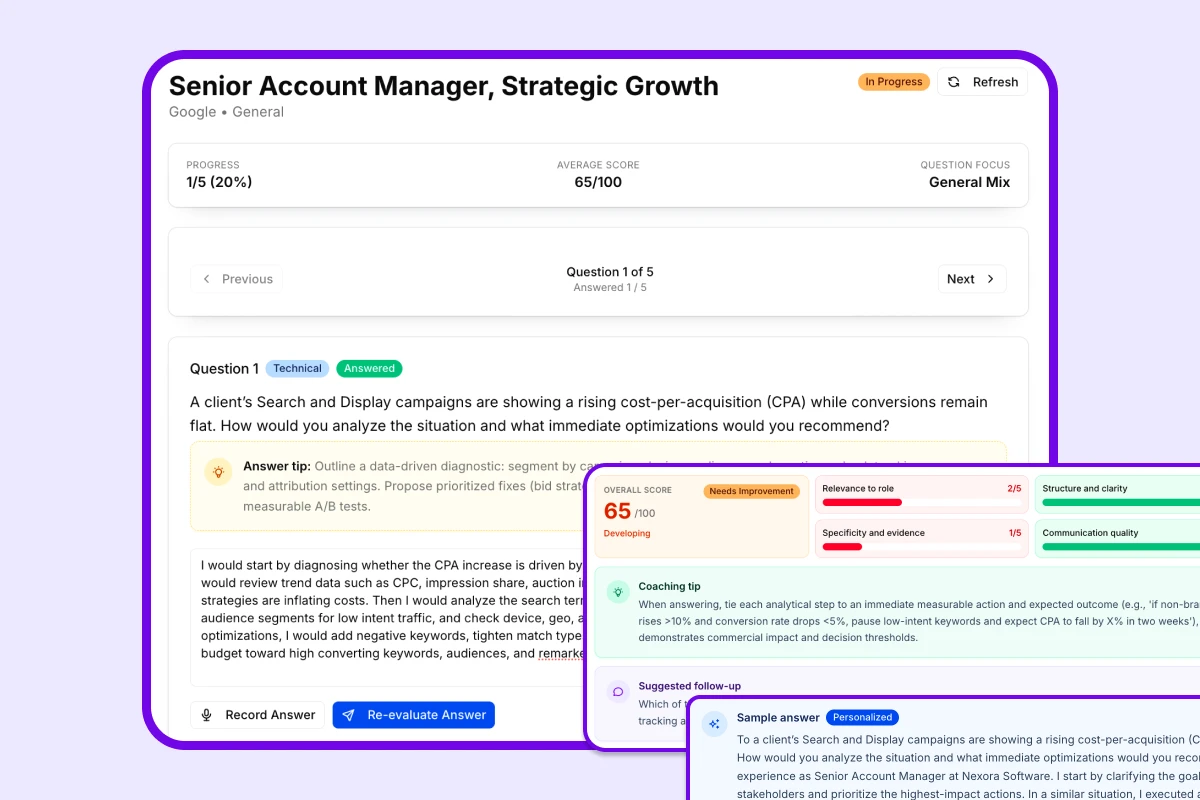
AI Interview Prep
Got the interview? Now make sure you're ready.
Practice the exact questions likely to come up for your target role. Get scored on clarity, structure, and relevance — so you walk in sharp, not winging it.
Example Answer for a Marketing Role
Here is an example of a strong answer to "Tell me about yourself" in an interview:
"I’m currently a Senior Marketing Specialist at TechFlow, where I lead content strategy and have helped grow organic traffic by 150% over the past two years through audience research and targeted SEO. Before that, I worked in digital marketing coordination, where I managed social campaigns and built a strong foundation in analytics and conversion optimization. I’m now looking for a manager role where I can scale these strategies, lead a team, and contribute to growth in a more strategic way. I was especially interested in this position because of your focus on innovative growth channels, and I’d love to bring my data-driven background to support those goals."
This answer works because it is specific, relevant, and clearly tied to the job.
How Can You Tailor Your Answer to a Specific Job Description?
Tailoring is what separates a generic answer from a strong one.
Match your language to the role
Use the same keywords and priorities that appear in the job description. If the employer emphasizes collaboration, customer success, or operational efficiency, make sure those themes appear in your answer naturally.
Focus on the employer's problem
Think beyond your own background. Ask:
- What challenge is this role meant to solve?
- What outcome does the company want?
- Which of my experiences best supports that outcome?
When you answer in this way, you sound like someone already thinking about the job.
What Are Common Variations of the Question?
Interviewers may ask the same thing in different ways. Be ready for questions like:
- "Walk me through your resume."
- "How would you describe your professional background?"
- "What should I know about you?"
- "I have your resume in front of me, but tell me more about yourself."
These all call for the same basic approach: a clear professional summary that connects your experience to the role.
What Should You Avoid in Your Answer?
A strong answer is not just about what you include. It is also about what you leave out.
Common mistakes
-
Reciting your resume The interviewer can already see your work history.
-
Sharing too much personal detail Keep the focus on your professional background unless a personal detail is directly relevant.
-
Being vague Avoid empty phrases like "I’m a hard worker" without proof.
-
Rambling Long answers can lose the interviewer’s attention.
-
Starting too far back Unless you are a recent graduate, begin with your current or most recent role.
How Do Recent Graduates Answer This Question?
If you are early in your career, your answer should still follow the same structure, but the details will be different.
For recent graduates
- Present: Your degree, concentration, or strongest area of study
- Past: Internships, projects, leadership roles, or coursework
- Future: How your training prepares you for the role
Example:
"I recently graduated with a degree in communications, where I focused on digital media and audience engagement. During school, I completed an internship where I helped manage social content and learned how to use analytics to improve performance. I’m now looking for an entry-level role where I can apply those skills, continue learning, and contribute to a team that values creative, data-informed work."
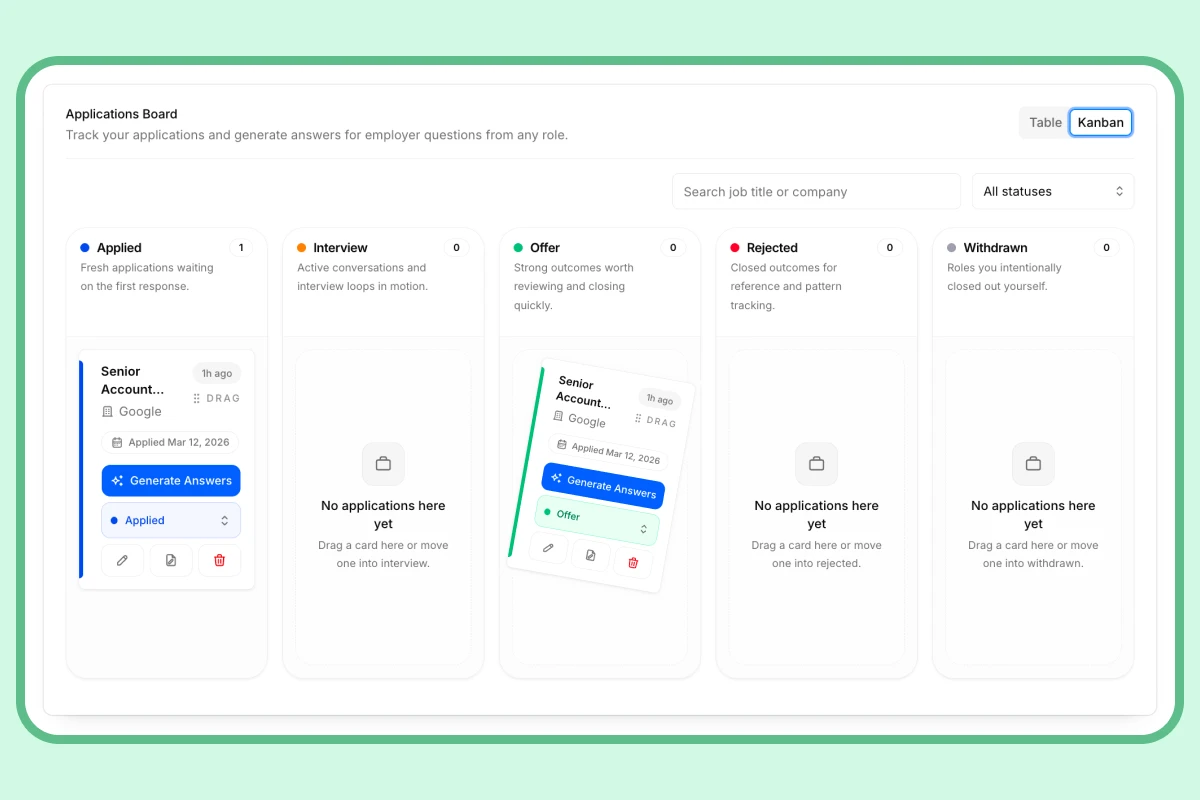
Application Tracker
Applying to 10+ jobs? You need a real system.
No more spreadsheets or lost threads. Track every role, stage, deadline, and follow-up in one dashboard — so you always know exactly where you stand.
How Do Career Changers Answer This Question?
Career changers should emphasize transferable skills and motivation for the shift.
For career changers
- Start with the direction you want to go
- Highlight transferable strengths from your current role
- Show how your background supports the new path
Example:
"I’m transitioning from customer support into project coordination because I’ve found that I really enjoy organizing work, improving processes, and keeping teams aligned. In my current role, I’ve often taken on scheduling, follow-up, and cross-team communication tasks, which helped me build strong coordination skills. I’m now looking for a role where I can focus on project delivery full time and bring that same attention to detail and collaboration to a new team."
How Should Senior Candidates Answer?
Senior professionals should focus on leadership, scale, and strategic impact.
For senior candidates
- Highlight scope and responsibility
- Emphasize leadership style or business impact
- Connect your experience to the company’s next stage of growth
Example:
"I currently lead a product operations team focused on improving cross-functional planning and execution. Over the past several years, I’ve built systems that improved visibility, reduced delays, and helped teams work more efficiently at scale. I’m now looking for a role where I can apply that experience in a broader strategic context and help shape how the organization grows."
How Long Should Your Answer Be?
A good answer is usually 60 to 90 seconds long.
That is long enough to provide context, but short enough to keep the interviewer engaged. If you are practicing, time yourself and trim anything that does not help you make your case.
Quick Tips for a Strong Answer
- Start with your current role
- Use specific accomplishments
- Keep your answer relevant to the job
- End by connecting your goals to the company
- Practice until it sounds natural
- Stay confident and conversational
Final Checklist
Before your interview, make sure your answer:
- Is tailored to the job description
- Uses a clear Present-Past-Future structure
- Stays within 60-90 seconds
- Includes at least one specific accomplishment
- Focuses on professional experience, not personal history
- Ends by showing why you want this role
Final Thoughts
"Tell me about yourself" is one of the most important interview questions because it sets the tone for everything that follows. If you answer with structure, relevance, and confidence, you make it easier for the interviewer to see your value.
A strong response should not sound rehearsed or generic. It should sound like a focused professional story that explains who you are, what you bring, and why this role is the right next step.
Explore this category
Interview Prep
Browse the full interview prep category for more related playbooks, examples, and tactical guides.
Browse Interview Prep articles →One workflow. Resume to offer.
Build ATS-ready resumes, track every application, and practice interviews — all in one place. Free to start, no credit card needed.
✓ Free plan forever · ✓ No card needed
Related articles
What Is Your Weakness Interview Question: Tips, Examples, and Best Answers
Answering "What is your greatest weakness?" doesn’t have to be awkward. Use this practical guide to choose a real weakness, explain it well, and show growth with confidence.
Why Did You Leave Your Last Job? A Strategic Interview Playbook
Answering 'Why did you leave your last job?' is a pivotal interview moment. The key is to frame your departure as a forward-looking, professional decision that aligns your growth with the new opportunity, while avoiding negativity about past employers.