





"Why should we hire you for this position?" is one of the most important interview questions you can get. It is your chance to show that you understand the role, can explain what you can bring to the company, and have the experience to deliver results.
For related next steps, use common interview questions guide, behavioral interview questions guide, situational interview questions guide, and tell me about yourself guide.
A strong answer does not sound memorized or generic. It sounds specific, confident, and relevant to the job you want.
Why Interviewers Ask This Question
Hiring managers are not just asking you to list your strengths. They want to understand why you are the right hire.
- Can you do the work?
- Will you add value to the team?
- Do you understand what this role really needs?
- Are you genuinely interested in this opportunity?.
In other words, the interviewer is trying to decide whether you are the best solution to a business need, not just another qualified applicant. Treat this question as a direct invitation to connect your strongest evidence to the role's most important outcomes.
How to Answer "Why Should We Hire You for This Position?"
The easiest way to answer is to use a simple 4-part structure:
1. Match your skills to the role
Start with the experience and abilities most relevant to the job description.
2. Highlight proof of results
Share a specific achievement, metric, or outcome that shows you can deliver.
3. Show how you fit the team
Mention the working style, communication habits, or strengths that make you effective with others.
4. Connect to the company
Explain why you want this role at this company and how your goals align with theirs.
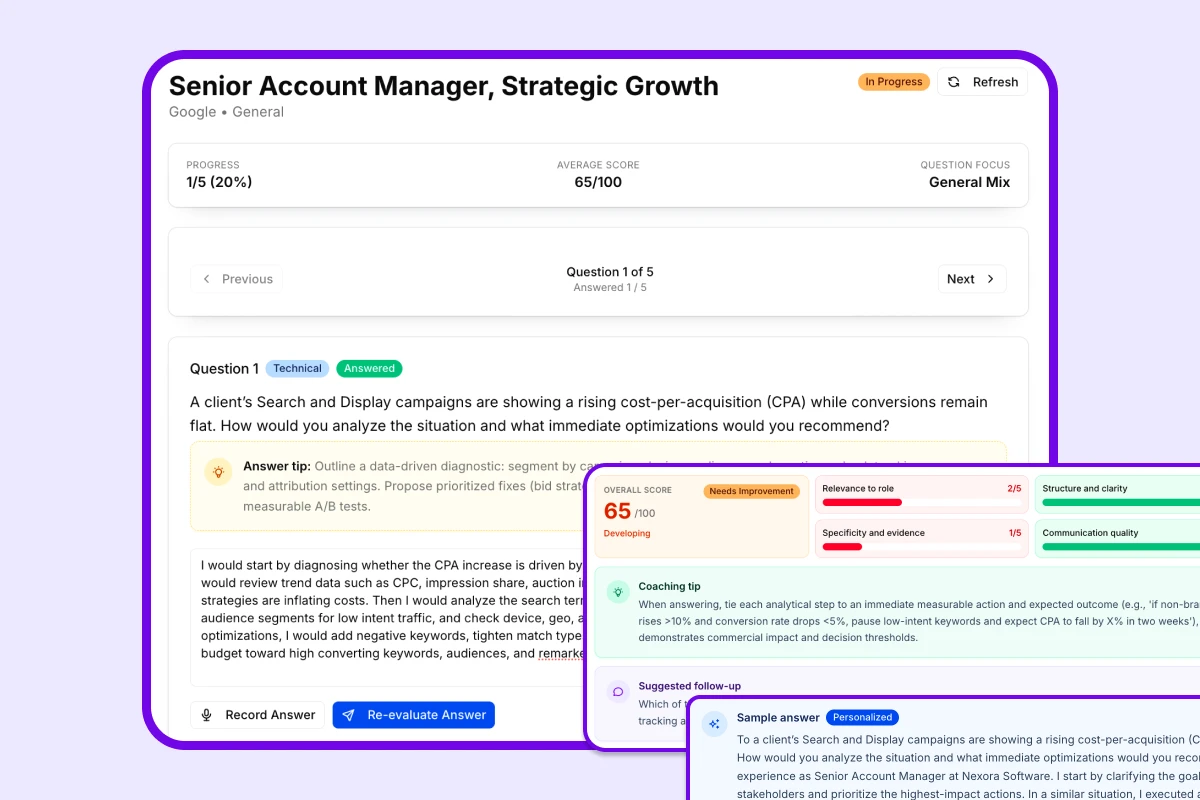
AI Interview Prep
Got the interview? Now make sure you're ready.
Practice the exact questions likely to come up for your target role. Get scored on clarity, structure, and relevance — so you walk in sharp, not winging it.
Step-by-Step: Build a Better Answer
Step 1: Study the job description
Look for the most important responsibilities, required skills, and repeated keywords. These are the signals that tell you what the company cares about most.
Ask yourself:
- What problems will this person need to solve?
- What skills appear most often in the posting?
- What outcomes does the company seem to value?
Step 2: Choose your strongest examples
Pick examples that are directly related to the role. The best examples are recent, measurable, and easy to understand.
For each example, try to include:
- the situation
- the action you took
- the result you achieved
Step 3: Keep the answer focused
A strong response should usually be 60 to 90 seconds long. You want enough detail to sound credible, but not so much that you lose the interviewer’s attention.
CareerOneStop's interview tips also emphasize preparing examples before the interview, which fits this focused approach.
Interview Question Why Should We Hire You for This Position Answer Formula
Use this simple formula when preparing your response:
"You should hire me because I bring [skill/experience], [proof of success], and [fit with the team/company], which will help me [deliver result for this role]."
Example:
"You should hire me because I bring five years of experience in project coordination, a track record of improving delivery timelines by 20%, and a collaborative style that fits fast-moving teams. That combination will help me keep projects organized and support your team’s goals from day one."
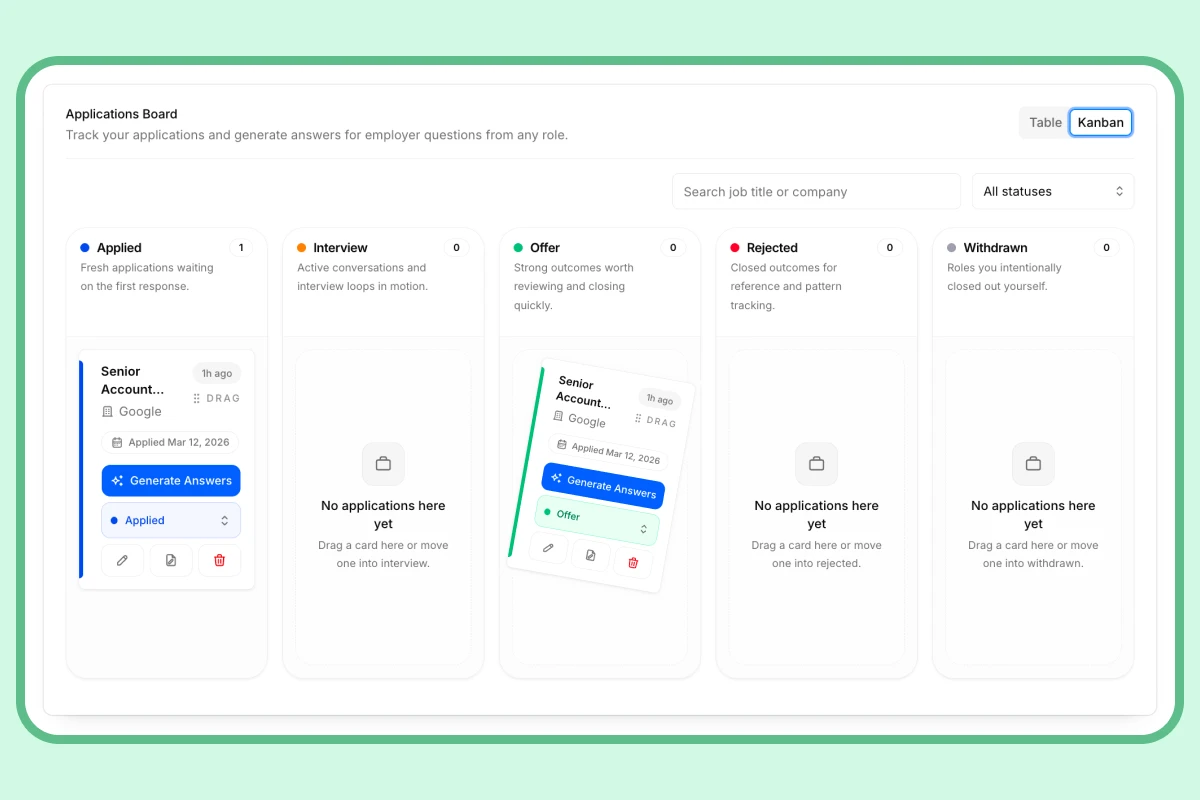
Application Tracker
Applying to 10+ jobs? You need a real system.
No more spreadsheets or lost threads. Track every role, stage, deadline, and follow-up in one dashboard — so you always know exactly where you stand.
Interview Question Why Should We Hire You for This Position Examples
Example 1: Marketing role
"You should hire me because I have direct experience planning and executing campaigns that drive qualified leads. In my last role, I helped increase lead generation by 30% in one quarter by improving campaign targeting and testing new messaging. I also work well across sales and creative teams, which helps keep projects moving. I’m excited about this role because your company is clearly focused on growth, and I’d love to contribute to that goal."
Example 2: Software engineering role
"You should hire me because I bring hands-on experience building reliable backend systems and improving performance under pressure. At my previous company, I refactored a core service and reduced response times by 40% during peak traffic. I also value clean communication and team collaboration, which makes me effective in agile environments. I’m interested in this position because your product is solving a real technical challenge, and I’d like to help scale it further."
Example 3: Customer service role
"You should hire me because I combine strong communication skills with a consistent focus on customer satisfaction. In my last position, I helped improve first-response times and contributed to a higher customer satisfaction score by staying organized and resolving issues quickly. I’m patient, dependable, and comfortable handling high-volume support. I’m also drawn to your company’s reputation for great service, which makes this role a strong fit for me."
Advanced Frameworks and Psychological Insights
Beyond the basic structure, consider these advanced approaches to craft a more compelling answer:
The "Company Needs" Framework
Shift the focus entirely to the employer. Harvard Business Review suggests framing your answer around the company's specific challenges and how you are uniquely positioned to address them. For example: "Based on my research, your team is focused on expanding into the European market this year. My experience localizing product launches and navigating EU compliance would allow me to immediately contribute to that priority."
The "Culture Add" Angle
Instead of just saying you're a culture fit, explain what unique perspective or skill you bring that the team currently lacks. This shows you've thought deeply about how you can evolve the team, not just blend in.
30-Day Execution Plan
Week 1: Gather role signals from the job description, company pages, and interviewer profile. Build a response bank with short STAR stories mapped to each requirement.
Week 2: Run timed practice rounds for behavioral questions, technical questions, and closing pitch. Track filler words, weak transitions, and unclear outcomes. Rewrite weak answers immediately.
Week 3: Simulate live sessions with realistic pressure. Practice opening, clarification questions, and concise closing statements. Verify examples stay specific and measurable.
Week 4: Final polish. Prepare follow-up email templates, role-specific questions, and interview-day checklist. Confirm logistics, attire, and device setup if virtual.
Interview Quality Checklist
- Start with the role's most important need.
- Give one proof point with a measurable result.
- Connect your proof to team or company impact.
- Keep the answer under 90 seconds.
- Mention collaboration style and how you receive feedback.
- End with a confident forward-looking sentence.
How can I structure a strong answer to 'Why should we hire you?' using a 4-reason framework?
For Interview Question Why Should We Hire You for This Position, start with a concise position statement, then back it with one real scenario, one action you controlled, and one measurable result. Keep language direct, avoid filler, and connect each example to role requirements. Close by stating what you learned and how that lesson improves future performance. This approach shows preparation, judgment, and coachability.
What are industry-specific examples for answering 'Why should we hire you?' in marketing or tech roles?
For Interview Question Why Should We Hire You for This Position, start with a concise position statement, then back it with one real scenario, one action you controlled, and one measurable result. Keep language direct, avoid filler, and connect each example to role requirements. Close by stating what you learned and how that lesson improves future performance. This approach shows preparation, judgment, and coachability.
How do I incorporate company research and values into my response?
For Interview Question Why Should We Hire You for This Position, start with a concise position statement, then back it with one real scenario, one action you controlled, and one measurable result. Keep language direct, avoid filler, and connect each example to role requirements. Close by stating what you learned and how that lesson improves future performance. This approach shows preparation, judgment, and coachability.
What common mistakes should I avoid when answering this interview question?
For Interview Question Why Should We Hire You for This Position, start with a concise position statement, then back it with one real scenario, one action you controlled, and one measurable result. Keep language direct, avoid filler, and connect each example to role requirements. Close by stating what you learned and how that lesson improves future performance. This approach shows preparation, judgment, and coachability.
Explore this category
Interview Prep
Browse the full interview prep category for more related playbooks, examples, and tactical guides.
Browse Interview Prep articles →One workflow. Resume to offer.
Build ATS-ready resumes, track every application, and practice interviews — all in one place. Free to start, no credit card needed.
✓ Free plan forever · ✓ No card needed
Related articles
Why Are You Applying for This Position? Answer Examples and Interview Tips
"Why Are You Applying for This Position?" is one of the most common interview questions—and one of the easiest to answer well with the right structure. This guide explains what employers are really asking, gives a proven answer formula, and shares examples plus interview answer tips you can adapt for your own background.
Situational Interview Questions: Examples, Answers, and STAR Method Tips
Situational interview questions ask how you would handle hypothetical, job-related scenarios to evaluate problem-solving, judgment, and critical thinking. This guide explains what they are, how they differ from behavioral questions, and how to answer them with a simple framework and real examples.