





Answer-First Summary: To read a job description effectively, look beyond the title and scan for three things first: the real responsibilities, the must-have qualifications, and the keywords that matter for ATS resume optimization. Use the posting to judge fit, identify what the employer values most, and tailor your resume and cover letter to match the language of the role.
What Is a Job Description, Really?
A job description is not just a list of duties. It is a hiring document that tells you what problem the company wants solved, what success looks like, and what experience the employer wants to see in strong candidates.
When you learn how to read a job description, you can do two things at once.
- Decide whether the role is a realistic fit.
- Pull out the language you should mirror in your application.
That second step matters because many employers use applicant tracking systems to scan for keyword alignment before a human ever sees your resume.
What Are the Main Parts of a Job Description?
Most job descriptions include the same core sections. Knowing what each one means makes it easier to read a posting quickly and accurately.
Job Title
The title gives you a rough category, but it can be misleading. A "Marketing Manager" role at one company may be a strategy-heavy leadership role, while another may focus on execution and content production.
Company or Team Overview
This section explains why the role exists and what the company values. It may be labeled "About Us," "About the Team," or included in the introduction.
Role Summary
The summary usually gives the big picture. It tells you the job’s main objective and what impact the person in the role is expected to make.
Key Responsibilities
This is the most important section for fit assessment. It shows what you will actually do day to day.
As a general rule, responsibilities tell you what work the employer needs done.
Required Qualifications
These are the non-negotiables. If the posting says the role requires a CPA, a specific degree, or 5+ years of experience, those items are likely screening criteria.
Preferred Qualifications
These are nice-to-haves. They can help you stand out, but missing one should not automatically disqualify you.
Benefits, Compensation, and Logistics
Look for salary range, location, remote policy, schedule, and benefits. When these details are missing, treat that as useful information about the employer’s transparency.
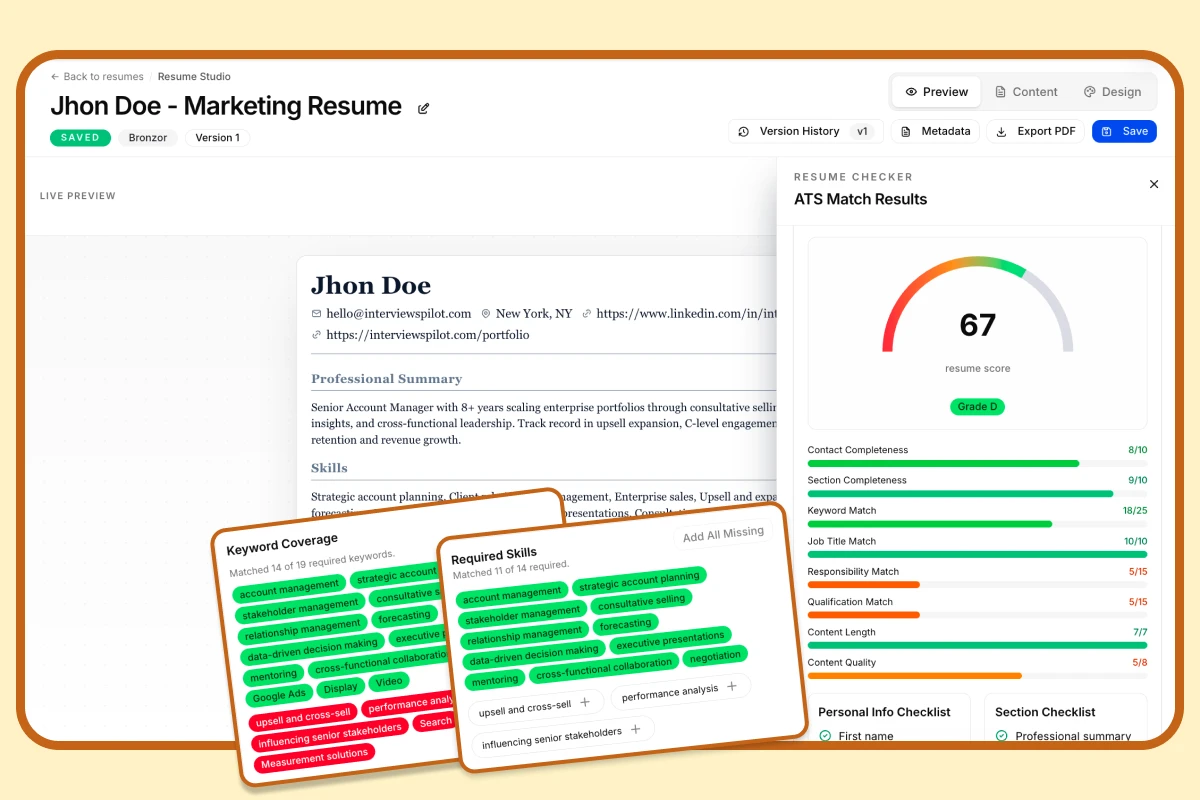
Free ATS Score
Your resume might be invisible to recruiters
Most resumes are filtered out before a human ever sees them. Get your free ATS score and see exactly where your resume falls short — before you hit send.
How Do You Know If You Should Apply?
A common mistake is assuming you need to match every bullet perfectly. You do not.
Use the 70% Rule
If you meet about 70% of the required qualifications, you are often worth considering. For the remaining gap, look for transferable skills, adjacent experience, or comparable outcomes.
Focus on Responsibilities, Not Just the Title
Job titles vary by company. Two roles with the same title can have very different expectations. Always compare the work in the posting to the work you have actually done.
Ask the Right Fit Questions
- Can I do the core work described here?
- Have I done similar work in another setting?
- Do I have enough experience to speak about results, not just tasks?
- Are the missing requirements truly required, or just preferred?
How Do You Read Responsibilities for Fit?
The responsibilities section usually reveals the true shape of the job.
Step 1: Group Similar Duties
Combine related tasks into themes such as reporting, project management, customer support, writing, leadership, or analysis. This helps you see where the role spends most of its time.
Step 2: Identify the Business Goal
Ask what each task is trying to accomplish.
For example:
- "Manage the content calendar" may mean the company needs consistent publishing.
- "Analyze campaign performance" may mean the company wants better ROI.
- "Support cross-functional teams" may mean the role requires coordination and communication.
Step 3: Match Each Theme to Your Experience
For every major responsibility, identify one strong example from your background that proves you can do that work.
Step 4: Look for Warning Signs
Watch for:
- overly broad responsibilities,
- vague language with no concrete deliverables,
- unrealistic combinations of tasks,
- a long list of unrelated duties for one person.
Those patterns can suggest a messy team structure or an unclear role.
What Keywords Should You Extract for ATS Resume Optimization?
If you want better ATS resume optimization, you need to extract the exact language used in the job description.
Build a keyword list from these categories:
| Keyword Type | What It Means | Where to Find It | Example |
|---|---|---|---|
| Hard skills | Tools, systems, and technical abilities | Responsibilities, qualifications | Excel, Salesforce, SEO, project management |
| Soft skills | Work style and interpersonal strengths | Summary, qualifications | collaboration, communication, leadership |
| Industry terms | Role-specific language and methods | Throughout the posting | content calendar, funnel, pipeline, forecasting |
| Acronyms and certifications | Formal credentials and shorthand | Qualifications, requirements | CPA, PMP, CRM, A/B testing |
How Should You Use Those Keywords?
Do not just drop keywords into a list. Place them naturally in your resume bullets, summary, and skills section.
For example, if a posting asks for "cross-functional collaboration," your resume should show that phrase in context, such as:
- Partnered with cross-functional teams to launch a new customer onboarding workflow.
That is stronger than simply listing "cross-functional collaboration" in isolation.
What Are Some Job Description Examples You Can Compare?
Here are a few simplified examples of how to read different postings.
Example 1: Content Manager
If the posting emphasizes editorial planning, SEO, and analytics, the role likely combines strategy and execution. Keywords may include content calendar, optimize, analytics, and editorial strategy.
Example 2: Sales Representative
If the job focuses on pipeline development, CRM hygiene, and quota attainment, the real priority is likely revenue generation and process discipline. Keywords may include lead generation, CRM, prospecting, and relationship management.
Example 3: Operations Coordinator
If the posting highlights scheduling, documentation, and cross-team communication, the role may be built around organization and workflow support. Keywords may include process improvement, coordination, systems, and stakeholder management.
These examples show why title alone is not enough. The responsibilities tell the full story.
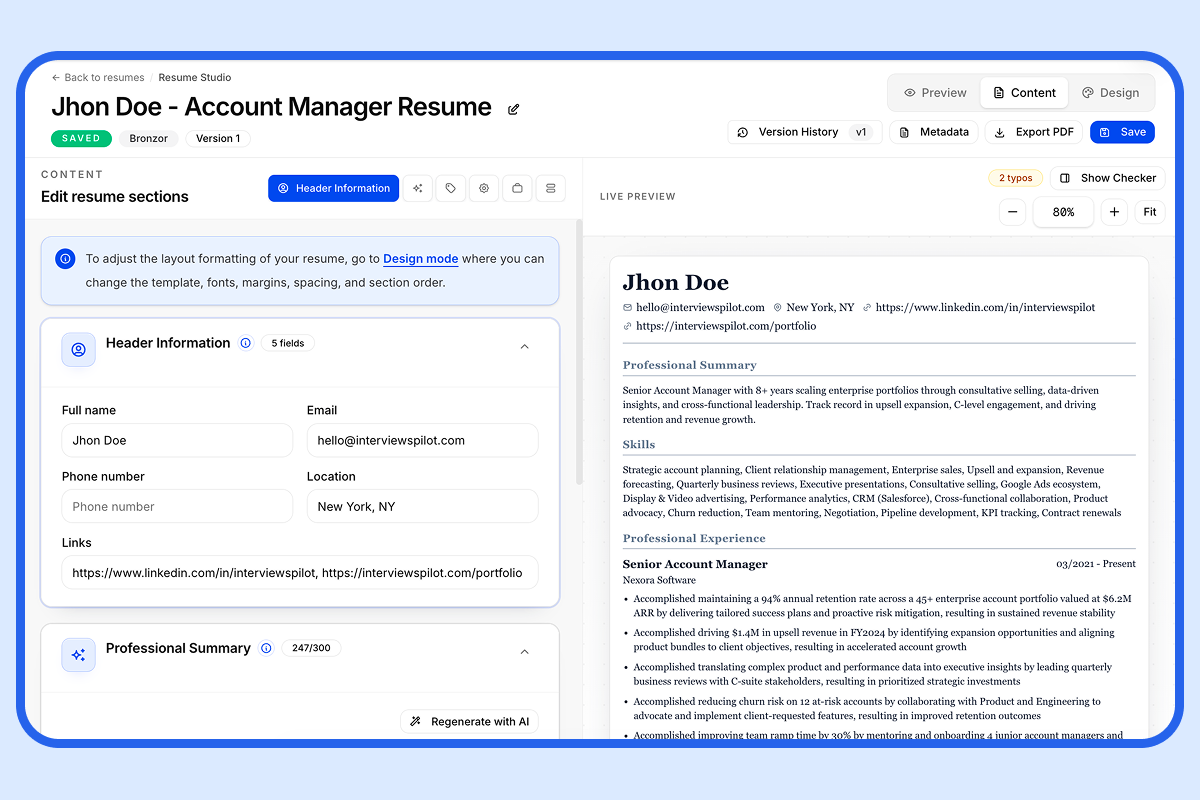
AI Resume Builder
Stop sending the same resume to every job
Paste any job description and InterviewsPilot rewrites your resume around it — keywords, bullets, and summary aligned to what recruiters are actually scanning for.
What Red Flags Should You Look For?
A job description can also reveal problems.
Common Red Flags
- "Must thrive in chaos" or "wear many hats" without clear structure
- vague mission language with few concrete responsibilities
- no salary range or location details where they would normally be expected
- typos, formatting issues, or inconsistent requirements
- an unusually long list of demands for one role
Common Green Flags
- specific responsibilities and success measures
- clear team structure or reporting line
- transparent compensation or location information
- realistic expectations and a balanced workload
- mention of growth, support, or training
How Do You Turn a Job Description Into an Application Plan?
Use this simple process every time you find a role worth pursuing.
1. Read the Title, Summary, and Top Requirements
Do a quick scan first. If the role is clearly misaligned, do not waste time on a full analysis.
2. Highlight the Important Language
Mark the required qualifications, preferred qualifications, tools, and repeated verbs.
3. Build a Keyword Bank
Group the most important terms into a short list you can use when updating your resume and cover letter.
4. Match Your Experience to the Posting
Choose the experiences that best prove you can do the work. Focus on outcomes, scale, and relevance.
5. Rewrite Your Resume for the Role
Adjust 3 to 5 bullets so they reflect the job description’s language and priorities.
6. Prepare Interview Stories
The responsibilities section often predicts interview questions. If a role emphasizes collaboration, leadership, or problem-solving, prepare a story that shows that skill in action.
How Can You Read a Job Description Faster?
If you are applying to multiple roles, use this shortcut:
- First, scan for the job title, summary, and required qualifications.
- Second, read the responsibilities for the actual daily work.
- Third, collect the keywords that match your experience.
- Fourth, decide whether the role is a fit before you spend time tailoring your materials.
This approach saves time and improves the quality of each application.
Final Takeaway
Learning how to read a job description is one of the most useful job search skills you can build. It helps you avoid mismatched applications, identify the work that really matters, and tailor your resume for ATS resume optimization in a way that still sounds natural to recruiters.
The best candidates do not just apply to jobs. They interpret the posting, match their experience strategically, and present themselves in the language the employer is already using.
Explore this category
Resume
Browse the full resume category for more related playbooks, examples, and tactical guides.
Browse Resume articles →One workflow. Resume to offer.
Build ATS-ready resumes, track every application, and practice interviews — all in one place. Free to start, no credit card needed.
✓ Free plan forever · ✓ No card needed
Related articles
How to Tailor Your Resume to a Job: Step-by-Step Tips, Examples, and ATS Optimization
Tailoring your resume is one of the most effective ways to improve your odds of getting noticed. This guide shows you how to analyze a job description, rewrite your summary and bullets, and optimize your resume for ATS and recruiters with clear examples and a simple checklist.
How to Write a Resume: A Practical 2025 Guide
Writing a resume is more than listing your work history. This guide shows you how to write a resume step by step, with examples, formatting tips, and ATS-friendly best practices that help your application stand out.