





Your response to a job interview email is your first active step in the hiring process and a critical opportunity to demonstrate your professionalism, enthusiasm, and attention to detail. A well-crafted reply can set a positive tone before you even walk into the room, just like a polished job application email. This guide breaks down the process into actionable steps, providing templates and strategies for every common scenario. For a neutral preparation baseline, CareerOneStop's interview tips reinforce the same focus on examples, practice, and clear communication.
For related next steps, use common interview questions guide, behavioral interview questions guide, situational interview questions guide, tell me about yourself guide, and professional introduction examples.
Answer-First Summary
To respond to a job interview email effectively, you must act promptly, typically within 24 hours. Your response should be polite, clear, and professional. Key actions include: replying with the original subject line intact to maintain thread continuity, expressing gratitude for the opportunity, clearly confirming or proposing your availability, and asking any logistical questions upfront. Always use a formal email address, proofread meticulously, and tailor your tone to the company culture. Following the interview, a timely thank-you note reinforces your interest.
How Quickly Should You Respond to an Interview Request?
The golden rule is to reply within 24 hours, and ideally much sooner if possible. A prompt response signals reliability, keen interest, and respect for the recruiter's or hiring manager's time. In fast-moving industries or for highly competitive roles, delaying beyond a day can risk the perception that you are not seriously interested or are disorganized. If you need time to check your calendar for a complex scheduling request, it is acceptable to send a brief acknowledgment immediately (e.g., "Thank you for the invitation—I will confirm my availability by end of day") followed by a detailed confirmation later.
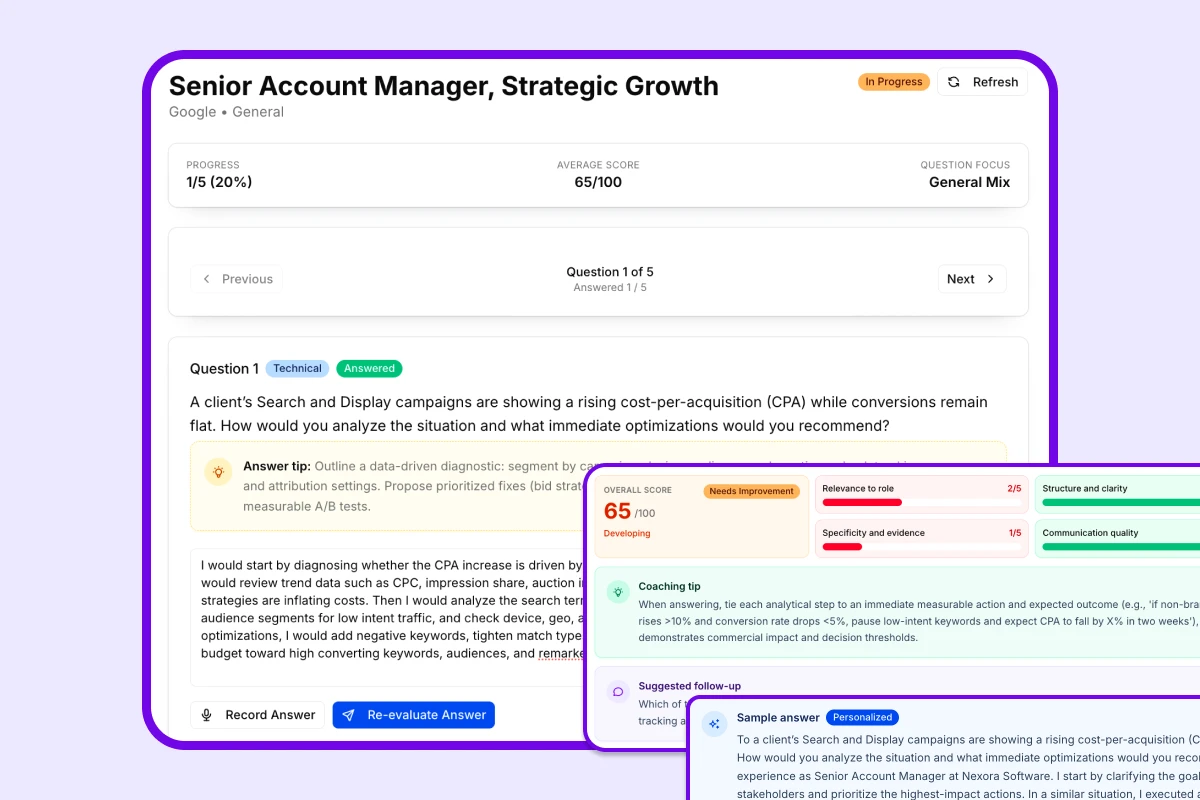
AI Interview Prep
Got the interview? Now make sure you're ready.
Practice the exact questions likely to come up for your target role. Get scored on clarity, structure, and relevance — so you walk in sharp, not winging it.
What Should You Include When Confirming an Interview by Email?
A confirmation email is more than a simple "yes." It should be a concise, professional message that covers all logistical bases and leaves no room for ambiguity. Here is a breakdown of the essential components.
- Subject Line: Keep the original subject line. Do not change it. This ensures your reply stays in the correct email thread.
- Salutation: Use a formal greeting (e.g., "Dear [Hiring Manager Name]," "Hello [Recruiter Name],").
- Expression of Thanks: Start by thanking the sender for the invitation and the opportunity.
- Clear Confirmation: Explicitly state that you accept the interview and confirm the date, time, and format (e.g., in-person, video call, phone screen).
- Reiteration of Enthusiasm: Briefly reaffirm your interest in the role and the company.
- Logistical Questions/Clarifications: Politely ask any necessary questions about location, video link, who you will be meeting, or what you should bring.
- Professional Closing: Use a standard closing (e.g., "Sincerely," "Best regards,") followed by your full name, phone number, and any relevant links (e.g., LinkedIn profile).
Example Template for Confirming an In-Person Interview:
Subject: Re: Interview Invitation for [Job Title] at [Company Name]
Dear Ms. Chen,
Thank you very much for inviting me to interview for the [Job Title] position at [Company Name]. I am delighted to accept and confirm my availability for the scheduled in-person interview on [Date] at [Time] at your office located at [Address].
I am very excited to learn more about the role and discuss how my experience in [Your Field] can contribute to your team.
Please let me know if there is any specific documentation or preparation you recommend I bring.
I look forward to meeting you.
Sincerely, [Your Full Name] [Your Phone Number] [Link to Your LinkedIn Profile]
How Do You Politely Decline a Job Interview Email?
There are valid reasons to decline an interview—perhaps the role isn't a fit, the timing is wrong, or you've accepted another offer. Handling this gracefully is crucial for maintaining a positive professional reputation. Your decline should be timely, polite, and brief. Express appreciation for the consideration, provide a simple, professional reason for your decision (without over-explaining), and wish them well.
Example Template for Politely Declining an Interview:
Subject: Re: Interview Request for [Job Title]
Dear Mr. Davis,
Thank you very much for considering me for the [Job Title] position and for extending an interview invitation. I sincerely appreciate you taking the time to review my application.
After careful consideration, I have decided to withdraw my application at this time. [Optional brief, professional reason: e.g., "My current career focus has shifted toward a different specialization."]
I wish you the very best in finding a qualified candidate for this role.
Best regards, [Your Full Name]
How to Handle Rescheduling or Same-Day Interview Requests
Life happens, and sometimes you need to reschedule. The key is to be proactive, apologetic, and flexible. Respond immediately, apologize for the inconvenience, provide a brief, professional reason (e.g., "an unavoidable prior commitment"), and offer 2-3 specific alternative times you are available. This demonstrates respect for the scheduler's time and maintains your professional standing.
Example Template for Rescheduling:
Subject: Re: Interview Invitation for [Job Title]
Dear [Hiring Manager Name],
Thank you again for the invitation to interview for the [Job Title] role. I am very interested in the opportunity.
Unfortunately, I have an unavoidable conflict at the scheduled time on [Original Date/Time]. I sincerely apologize for any inconvenience this causes.
Would it be possible to reschedule? I am available on [Alternative Date 1] at [Time], [Alternative Date 2] at [Time], or [Alternative Date 3] at [Time]. Please let me know if any of these times work for you.
Thank you for your understanding.
Sincerely, [Your Full Name]
For same-day or urgent requests, assess your ability to prepare adequately. If you can accommodate it, respond with enthusiastic confirmation. If you cannot, politely explain that you want to be fully prepared and propose the next earliest time you are available.
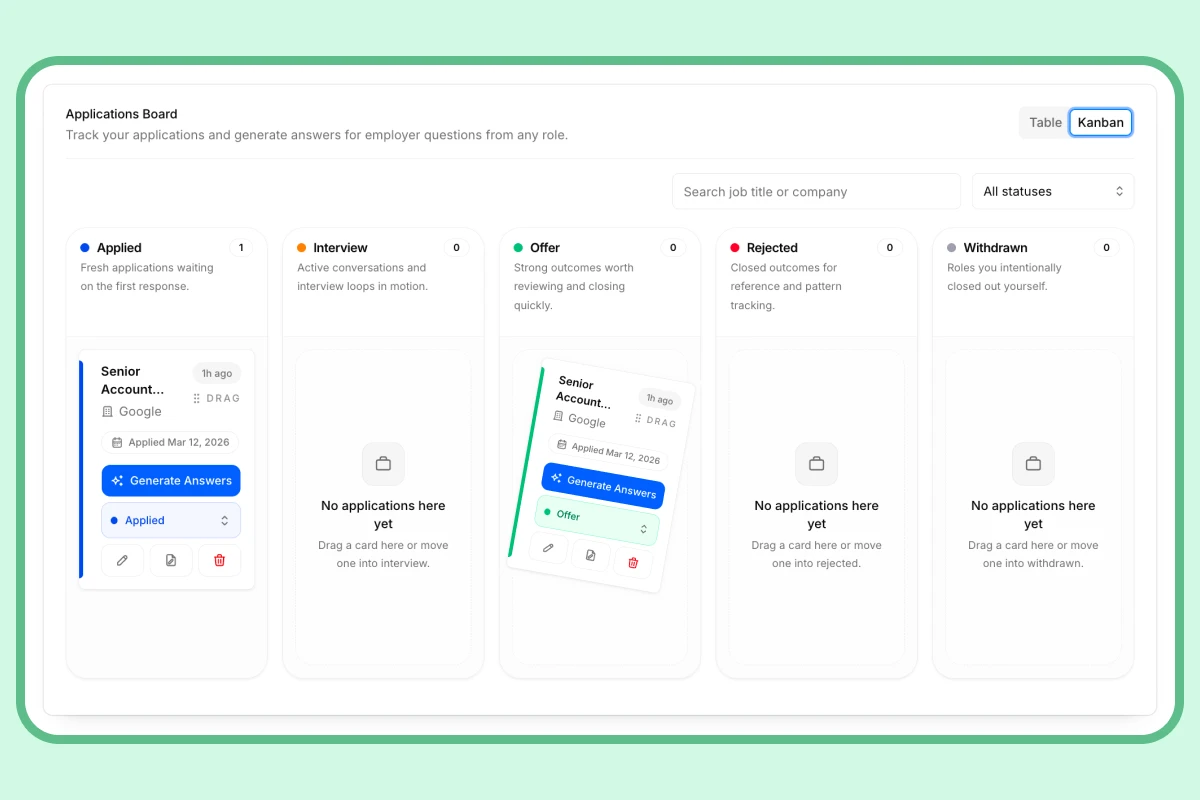
Application Tracker
Applying to 10+ jobs? You need a real system.
No more spreadsheets or lost threads. Track every role, stage, deadline, and follow-up in one dashboard — so you always know exactly where you stand.
What Are Examples for Different Interview Formats (Phone, Video, In-Person)?
The core principles of your response remain consistent, but you should tailor specifics to the interview format. The table below outlines key adjustments for each type.
| Interview Format | Key Elements to Include in Your Response |
|---|---|
| Phone Interview | Confirm the phone number they should call (provide yours if not stated), mention you will be in a quiet environment, and ask for the name/title of the caller if not provided. |
| Video Interview (Zoom, Teams, etc.) | Confirm you have the necessary software installed, request the meeting link if not included, and state you will join promptly. |
| In-Person Interview | Confirm the office address, ask about parking/check-in procedures, and inquire if you need to bring any identification for security. |
Example for Confirming a Video Interview:
...I confirm my availability for the video interview on [Date] at [Time]. I have [Software, e.g., Microsoft Teams] installed and ready. If you could please share the meeting link at your convenience, I would appreciate it.
I look forward to speaking with you virtually.
Adapting Your Response for Different Senders (HR vs. Hiring Manager)
While professionalism is universal, you can slightly nuance your tone based on who sent the email.
- From a Recruiter/HR Coordinator: Your response can be slightly more formal and focused on logistics. They are often managing many candidates, so clarity and brevity are appreciated.
- From the Hiring Manager/Direct Supervisor: Your tone can reflect more direct enthusiasm for the role and team. It's an opportunity to subtly reiterate your interest in their specific work. You might ask a concise, insightful question about the team's current projects (if appropriate).
What Tips Make Your Job Interview Email Responses Professional?
Beyond the templates, these nuanced practices elevate your communication from good to exceptional.
- Use a Professional Email Address: Your correspondence should come from an address based on your name (e.g., first.last@domain.com). Avoid casual or outdated addresses.
- Mirror the Sender's Tone: If the initial email is formal, be formal. If it's slightly more casual from a startup founder, you can adjust slightly while remaining professional. This shows cultural awareness.
- Proofread, Then Proofread Again: Spelling the hiring manager's name wrong or having typos is an avoidable mistake. Read your email aloud or use a tool to check before sending.
- Be Proactive About Scheduling: If the proposed time conflicts, respond immediately with 2-3 alternative windows you are available. This shows flexibility and initiative.
- Mobile Best Practices: If replying from a phone, ensure your email client is set to send from your proper address (not a mobile alias) and avoid auto-correct errors. Consider drafting in a notes app first.
- The Non-Negotiable Follow-Up: Sending a thank-you email within 24 hours of the interview is a critical final step. Reference specific topics discussed, reiterate your fit for the role, and thank each interviewer by name. This significantly influences hiring decisions.
Common Pitfalls to Avoid
- Overly Casual Language: Avoid slang, excessive exclamation points, or emojis in initial correspondence.
- Asking About Salary/Benefits Too Early: The interview confirmation email is for logistics. Save compensation discussions for the appropriate later stage.
- Being Vague About Availability: "I'm free next week" is unhelpful. Provide specific days and times.
- Forgetting to Attach Requested Materials: If they asked for a work sample or references, attach them or confirm they are on the way.
- Ignoring the Post-Interview Thank You: This is a major missed opportunity to stay top-of-mind.
By treating your interview email response as a key component of your candidacy, you project competence and consideration from the very first interaction. Remember, this communication is not just administrative—it's the continuation of your personal pitch. Mastering these steps ensures you make a polished, professional impression at every touchpoint.
Explore this category
Interview Prep
Browse the full interview prep category for more related playbooks, examples, and tactical guides.
Browse Interview Prep articles →One workflow. Resume to offer.
Build ATS-ready resumes, track every application, and practice interviews — all in one place. Free to start, no credit card needed.
✓ Free plan forever · ✓ No card needed
Related articles
How to Follow Up on a Job Interview: Timeline, Email Examples, and Tips
Wondering how to follow up on a job interview? Use this step-by-step guide to send a strong thank-you email, time your next check-in, and communicate professionally after the interview.
How Do You Sell Yourself During an Interview: A Pragmatic Playbook
Selling yourself in an interview isn't about boasting; it's a strategic process of aligning your proven skills with the employer's needs. This playbook provides the concrete frameworks, scripts, and preparation tactics you need to communicate your value with confidence and authenticity.
How to Answer What Are Your Greatest Strengths in an Interview
Learn how to answer "What are your greatest strengths?" with a concise, tailored response that highlights relevant skills, proves them with examples, and shows fit for the job.