





Preparing for situational interview questions can help you sound calm, thoughtful, and ready for the challenges of the role. These questions are designed to test how you would respond to realistic workplace problems, from conflict on a team to competing deadlines or upset clients. For a neutral explanation of structured behavioral answers, MIT's STAR method overview is a useful reference.
In this guide, you’ll learn what situational questions are, how they differ from behavioral questions, how to use the STAR method, and how to answer common scenarios with confidence.
What Are Situational Interview Questions?
Situational interview questions are hypothetical questions that ask how you would handle a future work-related situation. Interviewers use them to evaluate your judgment, problem-solving skills, communication style, and alignment with the role.
A situational question usually starts with phrases like.
- What would you do if...
- How would you handle...
- Imagine a situation where...
- If you were faced...
For example:
- "What would you do if a teammate missed an important deadline?"
- "How would you handle an upset client?"
- "If you noticed an inefficient process, what would you do?"
The goal is not to find a single perfect answer. Instead, the interviewer wants to understand how you think, what you prioritize, and whether your approach fits the job.
Situational vs. Behavioral Interview Questions
Situational and behavioral interview questions sound similar, but they test different things.
| Feature | Situational Interview Questions | Behavioral Interview Questions |
|---|---|---|
| Time focus | Future-oriented | Past-oriented |
| Question style | "What would you do if...?" | "Tell me about a time when...?" |
| Evidence | Hypothetical thinking | Real experience |
| Purpose | Tests judgment and decision-making | Tests proven behavior and results |
Behavioral questions ask you to describe something you already did. Situational questions ask what you would do in a new scenario.
That said, both question types often use the same skills: communication, initiative, teamwork, and leadership. A strong interview preparation strategy should include practice with both.
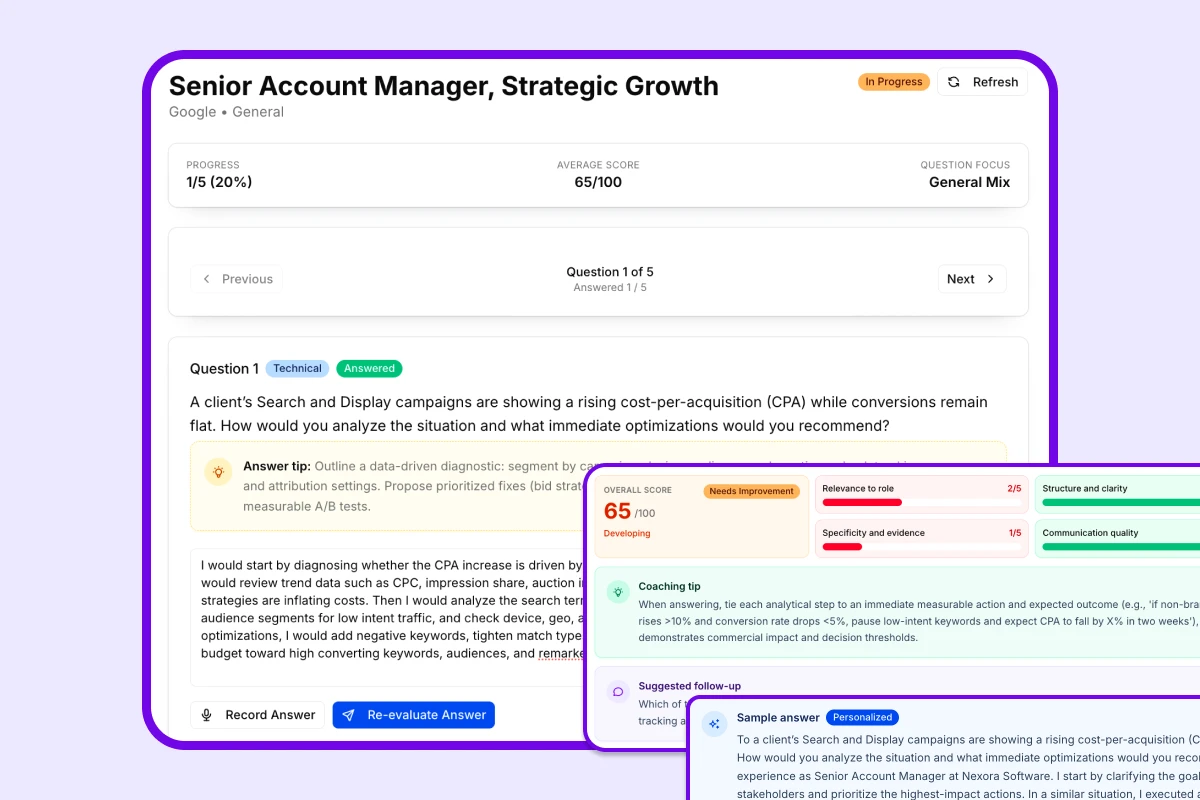
AI Interview Prep
Got the interview? Now make sure you're ready.
Practice the exact questions likely to come up for your target role. Get scored on clarity, structure, and relevance — so you walk in sharp, not winging it.
How to Answer Situational Interview Questions with STAR
The STAR method is one of the best ways to organize your answer.
- Situation: Briefly describe the scenario.
- Task: Explain your goal or responsibility.
- Action: Walk through the steps you would take.
- Result: Share the outcome you would expect and why.
Because situational questions are hypothetical, your STAR answer should sound realistic and practical. Focus on your decision-making process, not just the final result.
Simple STAR answer structure
- Restate the situation in one sentence.
- Define the main priority.
- Explain the specific actions you would take.
- End with the result you would aim for.
Example STAR response pattern
- Situation: A project is at risk because a teammate is behind.
- Task: Keep the project on track without damaging the relationship.
- Action: Talk privately, identify the cause, offer support, and escalate only if needed.
- Result: Resolve the issue early and protect the deadline.
Common Situational Interview Questions and Answers
Below are common situational interview questions examples grouped by skill area.
1. Conflict Resolution Situational Interview Questions
These questions assess how you handle tension, communication issues, and teamwork.
Question: What would you do if a coworker was not contributing their fair share on a project?
Answer: I would start with a private conversation to understand whether there was a workload issue, confusion about expectations, or a personal challenge affecting performance. My first goal would be to resolve the problem respectfully and keep the team moving forward. If needed, I would clarify responsibilities, offer help where appropriate, and make sure the deadline and expectations were understood. If the issue continued, I would bring it to my manager with a focus on the project impact rather than blame.
Why this works: It shows empathy, accountability, and a solution-first mindset.
Question: How would you handle a disagreement with a teammate about the best way to complete a task?
Answer: I would listen to their perspective, compare both approaches, and look for the option that best supports the team’s goal, timeline, and quality standards. If there were still disagreement, I would suggest using available data, team priorities, or manager guidance to make the decision.
2. Prioritization and Time Management Questions
These questions measure how well you handle pressure and competing demands.
Question: Your manager gives you three urgent tasks with the same deadline. What would you do?
Answer: I would first assess the scope, dependencies, and business impact of each task. Then I would speak with my manager as soon as possible to confirm which task should take priority or whether any deadlines can shift. After that, I would create a clear plan, break the work into steps, and communicate progress if anything changes. If help or delegation were possible, I would raise that as an option too.
Why this works: It shows you can prioritize logically instead of reacting emotionally.
Question: What would you do if you were falling behind on a project deadline?
Answer: I would review the remaining work, identify the root cause of the delay, and take action early. That might mean narrowing the scope, asking for support, or updating my manager before the deadline becomes a problem. I would focus on delivering the highest-value work first and keep communication transparent.
3. Problem-Solving and Initiative Questions
These questions test creativity, ownership, and analytical thinking.
Question: You notice a recurring process in your department is wasting time. What would you do?
Answer: I would document the current process, identify where the delays or inefficiencies are happening, and gather enough information to understand the impact. Then I would look for a practical improvement and test whether it could save time or reduce errors. Before making a formal recommendation, I would ask a few coworkers for feedback to make sure the idea would work in practice. Finally, I would present the proposal with a clear explanation of the benefits and a simple rollout plan.
Why this works: It shows initiative without assuming change should happen impulsively.
Question: What would you do if you were assigned to a project with unclear instructions?
Answer: I would ask clarifying questions right away so I could confirm the goal, timeline, and expected deliverables. If the instructions were still vague, I would summarize my understanding and ask for confirmation before starting. That would help prevent mistakes and save time later.
4. Customer Service and Client Relations Questions
These are common interview questions for roles that involve clients, patients, customers, or external partners.
Question: A client is angry about a mistake your company made. How would you respond?
Answer: I would stay calm, listen without interrupting, and acknowledge the client’s frustration. I would apologize for the mistake, ask questions to fully understand the issue, and explain what I could do next to help resolve it. I would also provide a realistic timeline and keep the client updated until the issue was fixed. Afterward, I would review what caused the error and what could prevent it in the future.
Why this works: It shows professionalism, empathy, and accountability.
Question: What would you do if a customer wanted something that was outside company policy?
Answer: I would explain the policy clearly and respectfully while looking for the closest possible solution. If there were an approved exception path, I would follow it. If not, I would focus on alternatives that still address the customer’s needs as much as possible.
5. Leadership and Decision-Making Questions
These questions are common for management, supervisory, and high-responsibility roles.
Question: What would you do if a team member disagreed with your decision?
Answer: I would invite their perspective and make sure they felt heard. If their feedback revealed a better option, I would be open to adjusting the plan. If I still believed my decision was the best one, I would explain the reasoning, the goals behind it, and how it supports the team’s priorities.
Question: How would you handle a mistake that affected your team’s work?
Answer: I would own the mistake quickly, explain the impact clearly, and take immediate steps to correct it. I would also communicate what I learned and what I would do differently to avoid repeating it.
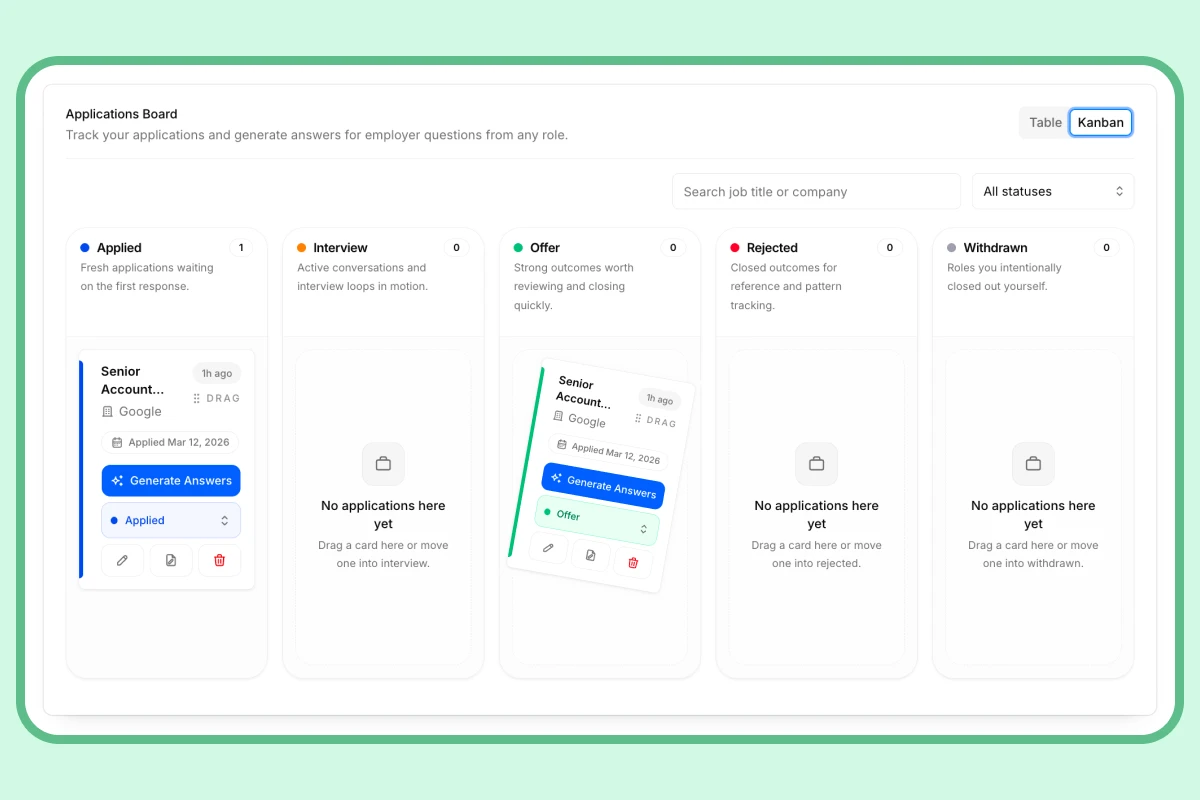
Application Tracker
Applying to 10+ jobs? You need a real system.
No more spreadsheets or lost threads. Track every role, stage, deadline, and follow-up in one dashboard — so you always know exactly where you stand.
More Situational Interview Questions Examples
Here are additional situational interview questions you may hear in a job interview:
- What would you do if two team members were in conflict?
- How would you handle a difficult deadline with limited resources?
- What would you do if you made a mistake that no one else noticed?
- How would you respond if a supervisor asked you to do something you believed was wrong?
- What would you do if you had to learn a new system quickly?
- How would you handle feedback you disagreed with?
- What would you do if a project changed direction halfway through?
- How would you respond if a client kept changing their requirements?
Practicing these types of questions can help you build flexible answers that sound natural during the interview.
Tips for Answering Situational Interview Questions Well
1. Be specific
Avoid vague answers like "I’d just handle it professionally." Instead, explain the exact steps you would take.
2. Show your reasoning
Interviewers want to understand how you think. Briefly explain why you would choose a certain action.
3. Stay positive
Even when the scenario involves conflict, mistakes, or pressure, keep your tone constructive.
4. Align with the role
Your answer should reflect the needs of the job. A customer-facing role may require more empathy, while a leadership role may require more decisiveness.
5. Practice out loud
Reading answers silently is not enough. Practice speaking so your responses sound confident and natural.
6. Use the company’s values when possible
If the organization emphasizes collaboration, ownership, or customer service, weave those ideas into your answer.
How to Prepare for Common Interview Questions
A strong interview prep routine should include more than memorizing sample answers.
- Review the job description for likely challenges.
- Think about the skills the employer values most.
- Write down 8 to 10 likely scenarios.
- Draft short STAR responses for each one.
- Practice answering in a conversational tone.
- Ask a friend or mentor to give feedback.
You can also pair this practice with behavioral interview questions, since many interviewers use both styles in the same conversation.
Final Thoughts on Situational Interview Questions
Situational interview questions are designed to reveal how you approach problems before they happen. When you prepare with the STAR method, focus on the role’s priorities, and answer with confidence, you give the interviewer a clear picture of how you think and work.
If you want better results, practice a variety of situational interview questions and answers before your next interview. The more familiar you are with common scenarios, the easier it becomes to respond with clarity, logic, and professionalism.
Explore this category
Interview Prep
Browse the full interview prep category for more related playbooks, examples, and tactical guides.
Browse Interview Prep articles →One workflow. Resume to offer.
Build ATS-ready resumes, track every application, and practice interviews — all in one place. Free to start, no credit card needed.
✓ Free plan forever · ✓ No card needed
Related articles
How Do You Sell Yourself During an Interview: A Pragmatic Playbook
Selling yourself in an interview isn't about boasting; it's a strategic process of aligning your proven skills with the employer's needs. This playbook provides the concrete frameworks, scripts, and preparation tactics you need to communicate your value with confidence and authenticity.
How to Answer What Are Your Greatest Strengths in an Interview
Learn how to answer "What are your greatest strengths?" with a concise, tailored response that highlights relevant skills, proves them with examples, and shows fit for the job.
Interview Question: Why Do You Feel You Are Qualified for This Position? Answer, Examples, and Tips
Discover what interviewers really want to hear, how to structure a confident answer, and how to use examples that prove you are qualified for the role.