






When an interviewer asks, "What can you bring to the company?" they want more than a list of strengths. They want to know whether you understand the role, whether your experience matches their needs, and whether you can explain your value clearly.
For related next steps, use common interview questions guide.
A strong answer should do three things.
- Show that you understand the company’s goals or challenges.
- Explain the most relevant skills, qualities, or experience you bring.
- Prove it with a specific example or result.
This guide will help you build a strong What Can You Bring to the Company answer with examples, a simple framework, and common mistakes to avoid.
What does "What can you bring to the company?" really mean?
This question is designed to evaluate several role-fit signals at once.
- Company knowledge: Have you researched the business and role?
- Self-awareness: Do you know your own strengths?
- Relevance: Can you connect your background to the job requirements?
- Communication: Can you explain your value in a concise, confident way?
- Fit: Would you work well with the team and culture?
In other words, the interviewer is asking: Why are you a good match for this role, and what value can you create here?
How to answer "What can you bring to the company?"
Use this 3-part structure:
1. Start with the company’s need
Begin by showing that you understand what the organization is trying to achieve.
You can refer to:
- a challenge mentioned in the job description
- a team priority
- a company goal or recent initiative
- a problem the role is meant to solve
Example:
"From the job description, it sounds like this team is focused on improving customer retention and streamlining communication across departments."
That opening tells the interviewer you did your research and are not giving a generic response.
2. Share your most relevant value
Next, name the skill, quality, or experience that directly supports that need.
You may want to combine:
- Hard skills: technical ability, tools, certifications, industry knowledge
- Soft skills: communication, adaptability, leadership, teamwork, problem-solving
Example:
"I can bring strong data analysis skills and a collaborative working style, which help me identify patterns quickly and turn them into practical solutions."
If the role is technical, emphasize hard skills first. If the role depends on teamwork, client communication, or leadership, highlight those strengths more heavily.
3. Prove it with a real example
The best What Can You Bring to the Company examples include evidence. A simple way to do this is with the STAR method:
- Situation: What was happening?
- Task: What needed to be done?
- Action: What did you do?
- Result: What changed?
Example:
"In my previous role, our team had low engagement with onboarding emails. I reviewed performance data, tested new subject lines and calls to action, and worked with the content team to improve the sequence. As a result, open rates increased by 20% and trial conversions improved by 12%. I would bring that same data-driven approach here."
That answer works because it is specific, relevant, and backed by results.
What Can You Bring to the Company answer: a simple formula
You can use this sentence pattern:
"I can bring [skill/quality] to help with [company need], and I’ve proven that by [example/result]."
Example formulas
- "I can bring strong project management skills to help keep cross-functional work on schedule, and I’ve used that approach to deliver multiple launches on time in my current role."
- "I can bring a customer-first mindset to help improve service quality, and I’ve used feedback data to increase satisfaction scores in a previous position."
- "I can bring analytical thinking and attention to detail to help improve reporting accuracy, and I’ve reduced errors in monthly dashboards by 30%."
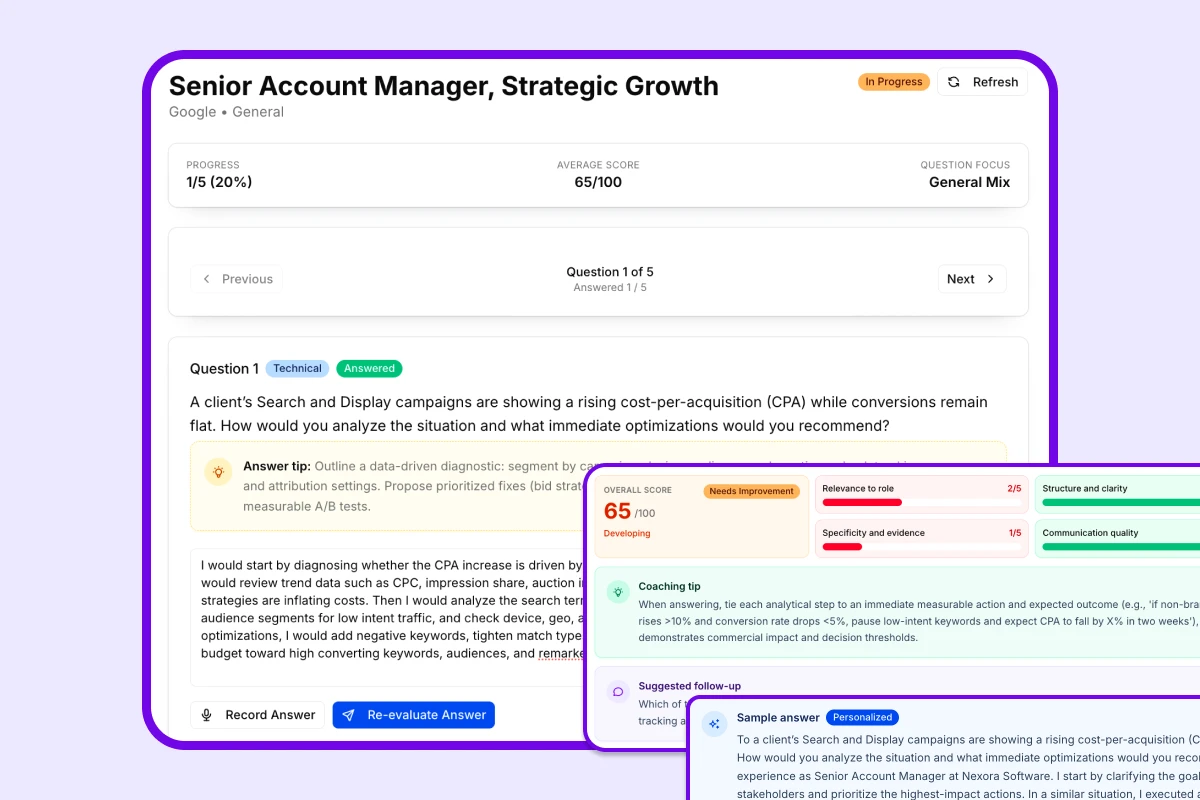
AI Interview Prep
Got the interview? Now make sure you're ready.
Practice the exact questions likely to come up for your target role. Get scored on clarity, structure, and relevance — so you walk in sharp, not winging it.
What Can You Bring to the Company examples
Here are a few sample answers you can adapt.
Example 1: Marketing role
"I can bring content strategy and analytics experience to help grow qualified leads. In my last role, I audited blog content, optimized our calls to action, and worked with the team to improve lead capture. That helped increase content-driven leads by more than 40% over six months."
Example 2: Customer support role
"I can bring strong communication skills and a calm problem-solving approach. In my previous job, I handled high-volume customer inquiries, resolved issues quickly, and helped improve our response process. That reduced repeat tickets and improved customer satisfaction."
Example 3: Entry-level candidate
"I can bring a strong willingness to learn, good organization, and the ability to work well with others. During my internship, I managed deadlines for a team project, helped organize research materials, and took feedback quickly. I’m confident I can apply that same reliability and adaptability here."
Example 4: Career changer
"I can bring transferable project management skills, clear communication, and a strong ability to adapt. In my previous career, I coordinated multiple stakeholders, managed competing priorities, and delivered projects on time. Those same strengths would help me contribute quickly in this role."
Interview answer tips for making your response stronger
Here are a few practical interview answer tips to keep in mind:
- Tailor your answer to the job. Use the job description as your guide.
- Keep it focused. One or two strengths are usually enough.
- Use evidence. Include a real example whenever possible.
- Be specific. Avoid vague phrases like "I’m a hard worker."
- Show confidence, not arrogance. State your value clearly without exaggeration.
- Match the role level. Entry-level answers can use school, volunteer, or internship examples.
How to research before you answer
Before the interview, spend time identifying the company’s main priorities.
Look at:
- the job posting
- the company website
- recent news or product updates
- LinkedIn posts or press releases
- the team’s goals or mission
Then ask yourself:
- What problem is this role meant to solve?
- What skills are mentioned most often?
- What results would matter most in this position?
- Which of my experiences best match those needs?
This research makes your answer sound intentional instead of rehearsed.
What if you don’t have direct experience?
If you’re early in your career or changing fields, focus on transferable strengths.
You can draw from:
- academic projects
- internships
- volunteer work
- freelance work
- leadership roles in clubs or organizations
- personal projects
The key is to show that you can learn quickly, adapt, and contribute value even if your background is not a perfect match.
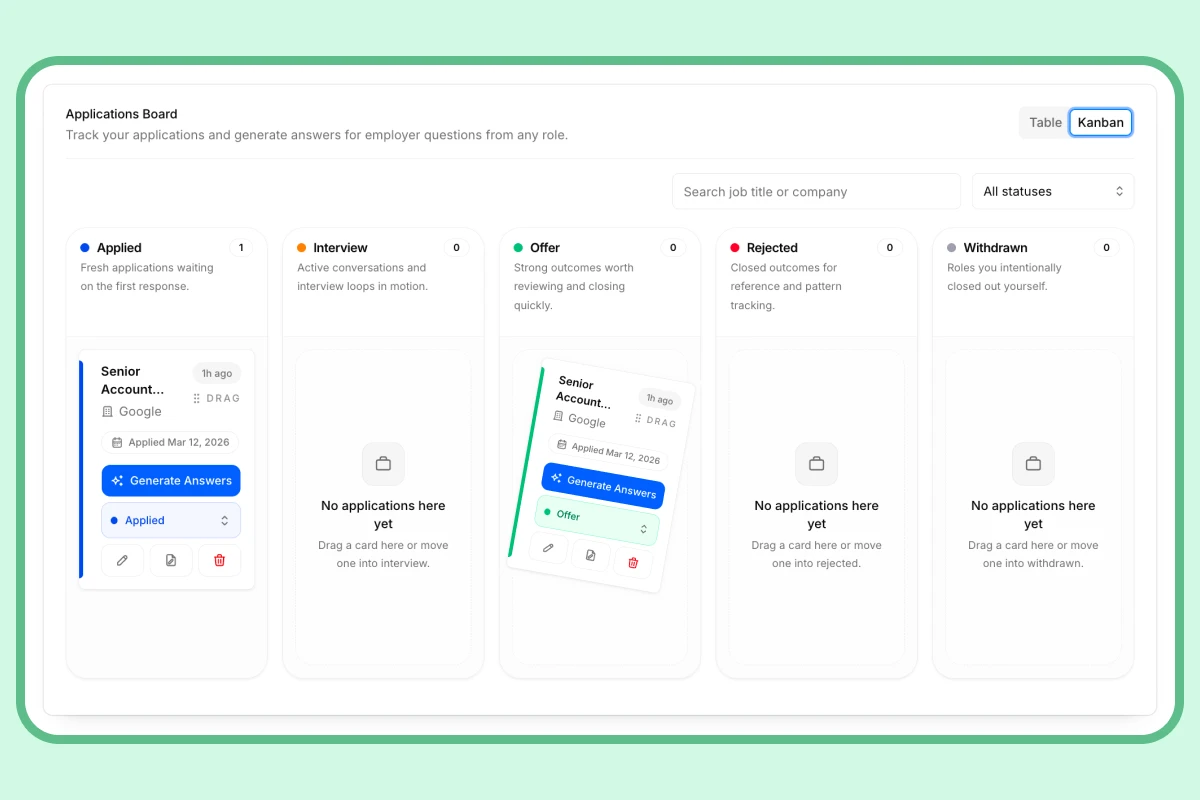
Application Tracker
Applying to 10+ jobs? You need a real system.
No more spreadsheets or lost threads. Track every role, stage, deadline, and follow-up in one dashboard — so you always know exactly where you stand.
Common mistakes to avoid
Avoid these pitfalls when answering What can you bring to the company?
- Being too generic: “I’m a team player.”
- Talking only about what you want: focus on what you offer.
- Listing skills without context: always connect them to the role.
- Giving a long, unfocused answer: keep it concise and relevant.
- Using no examples: proof matters.
- Sounding overly rehearsed: your answer should feel natural.
What if the question is phrased differently?
Interviewers may ask a variation of the same question. Your answer can stay similar, but the emphasis may change.
"What skills can you bring to the company?"
Focus more on technical or role-specific abilities.
"What qualities can you bring to the team?"
Focus more on communication, collaboration, reliability, or adaptability.
"How can you be an asset to our company?"
Emphasize results, efficiency, and impact.
"Why should we hire you?"
Combine your strengths with a brief explanation of why you stand out from other candidates.
Sample answer structure you can use
Here’s a simple template:
"From my research, I understand that this role needs someone who can help with [company goal or challenge]. I can bring [skill or quality] that would support that goal, and I’ve used that strength before when [brief example]. The result was [measurable outcome], and I’d be excited to bring that same approach here."
Final checklist before your interview
Before you answer, make sure you can identify:
- the company’s main need
- your most relevant skill
- one supporting quality
- one example with a result
If you can do those four things, you’ll have a much stronger answer.
Final thoughts
The best answer to "What can you bring to the company?" is not a list of traits. It is a clear connection between the employer’s needs and your proven ability to help.
If you can show that you understand the role, offer relevant strengths, and back them up with real results, you’ll sound prepared, credible, and valuable.
That is exactly what interviewers want to hear.
Explore this category
Interview Prep
Browse the full interview prep category for more related playbooks, examples, and tactical guides.
Browse Interview Prep articles →One workflow. Resume to offer.
Build ATS-ready resumes, track every application, and practice interviews — all in one place. Free to start, no credit card needed.
✓ Free plan forever · ✓ No card needed
Related articles
Interview Question: Why Do You Feel You Are Qualified for This Position? Answer, Examples, and Tips
Discover what interviewers really want to hear, how to structure a confident answer, and how to use examples that prove you are qualified for the role.
Interview Question: Why Should We Hire You for This Position? Answer Guide
Use this guide to build a strong answer to "Why should we hire you for this position?" with a simple framework, practical examples, and tips for tailoring your response to the role and company.
Why Are You Applying for This Position? Answer Examples and Interview Tips
"Why Are You Applying for This Position?" is one of the most common interview questions—and one of the easiest to answer well with the right structure. This guide explains what employers are really asking, gives a proven answer formula, and shares examples plus interview answer tips you can adapt for your own background.