





The What Is Your Weakness Interview Question is one of the most common interview questions because it reveals more than a candidate’s flaw. It shows how you think about self-awareness, accountability, and growth.
For related next steps, use common interview questions guide, behavioral interview questions guide, situational interview questions guide, professional introduction examples, greatest strengths answer guide, teamwork interview answer guide, and salary expectations answer guide.
A weak answer can sound evasive, rehearsed, or unconvincing. A strong answer, on the other hand, shows that you can reflect honestly, learn quickly, and improve over time, which is also the core of answering broader strengths and weaknesses questions.
This guide covers:
- Why interviewers ask this question
- How to structure your response
- What weaknesses are safe to mention
- What weaknesses to avoid
- What are common mistakes to avoid
- Examples for different roles and industries
- How to practice your answer for job interview preparation.
What does the interviewer really want to know?
When an interviewer asks about your weakness, they are usually not looking for a deal-breaker. They want to understand whether you can.
- Evaluate yourself honestly
- Take responsibility for growth areas
- Stay coachable under pressure
- Communicate clearly about challenges without sounding defensive.
In other words, this question is less about the weakness itself and more about how you respond to it.
How should you answer the weakness interview question?
The best answers follow a simple three-step structure:
- Name a real weakness that is genuine but not essential to the role.
- Explain the impact briefly so the interviewer sees that you understand it.
- Share the actions you are taking to improve or manage it.
This approach keeps your answer honest while also showing progress.
A simple framework you can use
You can think of your response as:
Weakness + Action + Result
Example:
“One area I’ve worked on is delegation. Early in my career, I sometimes kept too many tasks for myself because I wanted to make sure everything was done well. I realized that was limiting both my own time and my team’s development, so I started assigning work earlier, using clearer task ownership, and checking in at key milestones instead of managing every detail. That has helped me build stronger team trust and keep projects moving more efficiently.”
What are good weaknesses to mention in an interview?
The best weaknesses are:
- Real, not fake
- Manageable, not disqualifying
- Relevant to professional growth
- Already being improved
Here are several What Is Your Weakness Interview Question examples you can adapt.
1. Public speaking
Example:
“I used to feel uncomfortable speaking in front of large groups, especially when I did not know the audience well. To improve, I started volunteering to present in smaller meetings first and joined a speaking group to build confidence. That practice has made me much more comfortable leading presentations.”
2. Delegation
Example:
“I used to take on too many tasks myself because I wanted to be certain everything was done correctly. Over time, I learned that delegating earlier helps the team grow and improves overall efficiency. Now I use clearer task ownership and check-in points to stay aligned without micromanaging.”
3. Overcommitting
Example:
“Because I like being helpful, I used to say yes too quickly to additional requests. That sometimes stretched my time too thin. I now review priorities before committing and use a simple planning system to make sure I’m protecting my core responsibilities.”
4. Technical depth in a new tool or platform
Example:
“My background is stronger in one set of tools than another, so I’ve had to build confidence in a newer platform. I’ve already started taking training and practicing on small projects so I can close that gap quickly.”
5. Giving feedback
Example:
“Early in my career, I found it difficult to give direct feedback because I didn’t want to create tension. I’ve learned that clear feedback is important for performance and trust, so I now prepare specific examples and focus on solutions when I have those conversations.”
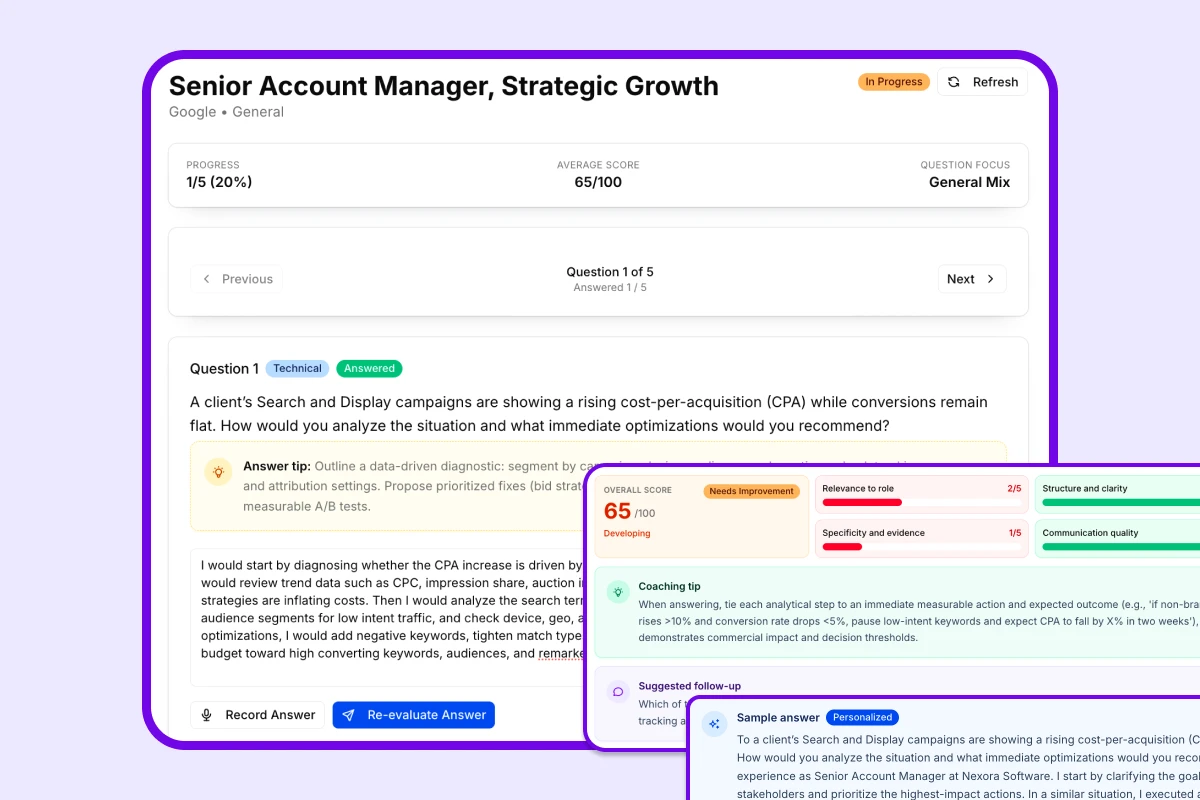
AI Interview Prep
Got the interview? Now make sure you're ready.
Practice the exact questions likely to come up for your target role. Get scored on clarity, structure, and relevance — so you walk in sharp, not winging it.
What are the best weakness interview question tips?
Use these What Is Your Weakness Interview Question tips to make your response stronger:
- Choose a weakness that will not damage your fit for the role
- Keep your answer short and focused
- Show that the weakness is under active improvement
- Use a specific example rather than a vague statement
- Sound calm and confident, not defensive
- End on progress, not apology
What are common mistakes to avoid?
If you want a strong answer, it helps to know what are common mistakes to avoid.
1. Saying a fake weakness
Avoid answers like:
- “I’m a perfectionist.”
- “I work too hard.”
- “I care too much.”
These often sound rehearsed and can make you seem evasive.
2. Naming a core job skill
If the role requires strong attention to detail, don’t say attention to detail is your weakness. If the job requires coding, don’t say you struggle with coding.
3. Choosing a major character issue
Avoid weaknesses that suggest poor reliability or poor judgment, such as chronic lateness, laziness, or inability to work with others.
4. Giving no improvement plan
A weakness without action sounds like a current problem, not a growth area.
5. Talking too long
The answer should be clear and concise. If you over-explain, the weakness can become the focus.
What are weakness interview question examples by role?
Tailoring your answer to the role makes it more credible.
For tech or engineering roles
Example:
“I sometimes spend too long refining a solution when a simpler version would be enough for the first release. To manage that, I now time-box early development and check scope with stakeholders sooner.”
For sales or marketing roles
Example:
“In fast-moving campaigns, I used to focus on execution and let documentation lag behind. I’ve improved that by using templates and capturing notes in real time so I can stay organized without slowing down.”
For management or leadership roles
Example:
“I can be very action-oriented, which sometimes means I move too quickly at the start of a project. I’ve gotten better by building in a review step and asking for broader input before making major decisions.”
For customer-facing roles
Example:
“I used to internalize difficult customer interactions more than I should have. I’ve learned to separate the issue from the emotion and focus on resolution, which helps me stay calm and effective.”
How can you prepare your answer for job interview preparation?
Strong preparation makes the response feel natural.
- Pick two or three possible weaknesses relevant to your background.
- Write a short answer for each one using the Weakness + Action + Result structure.
- Practice aloud so it sounds conversational.
- Trim unnecessary detail until the answer is focused.
- Prepare a follow-up example in case the interviewer asks for more detail.
The goal is not to memorize a script. The goal is to sound thoughtful, honest, and ready.
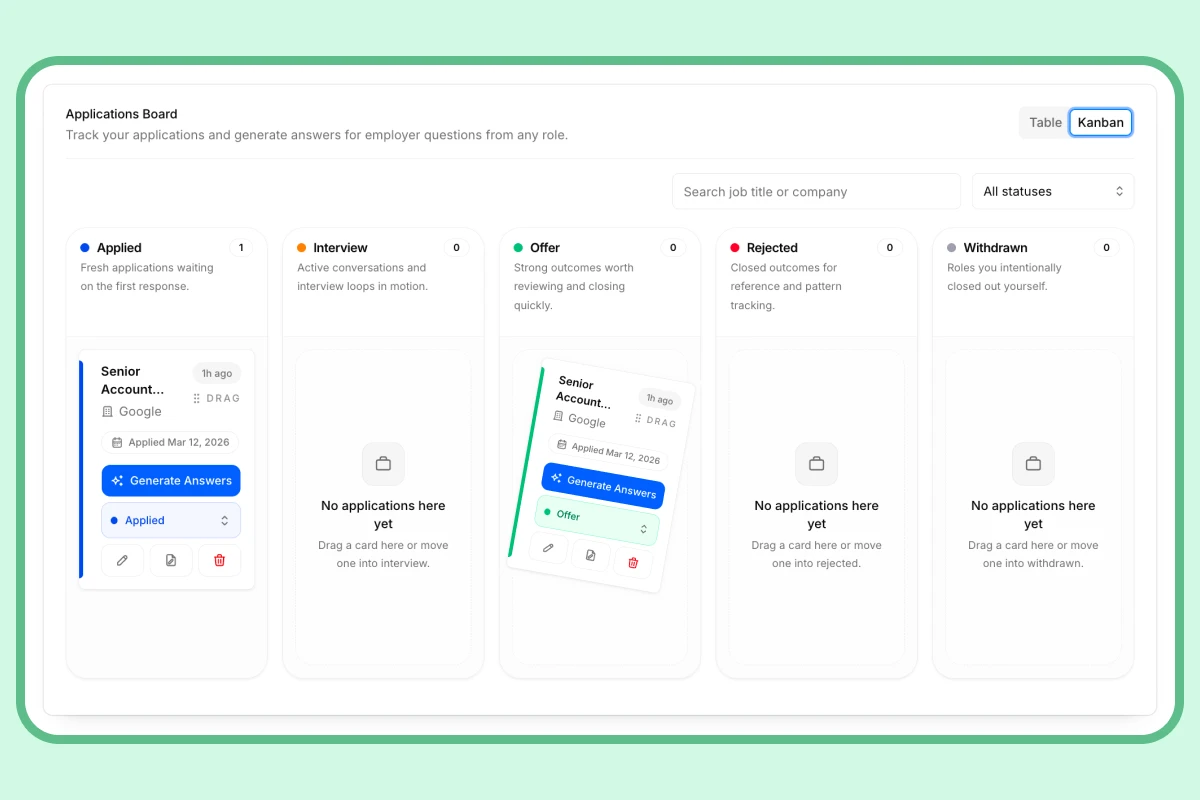
Application Tracker
Applying to 10+ jobs? You need a real system.
No more spreadsheets or lost threads. Track every role, stage, deadline, and follow-up in one dashboard — so you always know exactly where you stand.
How long should your answer be?
A good answer is usually 30 to 60 seconds. That gives you enough time to explain the weakness and the improvement plan without losing the interviewer’s attention.
If the interviewer asks for more detail, then you can expand with a second example.
Can you use the same weakness for every interview?
You can reuse a weakness if it still fits the role and still sounds genuine. However, the best answers are tailored.
For example, a weakness about public speaking may work well for a technical role, while a weakness about overcommitting may be more relevant in a fast-paced team environment.
What is the best way to finish your answer?
End with progress.
A strong closing might sound like this:
“I’m still working on it, but I’ve made clear progress by using specific systems and feedback to improve.”
That keeps the answer forward-looking and confident.
FAQ: What Is Your Weakness Interview Question
What is a good weakness to mention in a job interview?
A good weakness is real, manageable, and not central to the job. Examples include public speaking, delegation, overcommitting, or adjusting to a new tool.
How do you structure an answer to "What is your greatest weakness?"
Use a simple format: state the weakness, explain its impact briefly, and describe the steps you are taking to improve.
What are common mistakes to avoid when discussing weaknesses?
Avoid fake weaknesses, core job-skill gaps, personality red flags, and answers that do not include an improvement plan.
Can you give examples of weaknesses with improvement strategies?
Yes. A weakness like delegation can be paired with clearer task ownership, milestone check-ins, and trust-building with the team. Public speaking can be improved through practice, training, and small-group presentations.
Why do interviewers ask about your weaknesses?
They want to understand your self-awareness, accountability, communication style, and willingness to grow.
Final takeaways
The What Is Your Weakness Interview Question is really a test of how well you understand yourself and how you handle growth. The strongest answers are honest, specific, and improvement-focused.
Before your next interview, prepare one weakness, one example, and one clear improvement plan. That simple preparation can turn a stressful question into a strong interview moment.
Explore this category
Interview Prep
Browse the full interview prep category for more related playbooks, examples, and tactical guides.
Browse Interview Prep articles →One workflow. Resume to offer.
Build ATS-ready resumes, track every application, and practice interviews — all in one place. Free to start, no credit card needed.
✓ Free plan forever · ✓ No card needed
Related articles
How Do You Answer Tell Me About Yourself in an Interview? A Practical Guide
Answer "Tell me about yourself" with confidence using a simple Present-Past-Future framework, 60-90 second timing, and role-specific examples that fit the job.
Interview Question: Why Do You Feel You Are Qualified for This Position? Answer, Examples, and Tips
Discover what interviewers really want to hear, how to structure a confident answer, and how to use examples that prove you are qualified for the role.
Interview Question: Why Should We Hire You for This Position? Answer Guide
Use this guide to build a strong answer to "Why should we hire you for this position?" with a simple framework, practical examples, and tips for tailoring your response to the role and company.