





A short cover letter is a focused, one-page introduction that connects your resume to the job you want. When hiring managers are reviewing many applications, a clear and tailored letter can help you stand out for the right reasons. In this guide, you’ll find short cover letter examples, writing tips, formatting guidance, and practical advice for customizing your message for each role.
For related next steps, use job search checklist and strategic job search plan.
What Is a Short Cover Letter?
A short cover letter is typically 250-400 words and is designed to complement your resume, not repeat it. Its job is to explain why you want the position, why you want to work for that company, and why your background makes you a strong fit. Instead of listing every accomplishment, it should highlight the most relevant experience, skills, and achievements.
A strong short cover letter does three things.
- Introduces you and names the role you want
- Connects your experience to the employer’s needs
- Ends with a professional call to action.
Short Cover Letter Examples: A Basic Structure to Follow
Most short cover letters work best when they stay simple and easy to scan. A standard structure includes a header, a salutation, three short body paragraphs, and a professional closing.
1. Header and Salutation
Include your contact information at the top, followed by the date and the employer’s details when available. If possible, address the letter to a specific hiring manager by name. If you cannot find a name, use a professional alternative such as "Dear Hiring Manager," or "Dear Marketing Team,".
Avoid generic openings like "To Whom It May Concern."
2. Opening Paragraph
Your opening should clearly state:
- The job title
- The company name
- How you found the role
- One sentence that previews your main qualification or enthusiasm
Short cover letter example opening:
Dear Hiring Manager,
I am excited to apply for the Marketing Coordinator position at BrightPath, which I found on your careers page. With three years of experience supporting digital campaigns and improving engagement across social media channels, I believe I can contribute to your team’s growth goals.
3. Middle Paragraphs
Use the middle section to connect one or two of your strongest qualifications to the job description. This is where many applicants lose focus by repeating their resume. Instead, give one or two specific examples that show how your experience matches the role.
Short cover letter example body:
In my previous role, I helped coordinate a product launch that required collaboration across marketing, design, and sales teams. By managing deadlines, tracking deliverables, and communicating clearly with stakeholders, I helped keep the project on schedule and improved campaign consistency. I am especially drawn to BrightPath’s focus on customer-centered messaging, and I would bring the same attention to detail and collaboration to this position.
4. Closing Paragraph
Finish by reinforcing your interest, thanking the reader, and inviting the next step.
Short cover letter example closing:
Thank you for considering my application. I would welcome the opportunity to discuss how my background in digital marketing and project coordination could support your team. I look forward to speaking with you.
5. Professional Sign-Off
Use a simple closing such as:
- Sincerely,
- Best regards,
- Kind regards,
Then add your full name.
Short Cover Letter Examples for Different Situations
The best short cover letter examples adapt to the applicant’s background. Below are ways to shape your message for common scenarios.
Example for an Entry-Level Applicant
If you have limited work experience, focus on transferable skills from school, volunteer work, internships, or extracurricular activities.
I recently completed a communications degree with hands-on experience in research, presentation design, and team projects. Through student leadership and volunteer work, I developed strong organization and communication skills that would help me succeed in a fast-paced office environment.
Example for a Career Change
If you are changing careers, emphasize transferable strengths and explain why the new role is a logical next step.
While my background is in customer support, I have developed strong problem-solving, communication, and account management skills that translate well to this sales support role. I am eager to bring my experience working with clients and internal teams into a position where I can contribute to business growth.
Example for Someone With No Paid Experience
If you do not have paid experience, you can still write a compelling short cover letter by highlighting projects, volunteer work, coursework, and personal initiatives.
Although I do not yet have paid experience in this field, I have built relevant skills through academic projects, volunteer coordination, and independent learning. These experiences taught me how to collaborate, manage deadlines, and adapt quickly to new tools and responsibilities.
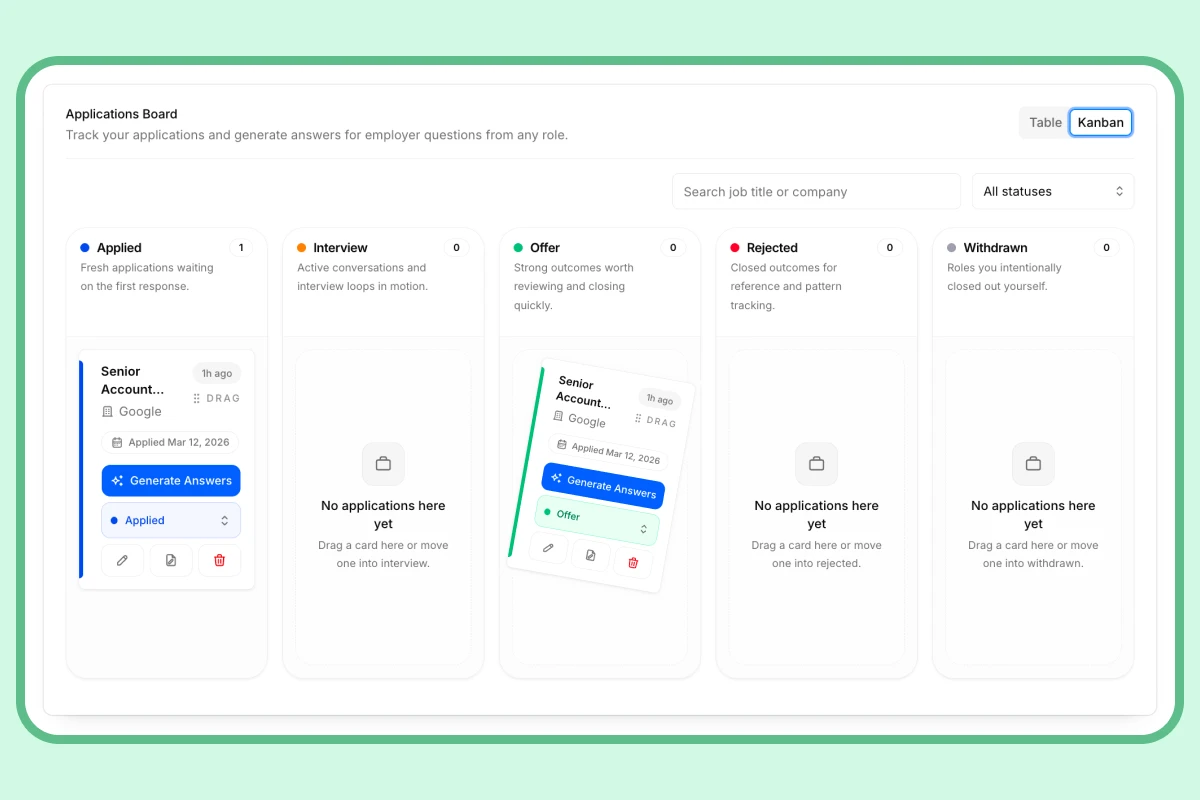
Application Tracker
Applying to 10+ jobs? You need a real system.
No more spreadsheets or lost threads. Track every role, stage, deadline, and follow-up in one dashboard — so you always know exactly where you stand.
Short Cover Letter Examples: Tips for Writing Better Content
A strong short cover letter depends on clarity and relevance. These short cover letter tips will help you create a more effective version.
Match the Job Description
Use the employer’s language when describing your experience. If the posting asks for project management, communication, or data analysis, include those terms naturally where they fit.
Focus on Results
Whenever possible, show the impact of your work. Numbers, outcomes, and measurable improvements make your letter more persuasive.
Example:
- Instead of: "I helped with social media."
- Try: "I increased social media engagement by 30% through a revised posting schedule and clearer audience targeting."
Keep the Tone Professional but Natural
A short cover letter should sound confident and polished without sounding stiff. Write in clear, direct sentences and avoid unnecessary filler.
Show You Did Your Research
Mention something specific about the company, such as a product, mission, recent initiative, or value that connects to your background.
Example:
I was especially interested in your focus on sustainable packaging, which aligns with my background in operations and process improvement.
Customize Every Letter
Even the best short cover letter examples only work if you tailor them. Change the job title, company name, skills, and examples for each application.
What Should You Include in a Short Cover Letter?
To make your letter complete and effective, include these key elements:
- Your contact information
- The date and employer contact details
- A personalized salutation
- The specific job title and company name
- One or two relevant qualifications
- Evidence of research about the company
- A professional closing and call to action
What Should You Avoid in a Short Cover Letter?
Even strong candidates make avoidable mistakes. Common issues include:
- Repeating the resume word for word
- Using vague statements like "I’m a hard worker"
- Writing too much or going beyond one page
- Forgetting to tailor the letter for the role
- Addressing the wrong company or hiring manager
- Skipping proofreading for grammar and spelling errors
How Do You Write a Short Cover Letter With No Experience?
If you are early in your career, focus on what you do have rather than what you lack. Employers often value skills like teamwork, communication, problem-solving, and learning ability.
You can draw from:
- Class projects
- Volunteer work
- Internships
- Club leadership
- Part-time jobs
- Personal projects
Try to connect each example back to the role.
Example:
My volunteer work organizing community events strengthened my scheduling, communication, and problem-solving skills. I believe these abilities would help me contribute to your team’s daily operations and client support goals.
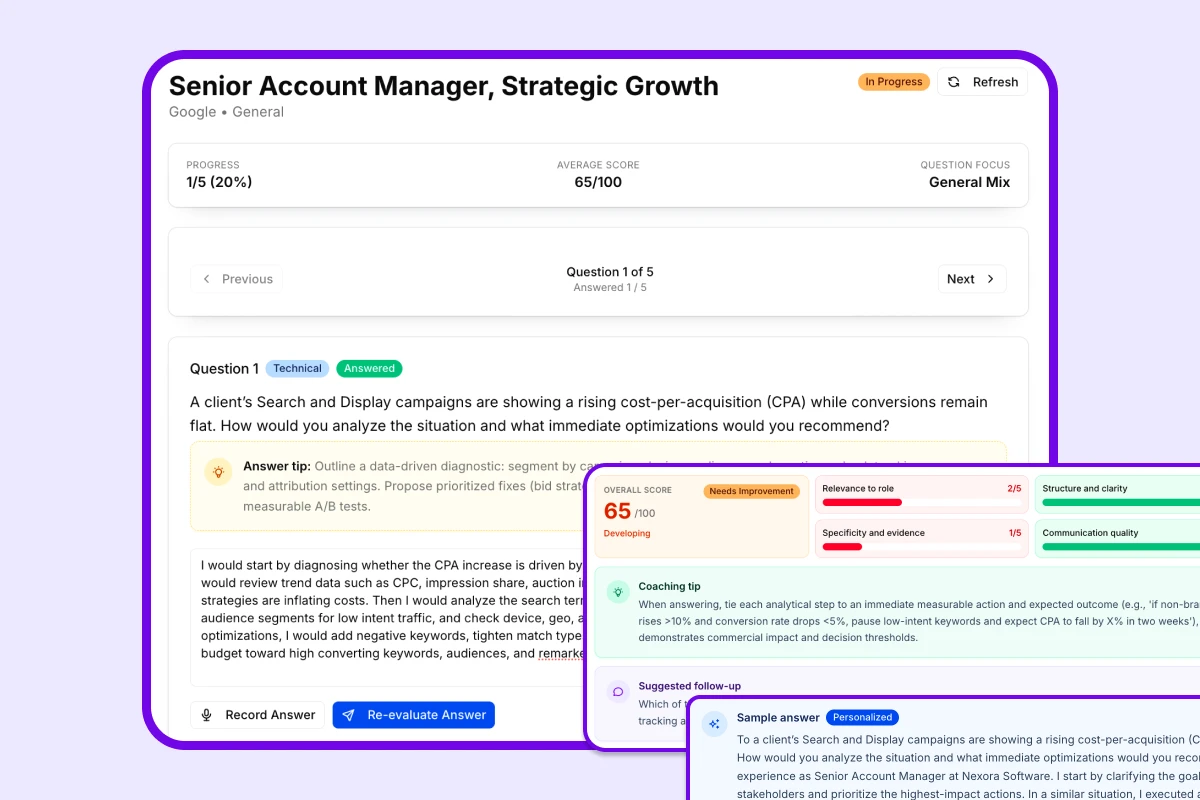
AI Interview Prep
Got the interview? Now make sure you're ready.
Practice the exact questions likely to come up for your target role. Get scored on clarity, structure, and relevance — so you walk in sharp, not winging it.
How Do You Customize a Short Cover Letter for Each Job?
Customization matters more than length. A short letter still needs to feel specific.
Use this quick process:
- Read the job description carefully
- Identify the top two or three required skills
- Choose one or two examples from your background
- Mention the company by name and include a relevant detail
- Edit the letter so every sentence supports the application
Is a Bullet List or Paragraph Better in a Cover Letter?
Most cover letters work best in paragraph form. Paragraphs create a smooth, professional flow and help you explain your fit in a concise narrative.
That said, bullets can be useful if you want to highlight a few key achievements in a very compact format. Use them sparingly and only if they improve readability.
What Is the Best Length for a Short Cover Letter?
A short cover letter should usually stay within one page and often lands around 250-400 words. If you can make your point clearly in fewer words, that is usually better.
The goal is not to say more. The goal is to say the right things well.
Final Checklist Before You Send
Before submitting your cover letter, check the following:
- Is the job title correct?
- Is the company name correct?
- Did I personalize the salutation?
- Did I show why I am a fit for this role?
- Did I avoid repeating my resume?
- Did I include a clear closing and call to action?
- Did I proofread for errors?
- Did I save the file as a PDF unless instructed otherwise?
Conclusion
Short cover letter examples can make the writing process easier, but the most effective cover letter is always tailored to the specific role. Keep it concise, focus on the employer’s needs, and use clear examples that show your value. With the right structure and a few strong details, you can write a short cover letter that feels professional, personal, and persuasive.
Explore this category
Job Applications
Browse the full job applications category for more related playbooks, examples, and tactical guides.
Browse Job Applications articles →One workflow. Resume to offer.
Build ATS-ready resumes, track every application, and practice interviews — all in one place. Free to start, no credit card needed.
✓ Free plan forever · ✓ No card needed
Related articles
Do You Need a Cover Letter? A 2025 Decision Framework
Do you need a cover letter? The answer depends on the job, the application system, and your goals. This guide explains when to submit one, when you can skip it, and how to write a strong cover letter fast.
How Long Should a Cover Letter Be? Word Count, Page Length, and Examples
A strong cover letter is usually 250-400 words, fits on one page, and uses 3-5 concise paragraphs. This guide explains the ideal length, when to adjust it, and how to avoid common mistakes.
How to Write a Cover Letter: The Ultimate Guide for 2026
Forget generic templates. This ultimate guide provides a clear framework for writing a cover letter that connects your skills directly to the job, highlights your achievements, and demonstrates genuine enthusiasm.