





A second interview is a strong signal that an employer is seriously considering you. At this stage, the conversation usually goes beyond basic qualifications and into your problem-solving approach, role-specific experience, communication style, and fit with the team. For a neutral preparation baseline, CareerOneStop's interview tips reinforce the same focus on examples, practice, and clear communication.
This guide covers common second interview questions along with example answers, question types to expect, and preparation tips that help you sound thoughtful, confident, and ready for the next step.
What to Expect in a Second Interview
The second interview is usually more detailed than the first. In many hiring processes, the first interview confirms baseline qualifications, while the second interview explores how you think, collaborate, and handle real work situations.
You may meet with a hiring manager, future teammates, department leaders, or senior decision-makers. The discussion may be more specific, more practical, and more focused on how you would perform in the role.
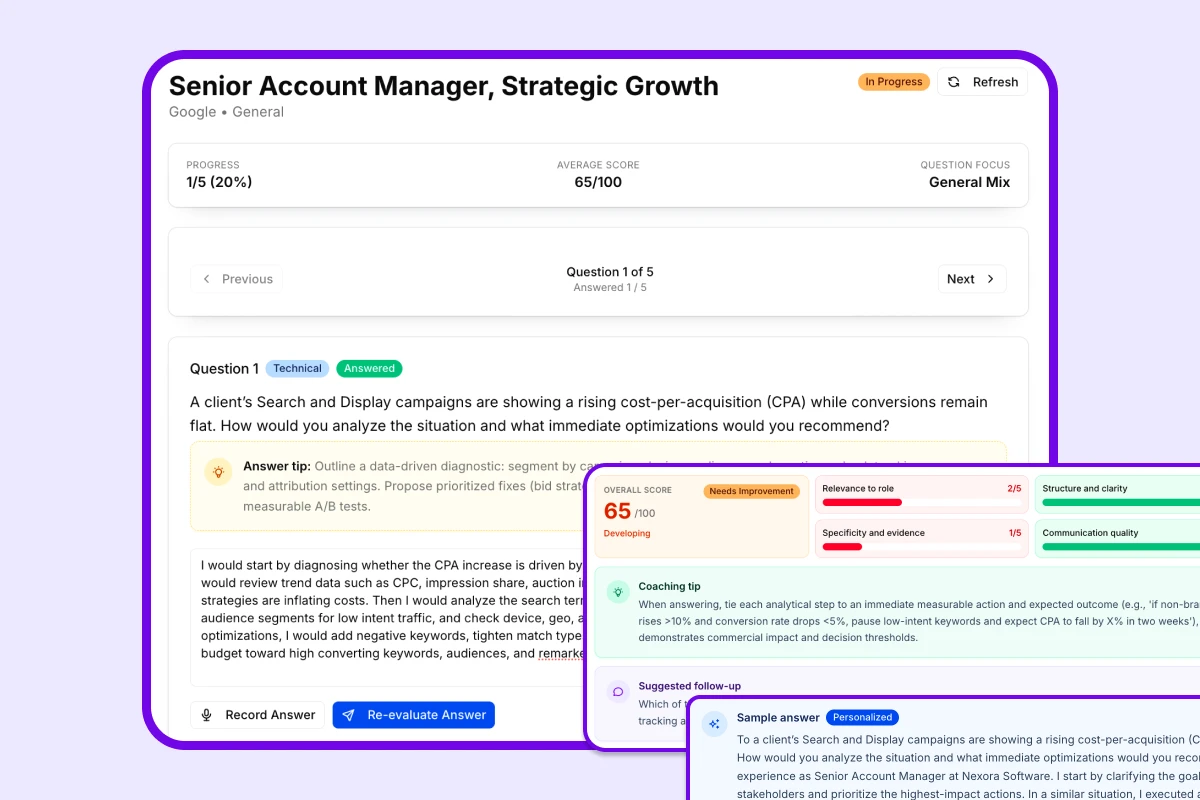
AI Interview Prep
Got the interview? Now make sure you're ready.
Practice the exact questions likely to come up for your target role. Get scored on clarity, structure, and relevance — so you walk in sharp, not winging it.
Common Second Interview Questions and How to Answer Them
Below are some of the most common second interview questions, including why employers ask them and how to shape a strong response.
1. Walk me through a complex project you managed from start to finish.
Why they ask: To evaluate your project management skills, ownership, decision-making, and ability to deliver results.
How to answer: Use the STAR method: Situation, Task, Action, Result. Keep your answer focused on what you did and what changed because of your work.
Example answer: "In my previous role, I led a customer database migration to a new cloud platform. The project had a tight deadline and affected several teams. My responsibility was to make sure the transition happened without data loss or extended downtime. I created a phased rollout plan, set weekly check-ins, and coordinated closely with engineering and operations. When we found a compatibility issue two weeks before launch, I helped organize a fast fix and kept stakeholders updated. We completed the migration on time, improved performance, and received positive feedback for the communication throughout the project."
2. How would you approach your first 90 days in this role?
Why they ask: To see whether you think strategically and understand how to create early impact.
How to answer: Break your response into clear phases: learn, contribute, and improve.
Example answer: "During the first 30 days, I’d focus on learning the team’s goals, workflows, and priorities. In days 31 to 60, I’d start contributing to active projects and look for ways to support the team’s immediate needs. By day 90, I’d aim to be fully integrated and delivering measurable value, whether that means improving a process, helping complete a priority project, or supporting a key team goal."
3. Tell me about a time you disagreed with a colleague or manager. How did you handle it?
Why they ask: To assess professionalism, conflict resolution, and emotional intelligence.
How to answer: Choose a real example with a constructive outcome. Focus on how you handled the disagreement, not just the conflict itself.
Example answer: "While working on a marketing campaign, a colleague and I had different views on the primary audience. Instead of debating in private, I suggested we each present our reasoning and supporting data to the team lead. After discussing both perspectives, we combined the best parts of each approach and ended up with a stronger audience strategy. It reinforced for me that respectful disagreement can lead to better decisions."
4. Why do you want to work here, and what about this role excites you?
Why they ask: To confirm your motivation and make sure your interest is specific and genuine.
How to answer: Connect your experience and goals to the company’s mission, work, or recent achievements. Avoid generic praise.
Example answer: "I’m interested in this company because of its focus on [specific value, product, or initiative]. I’ve been following your work on [specific project or announcement], and I’d love the chance to contribute to that kind of environment. This role especially appeals to me because it lets me use my experience in [skill] while growing in [related area], which fits well with my long-term goals."
5. What are your salary expectations?
Why they ask: To check whether your expectations align with the role and budget.
How to answer: Be ready with a researched range based on role, location, and experience.
Example answer: "Based on my experience and the scope of this role, I’d expect a salary in the range of [X to Y]. I’m open to discussing the full compensation package, including benefits and growth opportunities."
If you want to defer: "I’m very interested in the role and would love to understand the budgeted range for this position first."
More Common Second Interview Questions to Prepare For
Here are additional second interview questions examples you should be ready for:
6. What is your greatest strength for this role?
Why they ask: To identify the skill that will help you succeed most.
How to answer: Choose one strength, then back it up with a brief example.
7. What is a professional weakness you have worked on?
Why they ask: To see self-awareness and growth mindset.
How to answer: Share a real weakness, then explain what you’ve done to improve it.
8. How do you handle multiple priorities or tight deadlines?
Why they ask: To understand your organization and time management skills.
How to answer: Describe your process for prioritizing tasks, communicating early, and staying focused.
9. Tell me about a time you had to solve an unexpected problem.
Why they ask: To evaluate critical thinking and adaptability.
How to answer: Show how you assessed the issue, acted quickly, and learned from the outcome.
10. What would your previous manager or teammates say about you?
Why they ask: To learn how you work with others and how consistent your self-assessment is.
How to answer: Mention a few traits that others would likely describe, such as dependable, collaborative, or proactive.
A Quick Reference for Second Interview Question Types
| Question Type | What It Measures | Best Preparation Approach |
|---|---|---|
| Behavioral | Past performance, judgment, and communication | Prepare STAR stories for leadership, conflict, failure, and success |
| Situational | Problem-solving and decision-making | Practice thinking aloud and explaining your process clearly |
| Role-specific | Technical skill and practical knowledge | Review the job description and connect your experience to the responsibilities |
| Motivation and fit | Interest, values, and long-term alignment | Research the company, team, and recent business updates |
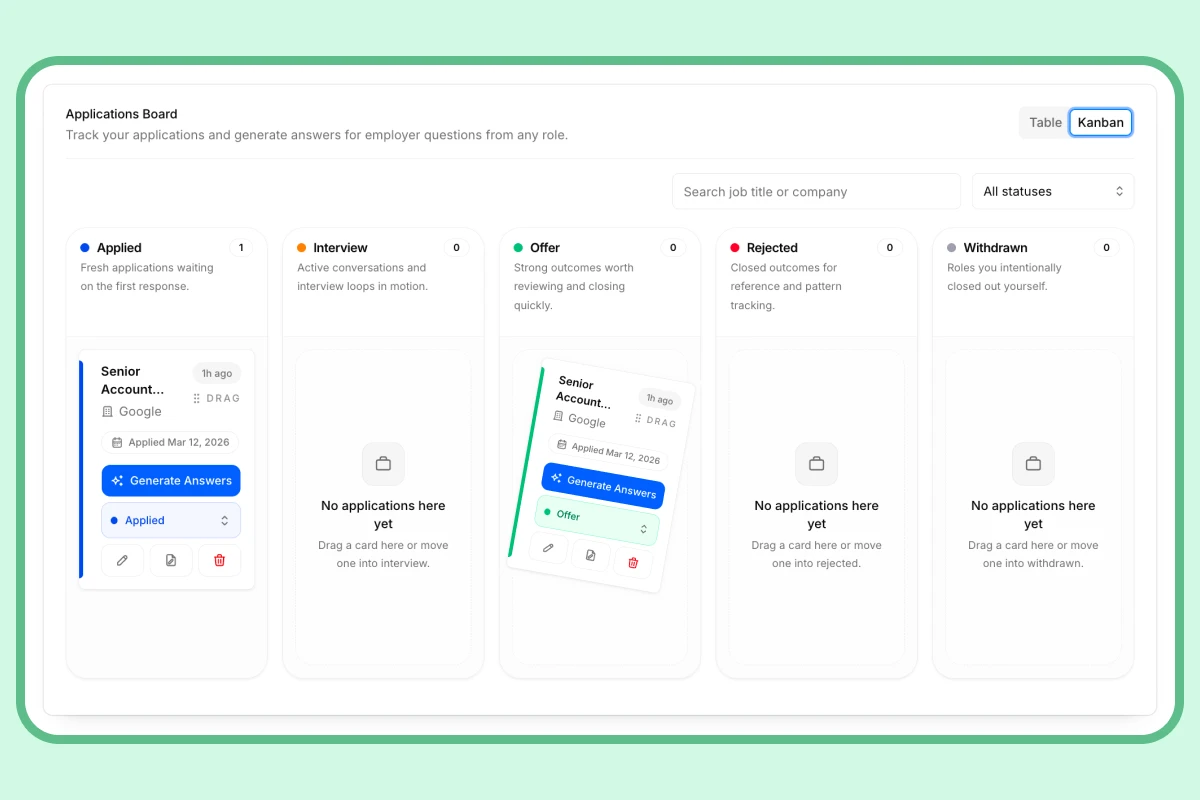
Application Tracker
Applying to 10+ jobs? You need a real system.
No more spreadsheets or lost threads. Track every role, stage, deadline, and follow-up in one dashboard — so you always know exactly where you stand.
How to Prepare for a Second Interview
Preparation for a second interview should go beyond memorizing answers. The goal is to show that you understand the role and can contribute quickly.
- Review your first interview. Write down what you discussed, any names you were given, and any themes that came up.
- Research the company more deeply. Look at recent news, leadership updates, products, and team priorities.
- Prepare STAR stories. Have several examples ready that show leadership, problem-solving, collaboration, and resilience.
- Practice answers out loud. Rehearsing helps you sound natural and confident.
- Prepare thoughtful questions. Ask about team goals, success metrics, challenges, and what the interviewer values most in the role.
Questions to Ask in a Second Interview
A second interview is also your chance to evaluate whether the role is right for you. Good questions can show interest and help you make a better decision.
Try asking:
- What would success look like in this role after 6 months?
- What challenges is the team currently facing?
- How does this role support the team’s biggest goals?
- What do you enjoy most about working here?
- How would you describe the team’s working style?
Final Tips for Acing the Second Interview
Second interviews often feel higher pressure because the company is narrowing its decision. The best way to stand out is to stay specific, relevant, and calm.
Focus on clear examples, thoughtful questions, and answers that show you understand the role beyond the surface level. If you can connect your experience to the company’s needs and explain how you would contribute, you’ll be in a strong position to move forward.
Answer-first summary: The best way to prepare for second interview questions is to practice structured answers for behavioral and situational prompts, research the company thoroughly, and show clear alignment with the role and team through concrete examples and thoughtful questions.
Explore this category
Interview Prep
Browse the full interview prep category for more related playbooks, examples, and tactical guides.
Browse Interview Prep articles →One workflow. Resume to offer.
Build ATS-ready resumes, track every application, and practice interviews — all in one place. Free to start, no credit card needed.
✓ Free plan forever · ✓ No card needed
Related articles
Interview Question: Why Do You Feel You Are Qualified for This Position? Answer, Examples, and Tips
Discover what interviewers really want to hear, how to structure a confident answer, and how to use examples that prove you are qualified for the role.
What Are Good Reasons to Hire Me? A Strategic Guide for Your Interview Answer
This guide provides a strategic framework to identify and articulate the most compelling reasons to hire you, moving beyond generic answers to deliver a targeted, confident response that connects your unique value directly to the employer's needs.
The Complete Guide to Behavioral Interview Questions: How to Prepare and Answer with Confidence
Behavioral interview questions are a critical part of the hiring process, designed to predict your future performance based on past experiences. This guide breaks down the most common types, provides actionable strategies for crafting compelling answers, and helps you turn interview anxiety into confidence.