






When an interviewer asks, "Why should we hire you?" they are handing you the microphone. It's your prime opportunity to synthesize your candidacy into a compelling, confident narrative. A generic answer won't suffice; you need a structured, persuasive argument built on concrete reasons that align directly with the role and company. This guide provides the strategic framework to construct that argument, moving beyond simple lists to deliver a targeted response that proves your unique value.
For related next steps, use common interview questions guide, behavioral interview questions guide, and situational interview questions guide.
Answer-First Summary: The Core of Your Response
Your answer should be a concise, powerful summary that connects your proven abilities to the employer's specific problems. It is not a restatement of your resume, but a tailored pitch. An effective response typically follows this formula: "You should hire me because I possess [Key Skill/Experience 1] and [Key Skill/Experience 2], which I've demonstrated through [Quantifiable Achievement]. I am deeply aligned with [Company Value/Mission], and I am confident I can deliver [Specific Result] for your team." This approach immediately grounds your reasons in evidence and relevance.
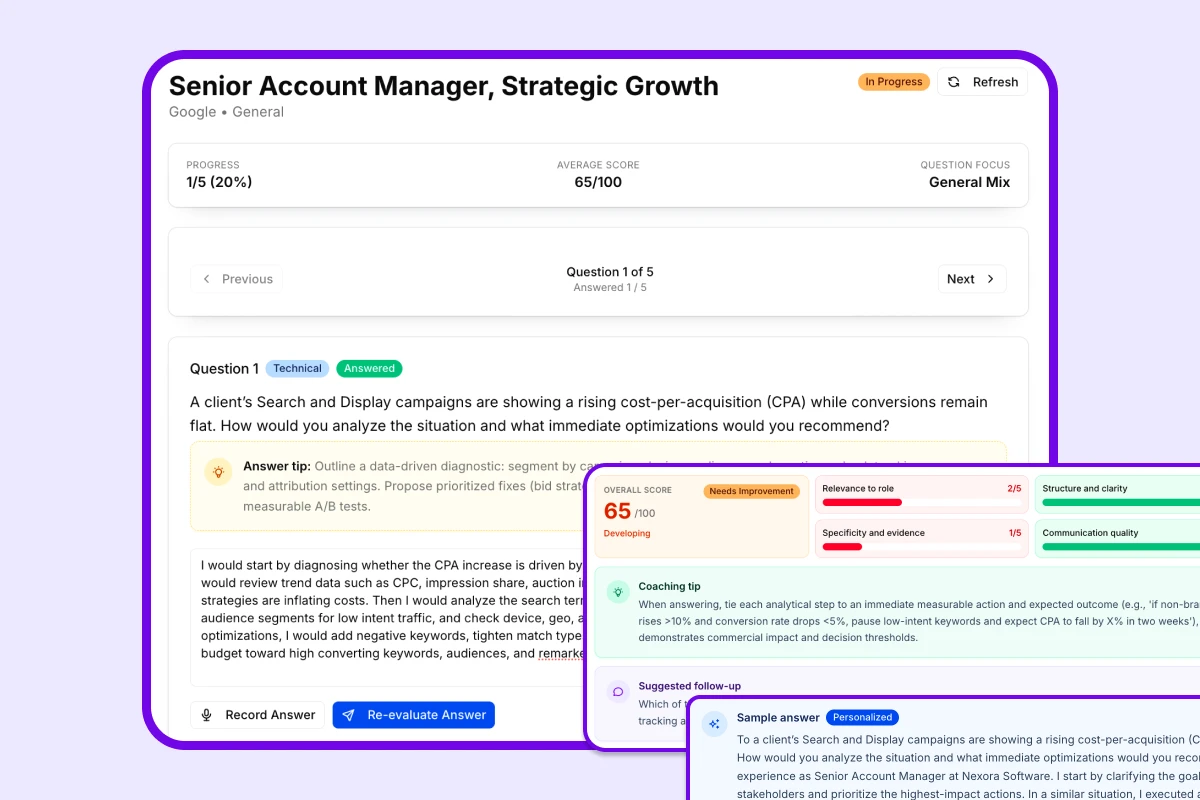
AI Interview Prep
Got the interview? Now make sure you're ready.
Practice the exact questions likely to come up for your target role. Get scored on clarity, structure, and relevance — so you walk in sharp, not winging it.
How to Structure Your Reasons: The Three-Pillar Framework
Effective reasons are not random strengths; they are strategic points organized into a logical case. Frame your answer around these three pillars.
- Functional Competence: Your hard skills and direct experience.
- Behavioral Fit: Your soft skills and how you work.
- Cultural & Motivational Alignment: Your drive and connection to the company's purpose.
What Are the Most Compelling Reasons to Hire You?
The best reasons are specific, provable, and directly tied to the job description. Here are the core categories to draw from, with guidance on how to articulate them.
1. Directly Relevant Experience and Proven Success
This is the most fundamental reason. Go beyond stating you have experience; explain how that experience is a precise match and has yielded results. Cite the job description's key requirements.
- How to Frame It: "My five years managing SaaS client accounts directly mirrors the core responsibility of this role. For example, at my previous company, I revived a stagnant portfolio, increasing client retention by 30% over 18 months—a result I'm eager to replicate for your team."
- Source Insight: As noted in career guidance from Southeastern Louisiana University, relevant experience is consistently a top reason employers cite for hiring decisions, as it reduces perceived risk and training time.
2. A Unique Blend of Skills That Solves a Specific Problem
Many candidates may have one required skill. Your differentiator is the combination of skills that allows you to address complex challenges. Identify a potential pain point for the role and show how your hybrid skill set solves it.
- How to Frame It: "I understand this role requires not just data analysis, but communicating insights to non-technical stakeholders. My background in both data science and marketing enables me to bridge that gap, turning complex datasets into actionable growth strategies, as I did when my reports led to a 15% shift in our ad spend strategy."
3. Quantifiable Achievements and Impact
Numbers create credibility. Replace "I helped increase sales" with "I developed a outreach campaign that contributed to a 22% increase in qualified leads in Q3." Prepare 2-3 key metrics for your most relevant roles.
- How to Frame It: Use the STAR method (Situation, Task, Action, Result) to structure your examples. This ensures your achievement is presented as a coherent story with a clear, impactful conclusion.
4. Strong Interpersonal and Collaborative Skills
Companies hire team members, not just skill sets. Demonstrate your ability to communicate, collaborate, and resolve conflict. This is especially critical for roles involving management, client service, or cross-functional work.
- How to Frame It: "I pride myself on being a collaborative problem-solver. In my last project, I facilitated weekly syncs between the engineering and design teams, which improved our workflow and helped us launch the product two weeks ahead of schedule."
- Source Insight: Harvard Business Review emphasizes that interviewers assess not only what you can do, but how you will do it within their existing team dynamic, making interpersonal evidence crucial.
5. A Demonstrated Passion for the Industry and Role
Passion fuels perseverance and innovation. It shows you're motivated by more than a paycheck. Connect your personal interests or long-term goals to the company's mission.
- How to Frame It: "I've followed your company's work in sustainable packaging for years, and my graduate research focused on biodegradable materials. This role is the perfect intersection of my professional skills and my personal commitment to environmental innovation."
6. Alignment with Company Culture and Values
Show you've done your homework. Reference the company's stated values (from their website or social media) and provide an example of how you embody them.
- How to Frame It: "I read about your company's 'fail fast, learn faster' ethos. That resonates deeply with my approach. In a recent campaign, we tested three messaging variants quickly, learned one underperformed, and pivoted, ultimately exceeding our engagement target by 40%."
7. Capacity for Growth and Long-Term Potential
Employers invest in the future. Show them you are a learner who will grow with the company. Mention specific skills you're developing or how you see the role evolving.
- How to Frame It: "While I'm proficient in the analytics tools listed, I'm currently completing a certification in advanced predictive modeling because I see that as the next frontier for this department, and I want to contribute to that evolution here."
How to Deliver Your Answer: Practical Tips
| Tip | Description | Example / Rationale |
|---|---|---|
| Customize Every Time | Never reuse a generic answer. Tailor your top 3-4 reasons to each specific job description. | If the JD emphasizes "agile development," highlight your Scrum experience. If it stresses "independent work," pivot to a self-directed project. |
| Lead with Confidence | State your core reason assertively. Avoid weak language like "I think" or "I believe." | Start with: "You should hire me because I have a proven track record of..." |
| Weave in Evidence | Follow every claim with a brief, concrete example. | Don't just say "I'm a leader." Say, "I'm a collaborative leader, as when I mentored two junior analysts, both of whom were promoted within a year." |
| Keep it Concise | Aim for 60-90 seconds. Practice to ensure your answer is impactful, not rambling. | Structure is key: Claim -> Example -> Connection to the role. |
| End with Enthusiasm | Conclude by reaffirming your interest and how you envision contributing. | "I am genuinely excited by the challenges of this role and am confident I can hit the ground running to help your team achieve X." |
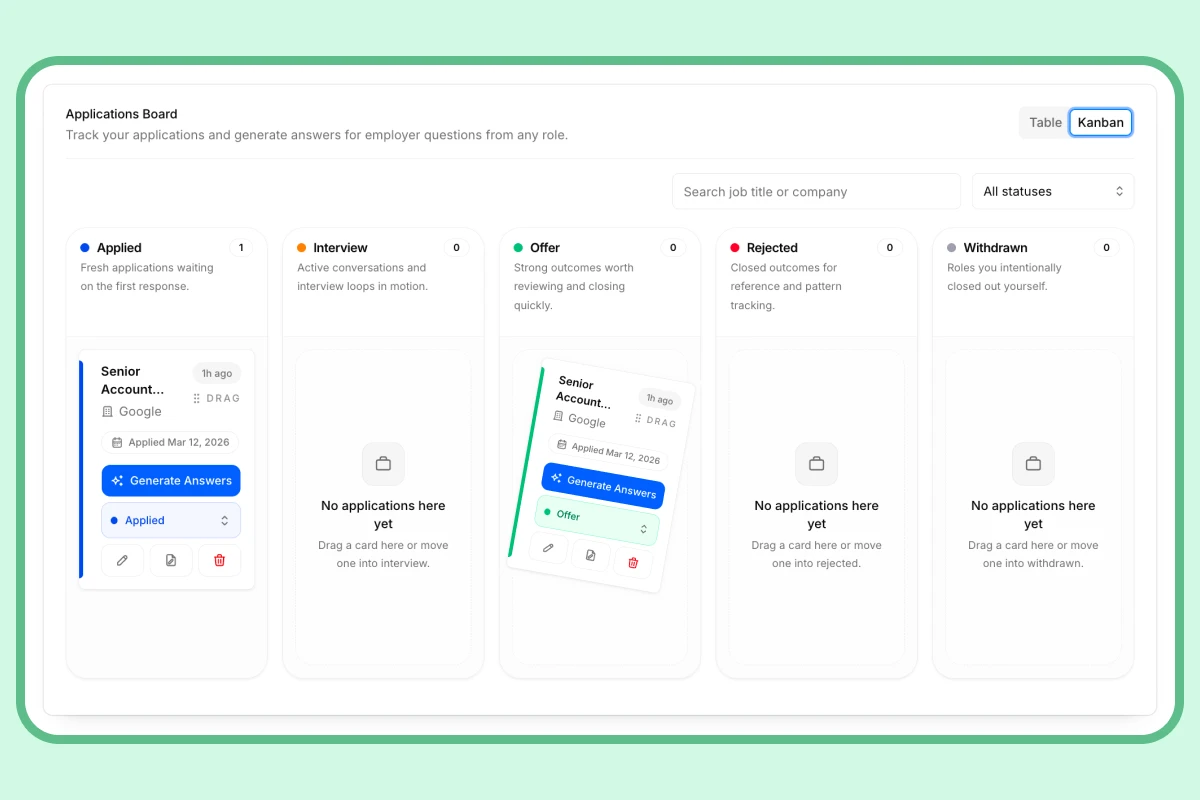
Application Tracker
Applying to 10+ jobs? You need a real system.
No more spreadsheets or lost threads. Track every role, stage, deadline, and follow-up in one dashboard — so you always know exactly where you stand.
Common Pitfalls to Avoid
- Repeating Your Resume: The interviewer has read it. Interpret and synthesize the information.
- Being Too Generic: "I'm a hard worker and a fast learner" is expected, not differentiating.
- Focusing Only on Yourself: Frame your reasons around the value you bring to them.
- Neglecting to Prepare: This is a predictable question. Not having a polished answer signals a lack of serious interest.
Putting It All Together: A Sample Answer
Context: Interview for a Marketing Manager role at a growing ed-tech company. The JD emphasized demand generation, cross-team collaboration, and experience with marketing automation.
"You should hire me because I have a five-year track record of building demand generation pipelines in the tech space, specifically using HubSpot, which your job description highlighted. In my current role, I rebuilt our lead nurturing workflow, which increased our marketing-qualified lead conversion rate by 25% in six months. Furthermore, I know this role requires close work with the product team. I've successfully partnered with product managers on launch campaigns, creating alignment that helped us exceed user acquisition goals by 15%. I'm truly passionate about making education more accessible, which is why your mission resonates with me. I'm confident I can apply this experience to scale your inbound marketing efforts and contribute to your growth goals from day one."
This answer hits the key pillars: relevant experience with proof, a unique collaborative skill, and cultural alignment, all delivered in a concise, confident narrative.
Final Preparation Steps
- Analyze the JD: Highlight required skills and keywords.
- Research the Company: Understand their products, values, and recent news.
- Select Your Top 3-4 Reasons: Choose from the list above, ensuring they map directly to your analysis.
- Develop Your Evidence: For each reason, prepare a STAR-method example.
- Script and Practice: Write your 60-90 second pitch and rehearse it until it sounds natural, not memorized.
By moving beyond a simple list of traits to a strategic, evidence-based argument, you transform "Why should we hire you?" from a challenging question into your most powerful moment in the interview. Your reasons become the definitive case for your candidacy.
Explore this category
Interview Prep
Browse the full interview prep category for more related playbooks, examples, and tactical guides.
Browse Interview Prep articles →One workflow. Resume to offer.
Build ATS-ready resumes, track every application, and practice interviews — all in one place. Free to start, no credit card needed.
✓ Free plan forever · ✓ No card needed
Related articles
Interview Question: Why Do You Feel You Are Qualified for This Position? Answer, Examples, and Tips
Discover what interviewers really want to hear, how to structure a confident answer, and how to use examples that prove you are qualified for the role.
How Do You Sell Yourself During an Interview: A Pragmatic Playbook
Selling yourself in an interview isn't about boasting; it's a strategic process of aligning your proven skills with the employer's needs. This playbook provides the concrete frameworks, scripts, and preparation tactics you need to communicate your value with confidence and authenticity.
How to Answer What Are Your Greatest Strengths in an Interview
Learn how to answer "What are your greatest strengths?" with a concise, tailored response that highlights relevant skills, proves them with examples, and shows fit for the job.