





Personal strengths are your natural capacities for thinking, feeling, and behaving in ways that energize you and help you perform well in everyday life and at work. They are often described as character traits or qualities—such as empathy, resilience, creativity, or honesty—that shape how you approach challenges and relationships.
If you are preparing for an application or interview, understanding your strengths can help you answer questions clearly, write stronger resume bullets, and present yourself with more confidence.
What are personal strengths?
Personal strengths are the qualities that come most naturally to you and help you do your best work. Unlike technical skills or job-specific knowledge, they are less about what you know and more about how you think, respond, and interact. They are built-in capacities that energize individuals and help them excel in personal and professional contexts.
For example, notice how the same skill can show up differently by context:
- A person with strong empathy may be especially good at understanding teammates or customers.
- Someone with resilience may stay steady during pressure or setbacks.
- A person with creativity may generate fresh ideas and solutions.
In a career context, personal strengths help explain why you are effective, adaptable, and reliable. They encompass character traits and qualities such as kindness, empathy, resilience, creativity, and honesty that define who a person is.
What is the difference between personal strengths and professional strengths?
This distinction is important because it changes how you present strengths in applications and interviews.
- Professional strengths are learned abilities, credentials, and expertise, such as data analysis, project management, coding, or sales.
- Personal strengths are character-based qualities that influence how you use those abilities, such as integrity, curiosity, adaptability, or teamwork. They are unique qualities and abilities that energize you and help you excel, distinct from professional skills or expertise.
You can learn a new tool or process. Personal strengths are more closely tied to your patterns of behavior and the traits people often notice in how you work with others.
How many character strengths are there and how are they organized?
A widely used framework comes from positive psychology researchers Peterson and Seligman, who identified 24 character strengths organized into six virtues. This is often called the VIA Character Strengths framework. It gives you a useful vocabulary for understanding and discussing personal strengths.
| Virtue | Character strengths |
|---|---|
| Wisdom & Knowledge | Creativity, Curiosity, Open-Mindedness, Love of Learning, Perspective |
| Courage | Bravery, Persistence, Integrity, Vitality |
| Humanity | Love, Kindness, Social Intelligence |
| Justice | Teamwork, Fairness, Leadership |
| Temperance | Forgiveness, Humility, Prudence, Self-Regulation |
| Transcendence | Appreciation of Beauty, Gratitude, Hope, Humor, Spirituality |
These six virtues—Wisdom, Courage, Humanity, Justice, Temperance, and Transcendence—are valued across cultures. This framework helps categorize strengths that are universally recognized and can be developed.
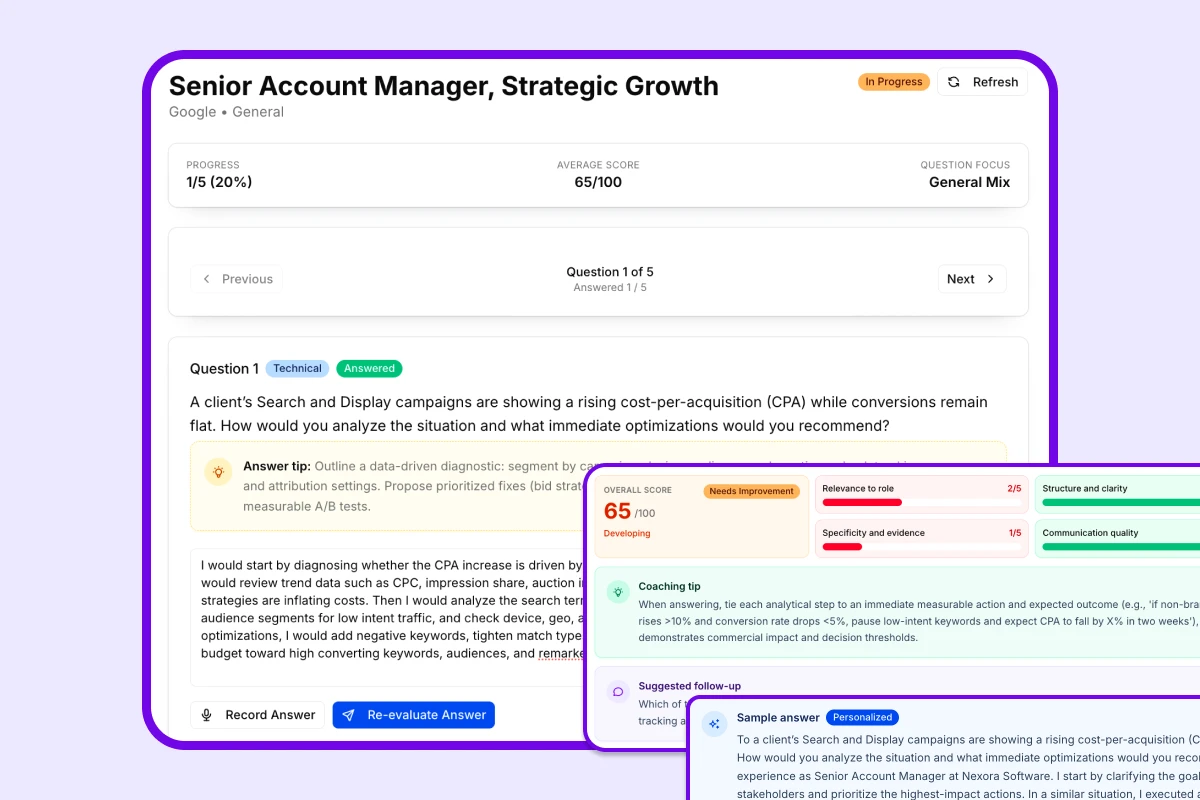
AI Interview Prep
Got the interview? Now make sure you're ready.
Practice the exact questions likely to come up for your target role. Get scored on clarity, structure, and relevance — so you walk in sharp, not winging it.
What are examples of personal strengths?
Here are common personal strengths people often use in interviews, resumes, and self-assessments:
- Resilience: Recovering quickly from setbacks
- Decisiveness: Making timely decisions
- Optimism: Staying hopeful and positive
- Problem-solving: Finding practical solutions to challenges
- Empathy: Understanding other people's perspectives and feelings
- Adaptability: Adjusting well to change
- Honesty: Being truthful and trustworthy
- Collaboration: Working effectively with others
- Initiative: Acting without waiting to be asked
- Attention to detail: Noticing small but important elements
If you need a stronger What Are Personal Strengths examples list for interview prep, choose traits that fit the role and that you can support with a real story. Common personal strengths include kindness, empathy, resilience, honesty, decisiveness, adaptability, optimism, and problem-solving.
How can I identify my personal strengths?
If you are unsure how to answer “What are your strengths?”, use these methods to identify patterns:
1. Ask when you feel energized
Think about the tasks that make you feel focused and engaged. What work do you naturally enjoy? Strengths should be discovered through self-reflection, feedback from others, strengths assessments, and by noting which activities energize versus drain you.
2. Ask other people for feedback
Friends, coworkers, mentors, and managers may notice strengths you overlook. Ask: “What do you think I do especially well?”
3. Use a strengths assessment
Tools like the VIA Character Strengths Survey can help you identify recurring strengths. Other assessments may also offer helpful insights.
4. Track what drains you versus what energizes you
For a few days, note which activities give you energy and which ones leave you tired. Energizing tasks often point to strengths.
Why is it important to recognize and use my personal strengths?
Recognizing your strengths can improve both career performance and personal well-being. Identifying personal strengths boosts self-confidence, enhances job satisfaction, contributes to personal growth, and facilitates positive relationships.
It can help you:
- Build confidence in interviews and networking
- Improve job satisfaction
- Increase productivity and quality of work
- Strengthen teamwork and communication
- Make better decisions about role fit and career direction
When you use your strengths regularly, you are more likely to feel engaged and effective. Focusing on strengths rather than weaknesses promotes a positive mindset and increases overall well-being and productivity.
How should I incorporate personal strengths into my resume and cover letter?
Do not just list strengths as adjectives. Show them through evidence. Leveraging personal strengths in job applications involves highlighting them in resumes and cover letters with specific examples, then reinforcing them during interviews and follow-up communications.
Use a simple strength + result approach:
- Resume example: Led a cross-functional team through a tight deadline by using collaboration and problem-solving to deliver the project ahead of schedule.
- Cover letter example: My adaptability helped me step into a new workflow quickly, support the team during a transition, and keep client work on track.
Choose 2 to 3 strengths that match the job description and back them up with results.
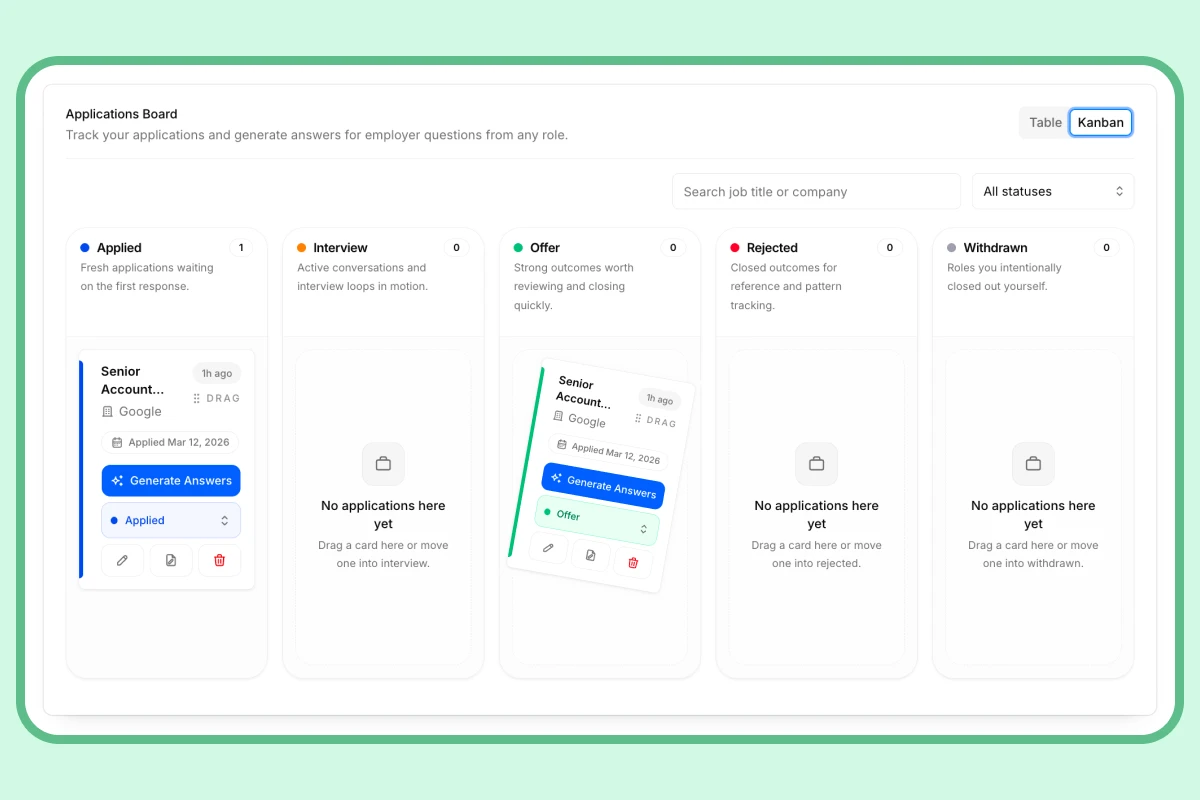
Application Tracker
Applying to 10+ jobs? You need a real system.
No more spreadsheets or lost threads. Track every role, stage, deadline, and follow-up in one dashboard — so you always know exactly where you stand.
How should I discuss personal strengths in a job interview?
The interview question What are your greatest strengths? is one of the best places to use a clear example.
A simple structure is:
- State the strength
- Give a short example
- Explain the result
- Connect it to the role
Interview answer example
“My strongest quality is problem-solving. In my last role, our team kept getting last-minute client changes, which made delivery difficult. I created a simple change-request process and worked with the team to improve it. As a result, we reduced confusion and improved on-time delivery. I think this would help me in this role because it requires handling multiple priorities and staying organized under pressure.”
Interview answer tips
- Choose strengths you can prove with a story
- Match your answer to the job
- Avoid vague claims without examples
- Prepare 2 or 3 strengths in advance
- Keep the answer specific and concise
If you are searching for What Are Personal Strengths answer examples, the best answers are usually simple, specific, and supported by results.
What are the best personal strengths to mention in an interview?
The best choice depends on the role, but these are commonly useful:
- Communication
- Teamwork
- Adaptability
- Problem-solving
- Leadership
- Time management
- Empathy
- Attention to detail
- Resilience
- Initiative
Pick strengths that are believable for you and relevant to the position.
How do personal strengths impact workplace performance and relationships?
Personal strengths reach beyond the workplace and impact private relationships, making their identification and use essential for holistic life success. In the workplace, leveraging your strengths can lead to:
- Enhanced Performance: Using your natural capacities allows you to work more efficiently and effectively.
- Improved Team Dynamics: Strengths like empathy, collaboration, and fairness foster better communication and trust among colleagues.
- Greater Job Satisfaction: When your role aligns with your strengths, you are more likely to feel fulfilled and motivated.
- Stronger Leadership: Strengths such as integrity, decisiveness, and social intelligence are foundational for effective leadership.
Underutilizing your strengths can negatively impact both career and personal relationships, so it's crucial to actively apply them.
What tools or assessments can help me discover my personal strengths?
Several reputable tools can provide structured insights:
- VIA Character Strengths Survey: A free, scientifically validated assessment that ranks your 24 character strengths.
- CliftonStrengths: Focuses on talent themes and how to apply them in professional settings.
- High5 Test: Identifies your top five strengths based on positive psychology principles.
- Reflective Journals: Tracking your energy levels and accomplishments over time can reveal patterns.
Using these tools in combination with self-reflection and feedback offers a comprehensive view of your strengths.
Conclusion
Understanding What Are Personal Strengths is a practical step in career growth. Personal strengths are the natural qualities that help you work well, handle challenges, and build strong relationships. When you identify them clearly and support them with examples, you can write better resumes, give stronger interview answers, and present yourself with more confidence in applications and interviews. By focusing on your strengths, you not only enhance your professional trajectory but also contribute to your overall well-being and success in all areas of life.
Explore this category
Interview Prep
Browse the full interview prep category for more related playbooks, examples, and tactical guides.
Browse Interview Prep articles →One workflow. Resume to offer.
Build ATS-ready resumes, track every application, and practice interviews — all in one place. Free to start, no credit card needed.
✓ Free plan forever · ✓ No card needed
Related articles
Fun Facts About Me: Examples and Tips for Interviews and Job Applications
Learn how to answer "Fun Facts About Me" with confidence in interviews, resumes, and job applications. This guide includes examples, tips for tailoring your response, and advice for sounding professional, authentic, and memorable.
Interview Question: Why Do You Feel You Are Qualified for This Position? Answer, Examples, and Tips
Discover what interviewers really want to hear, how to structure a confident answer, and how to use examples that prove you are qualified for the role.
Interview Question: Why Should We Hire You for This Position? Answer Guide
Use this guide to build a strong answer to "Why should we hire you for this position?" with a simple framework, practical examples, and tips for tailoring your response to the role and company.