





Landing a new role takes more than sending out resumes. If you want to know how to apply for jobs effectively, the key is to be intentional, organized, and selective. A strong job search strategy helps you choose the right roles, tailor your materials, and follow up in a way that improves your chances of getting interviews.
Answer-First Summary: To apply for jobs successfully, focus on five core steps: 1) research companies and roles before you apply, 2) tailor your resume and cover letter to each job description, 3) use networking and referrals when possible, 4) keep an application tracker to stay organized, and 5) follow up professionally after submitting your application. Quality and customization matter more than volume.
What Is the Best Mindset for Applying for Jobs?
A successful job search starts with a job search action plan. Treat it like a project with clear goals, deadlines, and tracking. Instead of using a "spray and pray" approach, focus on jobs that align with your skills, experience, and career goals.
The best applicants do not apply everywhere. They research companies, learn what problems the employer needs solved, and position themselves as the answer. That shift in mindset can make your applications more compelling and more targeted.
How Should You Prepare Before You Apply?
Before you submit any applications, prepare your core materials.
Build a master resume
Create one version that includes your full experience, skills, accomplishments, and metrics. Then adapt it for each job you apply to. This makes it easier to customize quickly without starting from scratch every time.
Tailor your resume to the job description
A tailored resume is one of the most important parts of how to apply for jobs. Review the posting carefully and look for repeated keywords, required skills, and preferred qualifications. Then mirror that language naturally in your resume.
For example, if a posting mentions project management, stakeholder communication, or Python, make sure those terms appear where relevant. Use measurable achievements whenever possible, such as:
- Increased sales by 15%
- Reduced turnaround time by 2 hours
- Managed a team of 6 across 3 projects
Write a customized cover letter
Your cover letter should explain why you want this role, why you want this company, and why you are a strong fit. Avoid repeating your resume line by line. Instead, use the letter to connect your experience to the employer’s needs.
Update your online presence
Recruiters often review LinkedIn and other public profiles. Make sure your profile matches your resume, including job titles, dates, and key skills. If relevant to your field, a portfolio or personal website can strengthen your application.
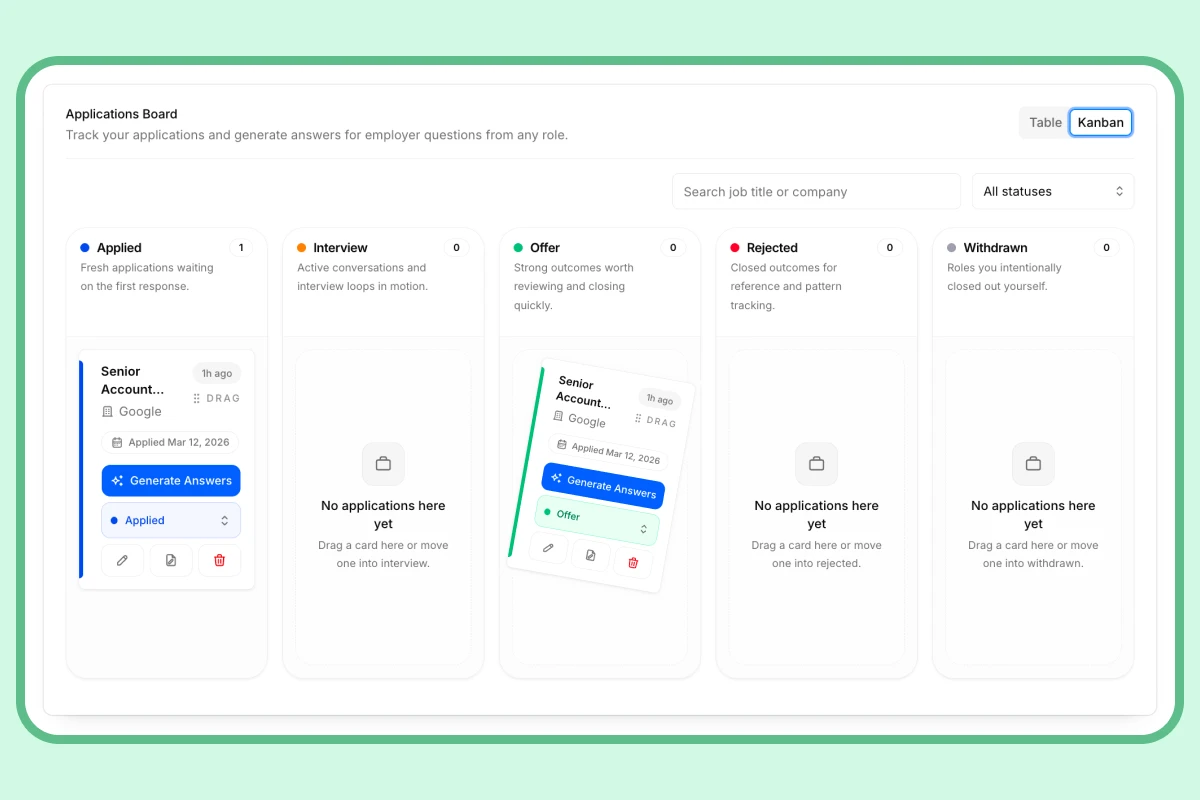
Application Tracker
Applying to 10+ jobs? You need a real system.
No more spreadsheets or lost threads. Track every role, stage, deadline, and follow-up in one dashboard — so you always know exactly where you stand.
How Do You Apply for Jobs Step by Step?
Use this process for each application.
1. Research the role and company
Start with the company website, job board listing, and recent news. Look at the company’s mission, products, culture, and employee reviews. The goal is to understand whether the role fits your background and what the employer values most.
2. Match your experience to the posting
Identify the top qualifications in the job description. Then choose the most relevant examples from your background. This helps you prioritize what to include in your resume, cover letter, and application responses.
3. Leverage your network
If you know someone at the company, ask for advice or an informational conversation. A referral can improve visibility and help your application stand out. Keep the message polite, specific, and low-pressure.
4. Complete the application carefully
Fill out every required field accurately. Upload the correct documents, answer screening questions clearly, and review everything before submitting. Small mistakes can hurt your chances.
5. Save and track each application
Use a spreadsheet or job tracker to record the company name, role, date applied, contact person, status, and follow-up date. Staying organized helps you avoid duplicate applications and makes follow-up easier.
What Should You Track During Your Job Search?
A good tracker keeps your search manageable, especially if you are applying to multiple jobs at once.
| Tracking Item | Why It Helps |
|---|---|
| Company name | Keeps applications organized |
| Job title | Prevents confusion between similar roles |
| Date applied | Helps you time follow-up messages |
| Application link | Lets you revisit the posting later |
| Contact person | Makes outreach more personal |
| Status | Shows where each application stands |
| Follow-up date | Reminds you when to check in |
If you are serious about job search strategy, tracking is not optional. It gives you a clear view of what is working and what needs to change.
Why Is Follow-Up Important After Applying?
Many candidates submit an application and wait passively. A better approach is to follow up professionally after a reasonable amount of time.
Send a brief message to the recruiter or hiring manager about one to two weeks after applying, unless the posting gives different instructions. Mention the role, restate your interest, and thank them for their time. Keep it short and respectful.
Follow-up can help keep your application top of mind and show that you are engaged and proactive.
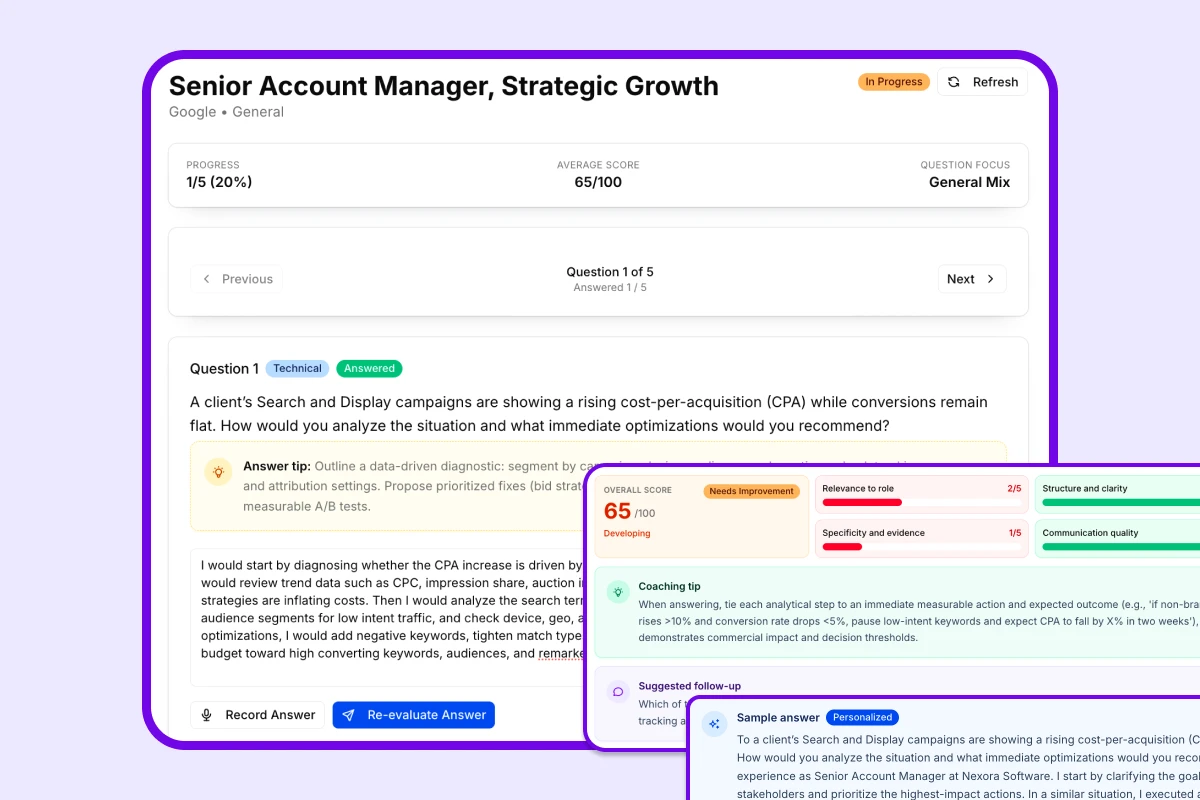
AI Interview Prep
Got the interview? Now make sure you're ready.
Practice the exact questions likely to come up for your target role. Get scored on clarity, structure, and relevance — so you walk in sharp, not winging it.
What Are Common Mistakes to Avoid?
Even strong candidates make avoidable mistakes. Watch out for these issues:
- Using generic materials: One resume for every role rarely works well.
- Ignoring instructions: Missing required documents or skipping screening questions can disqualify you.
- Submitting too quickly: Rushing increases the chance of typos or incomplete answers.
- Neglecting your online presence: Inconsistent profiles can weaken a strong application.
- Failing to track applications: If you do not organize your search, follow-up becomes difficult.
One of the most common job application help mistakes is not fully completing the application. Employers notice attention to detail, and incomplete submissions often get filtered out.
How Can You Improve Your Job Search Strategy Over Time?
A job search works better when you treat it like an ongoing process. Review your results each week.
Ask yourself:
- How many applications led to interviews?
- Are certain types of roles getting more responses?
- Do you need to improve your resume customization?
- Are you applying to jobs that truly fit your background?
If your response rate is low, adjust your approach. You may need stronger keywords, a tighter target list, better follow-up, or more networking. Getting feedback from a mentor, recruiter, or career coach can also help refine your materials.
What Is the Best Way to Stay Consistent?
Consistency matters as much as strategy. Set a weekly routine for researching jobs, customizing applications, and reviewing your tracker. Even a few focused applications per week can be more effective than sending dozens of rushed submissions.
A sustainable routine helps you stay motivated and prevents burnout. It also gives you more time to prepare for interviews when the right opportunity comes along.
Final Thoughts
Knowing how to apply for jobs is a core career skill. The most effective approach combines research, customization, organization, and follow-up. Instead of sending out generic applications, build a thoughtful process that helps each submission work harder for you.
If you want better results, focus on the fundamentals: choose the right roles, tailor your resume and cover letter, track every application, and follow up professionally. That job search strategy will put you in a much stronger position to land interviews.
Explore this category
Job Applications
Browse the full job applications category for more related playbooks, examples, and tactical guides.
Browse Job Applications articles →One workflow. Resume to offer.
Build ATS-ready resumes, track every application, and practice interviews — all in one place. Free to start, no credit card needed.
✓ Free plan forever · ✓ No card needed
Related articles
Email Subject for Job Application: A Practical Guide
Your email subject line is the first thing a hiring manager sees. Learn how to write a clear, concise, professional subject for a job application that gets opened and makes your intent obvious.
How Many Jobs Should I Apply For? 2025 Job Search Strategy and Weekly Application Targets
Wondering how many jobs you should apply for? This guide breaks down weekly and total application targets, explains when to prioritize quality over quantity, and shows how to build a smarter job search plan for your timeline.
How to Follow Up on a Job Application Email Template: Tips and Email Examples
Need a professional way to check in after applying? This guide explains when to follow up on a job application, what to include in your email, and how to use ready-to-send templates that keep your candidacy top of mind.