




Following up after applying for a job can feel awkward, but it is a normal and often helpful part of the job search process. A short, professional email can reaffirm your interest, remind the hiring team of your application, and sometimes move your candidacy forward.
For related next steps, use job search checklist, strategic job search plan, and job application tracker guide.
For a broader application benchmark, compare CareerOneStop's job search guidance.
This guide explains when to follow up on a job application, what to include in a follow-up email, and how to adapt a template for different situations. If you are looking for practical job application help, this is a simple playbook you can use.
Why follow up on a job application?
A follow-up email is not about pressure. It is about clear communication. Done well, it can.
- show continued interest in the role
- keep your application visible
- briefly reinforce why you are a strong fit
- help you confirm whether the process is still active.
In a crowded hiring process, a polite follow-up can help you stand out for the right reasons.
When should you follow up on a job application?
Timing matters. In most cases, the best time to send a first follow-up is 1 to 2 weeks after applying.
General timing guidelines
- After submitting an application: wait 1 to 2 weeks
- After an interview: send a thank-you note within 24 hours
- After the interviewer gives a timeline: wait until that timeline passes before checking in
- If the posting has a deadline: wait 1 to 2 weeks after the deadline
If you follow up too soon, it can feel premature. If you wait too long, the role may already be filled.
What should a follow-up email include?
A good follow-up email is short, clear, and easy to scan. Use this structure:
- Subject line that clearly identifies the role
- Greeting addressed to the hiring manager or hiring team
- Reference to your application and the date you submitted it
- Brief expression of interest in the role and company
- One sentence of value connecting your background to the job
- Polite request for an update on the hiring timeline
- Professional closing with your contact information
How to write a follow-up email for a job application
Keep the message concise. You do not need to repeat your full resume or explain every qualification again. The goal is to make it easy for the reader to understand who you are and why you are reaching out.
Best practices
- use a clear subject line
- mention the exact job title
- include the application date if possible
- personalize the email when you know the hiring manager’s name
- keep the tone respectful and confident
- proofread carefully for spelling and grammar
What to avoid
- sounding impatient or demanding
- writing a long message
- sending repeated follow-ups within a few days
- attaching documents again unless asked
- using a generic message that could go to any company
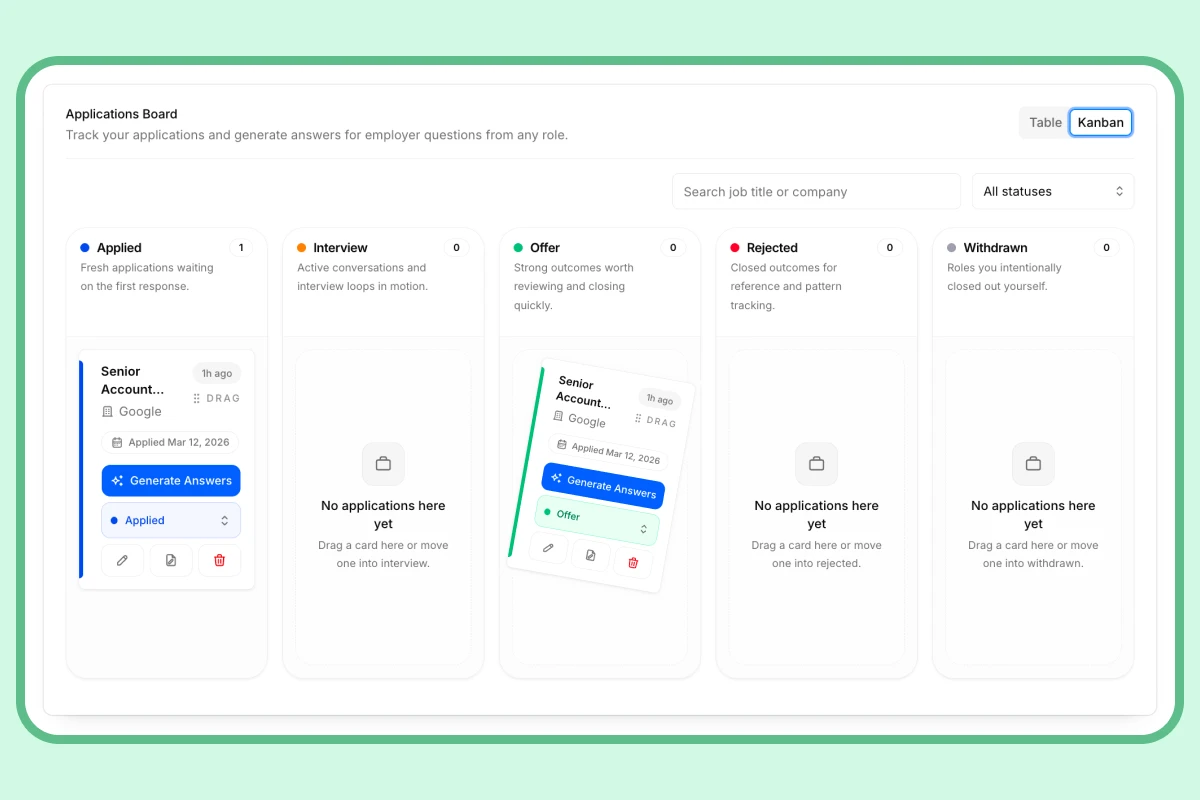
Application Tracker
Applying to 10+ jobs? You need a real system.
No more spreadsheets or lost threads. Track every role, stage, deadline, and follow-up in one dashboard — so you always know exactly where you stand.
Email template: general follow-up after applying
Subject: Follow-Up on Application for [Job Title] — [Your Name]
Dear [Hiring Manager Name],
I hope you are doing well. I recently applied for the [Job Title] position on [Date of Application], and I wanted to follow up to express my continued interest in the role.
I am especially excited about the opportunity to contribute to [Company Name] because of my experience in [relevant skill, achievement, or area]. I would appreciate any update you can share about the hiring timeline or next steps.
Thank you for your time and consideration.
Best regards, [Your Full Name] [Your Phone Number] [Your LinkedIn Profile]
Email template: follow-up after a job interview
Subject: Thank You and Follow-Up — [Job Title] Interview — [Your Name]
Dear [Interviewer Name],
Thank you again for taking the time to speak with me about the [Job Title] role. I enjoyed our conversation about [specific topic] and appreciated the chance to learn more about the team.
Our discussion made me even more enthusiastic about the position. Based on my background in [relevant skill], I am confident I could contribute to [specific need or goal]. Please let me know if there is anything else I can provide as you move forward.
Thank you again for your time and consideration.
Sincerely, [Your Full Name] [Your Phone Number] [Your LinkedIn Profile]
Email template: follow-up when you have another offer
Subject: Application Update Request — [Job Title] — [Your Name]
Dear [Hiring Manager Name],
I am writing to follow up on my application for the [Job Title] position at [Company Name]. I remain very interested in the opportunity, especially because of [specific company value, mission, or team goal].
I wanted to share that I am currently in the later stages of another opportunity and would be grateful for any update on your hiring timeline. I understand that decisions take time, and I appreciate any information you are able to provide.
Thank you for your consideration.
Best regards, [Your Full Name] [Your Phone Number] [Your LinkedIn Profile]
How many times should you follow up?
In most cases, one follow-up is enough if you do not get a response. If you are still highly interested, you can send a second, shorter follow-up about 1 to 2 weeks later.
After that, it is usually best to move on. A lack of response does not necessarily mean you were rejected, but it often means the process has slowed or the team has chosen another direction.
Should you follow up if you do not hear back?
Yes, a follow-up is appropriate if enough time has passed. If you still do not hear back after a second message, the best strategy is to keep applying elsewhere rather than waiting indefinitely.
This is where a broader job search strategy helps. The strongest candidates keep momentum by applying to multiple roles, tracking their outreach, and staying organized.
What is the best subject line for a follow-up email?
A good subject line should be simple and specific. Examples include:
- Follow-Up on Application for [Job Title] — [Your Name]
- Checking In on My Application for [Job Title]
- Thank You and Follow-Up — [Job Title] Interview
- Application Update Request — [Job Title] — [Your Name]
Avoid vague subject lines like “Hello” or “Quick question.”
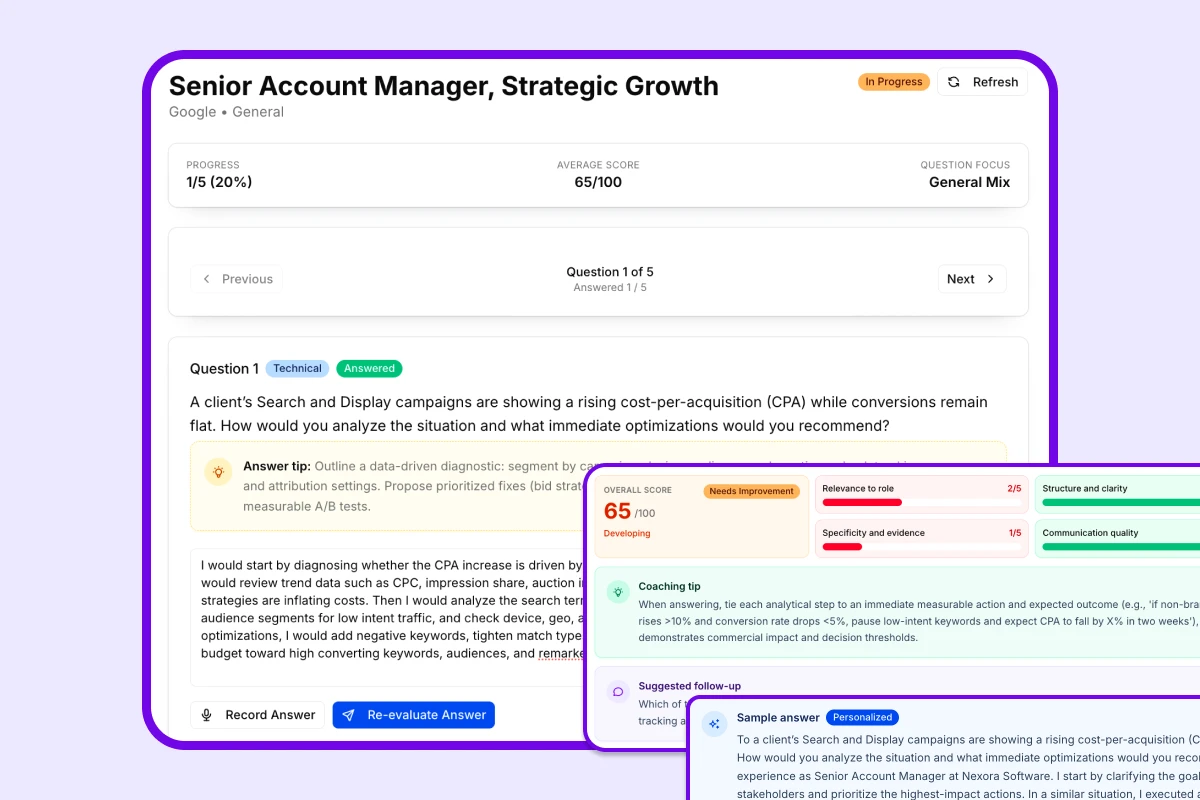
AI Interview Prep
Got the interview? Now make sure you're ready.
Practice the exact questions likely to come up for your target role. Get scored on clarity, structure, and relevance — so you walk in sharp, not winging it.
What should you do if the job posting has a deadline?
If the application deadline has not yet passed, wait until after it closes. Then give the hiring team another 1 to 2 weeks before following up.
This gives recruiters time to review applicants without making your message feel premature.
What should you do if you are following up by phone or LinkedIn?
Email is usually the best first choice because it is easy to track and forward. If you do not have an email address, or if the posting specifically encourages another contact method, a brief LinkedIn message or phone call may be acceptable.
Keep the message short in any format. The same rules apply: be polite, specific, and professional.
Do’s and don’ts for following up
| Do | Don’t |
|---|---|
| Wait 1 to 2 weeks before sending your first follow-up | Follow up repeatedly within a few days |
| Personalize the email with the correct job title | Send a generic message to every employer |
| Keep it short and polite | Write a long message that repeats your resume |
| Mention one reason you are a strong fit | Focus only on asking when you will hear back |
| Proofread before sending | Send an email with typos or awkward wording |
| Move on if there is no response after a second attempt | Keep pushing if the company is not responding |
Quick follow-up checklist
Before you hit send, make sure your email includes:
- the right name or greeting
- the correct job title
- your application date
- a short statement of interest
- one relevant skill or achievement
- a polite request for an update
- your contact details
FAQ
What is the best time to follow up on a job application?
Usually 1 to 2 weeks after applying.
What should the subject line be for a follow-up email?
Keep it clear and specific, such as “Follow-Up on Application for [Job Title].”
Should you attach your resume in a follow-up email?
Usually no, unless the employer asks for it.
How many times should you follow up on a job application?
One follow-up is standard. A second short message is acceptable if you still have not heard back.
What should you include in a job application follow-up email?
Your job title, application date, interest in the role, one relevant strength, and a polite request for an update.
Final thoughts
Following up on a job application is a simple but useful part of the hiring process. A thoughtful message can reinforce your interest, support your job search strategy, and help you communicate professionally.
Use a clear subject line, keep your message brief, and focus on value. With the right approach, a follow-up email becomes less about waiting and more about staying proactive.
Explore this category
Job Applications
Browse the full job applications category for more related playbooks, examples, and tactical guides.
Browse Job Applications articles →One workflow. Resume to offer.
Build ATS-ready resumes, track every application, and practice interviews — all in one place. Free to start, no credit card needed.
✓ Free plan forever · ✓ No card needed
Related articles
Email Subject for Job Application: A Practical Guide
Your email subject line is the first thing a hiring manager sees. Learn how to write a clear, concise, professional subject for a job application that gets opened and makes your intent obvious.
How to Write a Job Application Email: Examples, Subject Lines, and Best Practices
This guide explains how to write a job application email step by step, including subject line formulas, body structure, examples, common mistakes, and follow-up tips.
How Many Jobs Should I Apply For? 2025 Job Search Strategy and Weekly Application Targets
Wondering how many jobs you should apply for? This guide breaks down weekly and total application targets, explains when to prioritize quality over quantity, and shows how to build a smarter job search plan for your timeline.