





Being asked about a termination can feel uncomfortable, but it does not have to derail the interview. The goal is not to defend every detail or try to spin the story. The goal is to give a brief, honest explanation that shows accountability, self-awareness, and readiness for the role you want next. For a neutral preparation baseline, CareerOneStop's interview tips reinforce the same focus on examples, practice, and clear communication.
For related next steps, use common interview questions guide, behavioral interview questions guide, situational interview questions guide, tell me about yourself guide, professional introduction examples, teamwork interview answer guide, and salary expectations answer guide.
For a broader preparation benchmark, compare MIT's STAR method overview.
Answer-first summary: To explain being fired in a job interview, be factual, concise, and forward-looking. Say what happened without oversharing, accept your part without blaming others, share what you learned, mention what you did to improve, and then pivot back to why you are a strong fit for this job.
Why Do Interviewers Ask About Being Fired?
Hiring managers usually ask because they want to understand three things.
- Accountability — Do you take responsibility for your actions?
- Self-awareness — Do you understand what went wrong?
- Risk — Is this likely to happen again in a new role.
They are not looking for a perfect past. They are looking for a professional response. In many cases, the way you explain the situation matters more than the termination itself.
What Is the Best Way to Explain Being Fired in a Job Interview?
The best approach is simple:
- Be honest about the separation
- Keep it brief and avoid a long backstory
- Avoid blame and negative commentary
- Focus on growth and what changed
- Pivot to the role you are interviewing for
A useful structure is the A-LAP framework:
- Acknowledge the termination factually
- Lesson — state one clear thing you learned
- Action — explain what you did to improve
- Pivot — connect that growth to the new job
Example:
"I was let go from my previous role after my manager and I agreed I was not meeting expectations in one area of the job. It was a hard experience, but it helped me see that I needed to strengthen my communication and planning. Since then, I have taken steps to improve those skills, and I am looking for a role where I can apply that growth in a more collaborative environment."
How Should You Explain Being Fired in a Job Interview Without Sounding Defensive?
A defensive answer usually sounds too long, too emotional, or too focused on proving the firing was unfair. Instead, aim for calm and matter-of-fact language.
Use these rules:
- Stick to the facts
- Use "I" statements
- Do not bad-mouth a former manager or company
- Keep your tone neutral
- End with what you are bringing to the next role
Avoid these common mistakes:
- Giving too much detail
- Arguing with the interviewer
- Saying "it was not my fault"
- Pretending it never happened
- Sounding ashamed or panicked
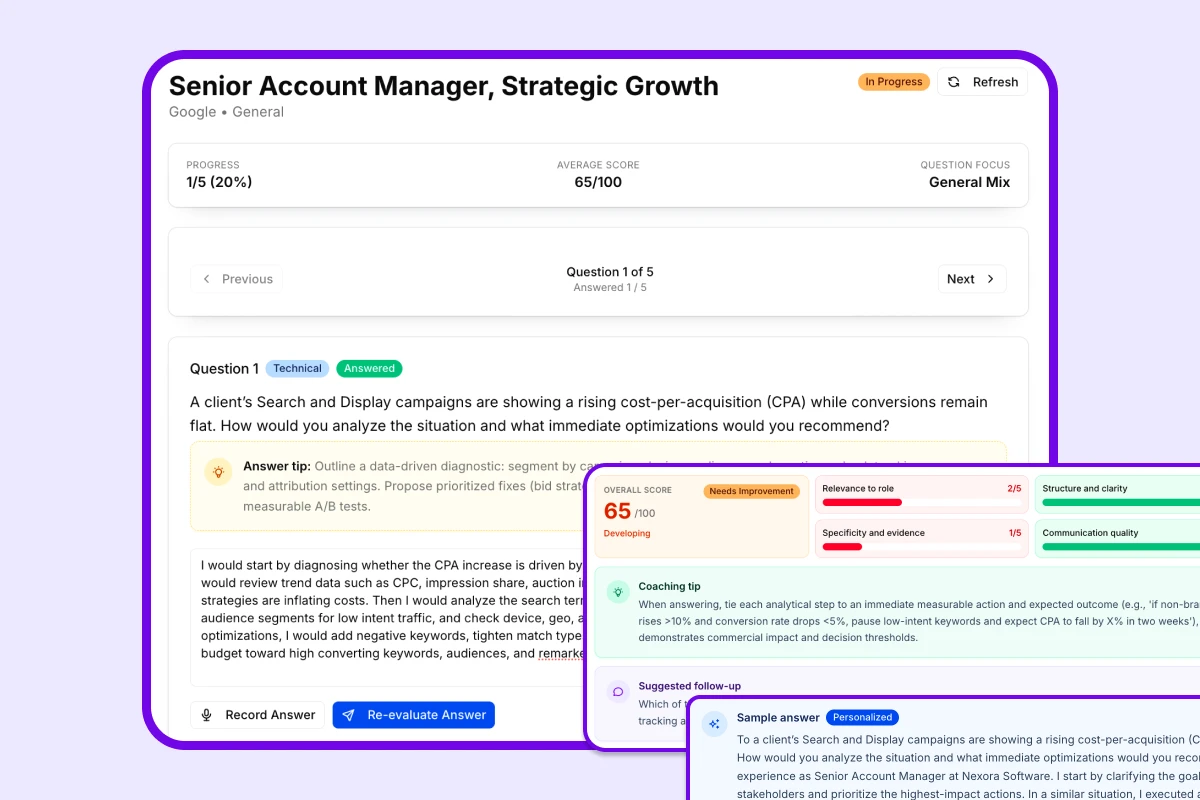
AI Interview Prep
Got the interview? Now make sure you're ready.
Practice the exact questions likely to come up for your target role. Get scored on clarity, structure, and relevance — so you walk in sharp, not winging it.
How to Explain Being Fired in a Job Interview: Examples
Different situations call for different wording. Here are examples you can adapt.
Example 1: Fired for Poor Performance
"I was let go from my last job because I was not meeting expectations in a key part of the role. I took that seriously and used it as a chance to identify the skill gaps that led to the issue. Since then, I have worked on those areas through training and hands-on practice, and I am now looking for a position where I can apply those improved skills and continue growing."
Example 2: Fired After a Culture or Fit Mismatch
"My previous role ended because it became clear that the job and I were not the best long-term fit. I learned a lot from the experience, especially about the kind of environment where I do my best work. Since then, I have been more intentional about researching companies, and this role feels like a much better match for my strengths and working style."
Example 3: Fired During Restructuring With Performance Concerns
"My position was eliminated during a restructuring, and the change created a broader review of the team. It was a difficult transition, but it also pushed me to evaluate how I could become more valuable in future roles. I used that time to build my skills and focus on work that aligns with this kind of opportunity."
Example 4: Fired for Attendance or Reliability Issues
"I was let go from my previous role after I struggled with consistency in attendance. I understand why that was a serious issue, and I have taken clear steps to correct it. That experience taught me the importance of reliability and communication, and I am confident in the systems I have put in place since then."
What Tips Help You Explain Being Fired in a Job Interview Well?
Here are the most useful tips to keep in mind:
1. Prepare your answer in advance
Do not improvise this question on the spot. Write out a version that feels honest and natural, then practice it until you can say it calmly.
2. Keep it to 30 to 45 seconds
A short answer sounds more confident than a long explanation. If the interviewer wants more detail, they will ask.
3. Focus on one lesson
Choose one main lesson rather than listing every mistake. That keeps your answer clear and memorable.
4. Show what changed
Interviewers want evidence that the issue is behind you. Mention a course, project, habit, mentor, or system that shows real improvement.
5. Redirect to the role
After explaining the situation, bring the conversation back to why you are a strong fit for the job you want.
What Should You Say If You Were Fired for Poor Performance?
If performance was the reason, be direct but not self-destructive. Do not insult yourself or make excuses. Instead, show that you understood the feedback and acted on it.
A strong answer should include:
- A brief acknowledgment of the performance issue
- A clear lesson
- Specific actions you took to improve
- A connection to the role you are applying for
Example:
"I was terminated because I was not meeting expectations in one part of the role. That was difficult to hear, but it gave me a chance to understand where I needed to improve. I have since strengthened that skill through training and practical application, and I am now much better prepared for a role like this one."
What Should You Say If You Were Fired but Think the Situation Was Unfair?
Even if you disagree with how the situation was handled, avoid turning the interview into a complaint session. You do not need to pretend you agreed with every decision. You do need to stay professional.
A better approach is:
- State the outcome factually
- Keep the explanation short
- Avoid emotional language
- Focus on what you learned and what you are seeking next
Example:
"The role ended sooner than I expected, and I learned that the expectations and my strengths were not fully aligned. I took time to reflect on that experience, and it helped me become more thoughtful about the kind of team and responsibilities where I can contribute most effectively."
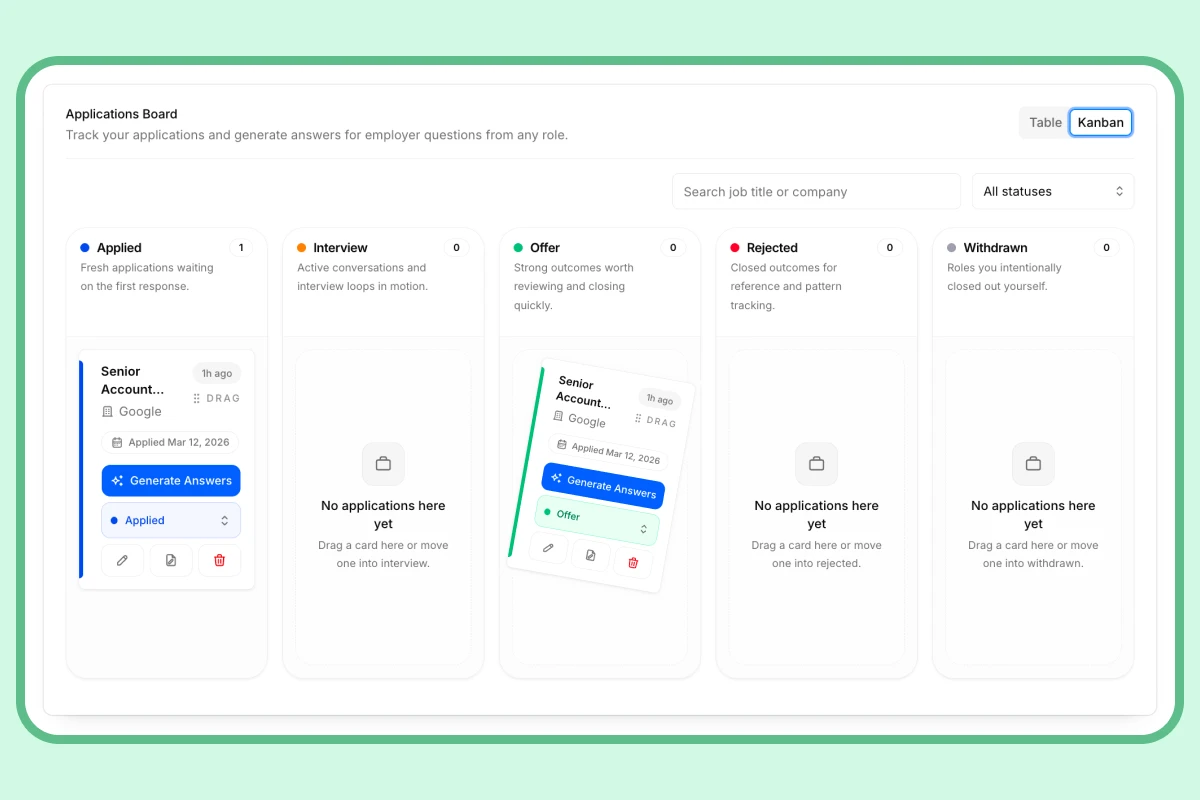
Application Tracker
Applying to 10+ jobs? You need a real system.
No more spreadsheets or lost threads. Track every role, stage, deadline, and follow-up in one dashboard — so you always know exactly where you stand.
How Do You Rebuild Confidence Before the Interview?
Your delivery matters as much as your wording. If you sound nervous, your answer may seem less credible than it should.
Helpful ways to build confidence:
- Practice your answer out loud
- Record yourself and listen for tone
- Pause and breathe before answering
- Write down the main lesson and improvement
- Remind yourself that one firing does not define your career
Confidence comes from preparation. When you know exactly what you will say, the question becomes much easier to handle.
What Not to Say When Explaining Being Fired in a Job Interview?
There are a few phrases you should avoid completely.
| Avoid saying | Why it hurts your answer | Better approach |
|---|---|---|
| "It was not my fault" | Sounds defensive | Focus on what you learned |
| "My boss was terrible" | Sounds unprofessional | Stay neutral and respectful |
| "I do not know why I was fired" | Sounds unaware | Show insight into the issue |
| "I just needed a break" | Raises concern about commitment | Be direct about the separation |
| "It was no big deal" | Can sound dismissive | Acknowledge it as a real learning moment |
Do Hiring Managers Care If You Were Fired Once?
Usually, no — not if the rest of your background is strong and your explanation is professional.
What matters most is:
- Whether it was a one-time issue
- Whether you took responsibility
- Whether you can explain how you improved
- Whether you seem ready for a better fit now
A single firing is often survivable. Multiple terminations, vague answers, or a blaming attitude create more concern than the firing itself.
FAQ: How to Explain Being Fired in a Job Interview
What should you say if fired for poor performance in an interview?
Be honest, brief, and accountable. Acknowledge the performance issue, share one lesson, explain what you did to improve, and then pivot to the new role.
How do you explain being fired versus laid off?
Be precise. If you were laid off, say so. If you were fired, do not call it a layoff. Interviewers value honesty, and mixed-up wording can damage trust.
Should you mention lessons learned after being terminated?
Yes. A lesson learned shows maturity and self-awareness. Keep it short and connect it to a specific action you took afterward.
What frameworks help structure your response?
The A-LAP framework works well: Acknowledge, Lesson, Action, Pivot. It helps you stay concise and positive.
How can you rebuild confidence after being fired before interviews?
Practice your answer, keep it factual, and remind yourself that the interview is about your future contribution, not just your past setback.
What should you avoid saying?
Avoid blaming others, oversharing, sounding bitter, or pretending the firing never happened.
Are there example scripts for different firing scenarios?
Yes. The best answer depends on whether the issue was performance, attendance, fit, or restructuring.
Do hiring managers care if you were fired once?
Most do not, as long as you are honest, reflective, and clearly ready for the next role.
Final Thoughts
Being fired is a professional setback, not a permanent label. If you can explain it honestly, briefly, and without defensiveness, you show the exact qualities employers want: maturity, resilience, and self-awareness.
The best way to explain being fired in a job interview is to own the situation, share what you learned, and move the conversation toward the value you can bring now. With preparation, the question becomes manageable — and sometimes even a chance to strengthen your candidacy.
Explore this category
Interview Prep
Browse the full interview prep category for more related playbooks, examples, and tactical guides.
Browse Interview Prep articles →One workflow. Resume to offer.
Build ATS-ready resumes, track every application, and practice interviews — all in one place. Free to start, no credit card needed.
✓ Free plan forever · ✓ No card needed
Related articles
How Do You Sell Yourself During an Interview: A Pragmatic Playbook
Selling yourself in an interview isn't about boasting; it's a strategic process of aligning your proven skills with the employer's needs. This playbook provides the concrete frameworks, scripts, and preparation tactics you need to communicate your value with confidence and authenticity.
How to Answer What Are Your Greatest Strengths in an Interview
Learn how to answer "What are your greatest strengths?" with a concise, tailored response that highlights relevant skills, proves them with examples, and shows fit for the job.
How to Follow Up on a Job Interview: Timeline, Email Examples, and Tips
Wondering how to follow up on a job interview? Use this step-by-step guide to send a strong thank-you email, time your next check-in, and communicate professionally after the interview.