





Following up after an interview is one of the simplest ways to reinforce your interest and show professionalism. If you are wondering how to follow up on a job interview, the key is to be timely, specific, and respectful of the hiring team’s process.
For related next steps, use common interview questions guide, behavioral interview questions guide, situational interview questions guide, tell me about yourself guide, and professional introduction examples.
For a broader preparation benchmark, compare MIT's STAR method overview.
Answer-first summary: Send a personalized thank-you email within 24 hours, then wait until after the employer’s stated timeline before checking in again. Keep each message brief, specific, and polite. The goal is to stay memorable without becoming pushy.
Why does following up after a job interview matter?
A thoughtful follow-up can help you.
- Reaffirm your interest in the role
- Show professionalism and attention to detail
- Clarify or expand on a point from the interview
- Stay top of mind with the recruiter or hiring manager.
A well-timed follow-up will not guarantee an offer, but it can strengthen your candidacy and leave a positive impression.
When should you follow up after a job interview?
Timing matters. The safest approach is to follow the employer’s timeline when one is given. If no timeline is shared, use a reasonable sequence.
| Stage | Timing | What to do | Goal |
|---|---|---|---|
| Thank-you email | Within 24 hours | Send a personalized note to each interviewer | Say thanks, reinforce fit, and express interest |
| First status check | 1 week after the expected decision date | Send a short follow-up email | Politely ask for an update |
| Second status check | 1 to 2 weeks later | Send one final email or brief call | Request closure or a timeline update |
| After rejection | As soon as you can | Reply graciously and ask for feedback if appropriate | Protect the relationship and learn from the process |
If you are unsure how to follow up on a job interview without sounding impatient, remember this rule: the more time passes, the shorter and more professional your message should be.
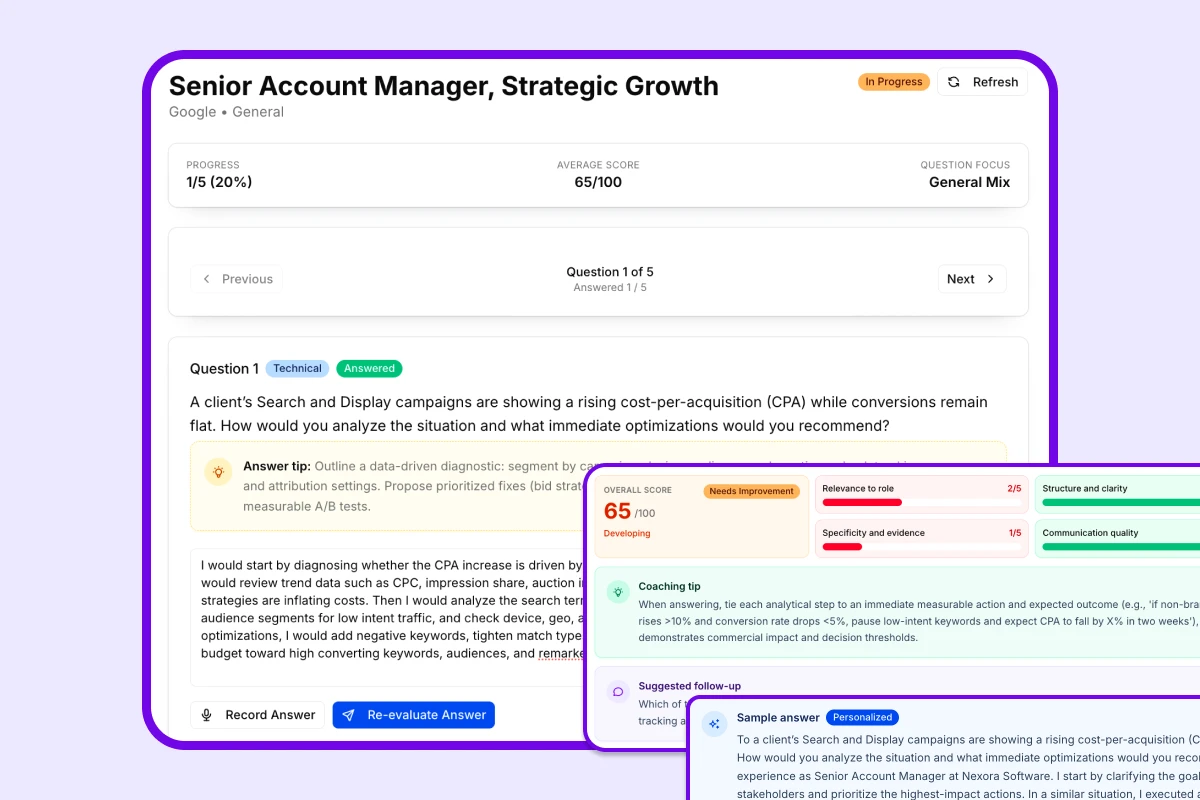
AI Interview Prep
Got the interview? Now make sure you're ready.
Practice the exact questions likely to come up for your target role. Get scored on clarity, structure, and relevance — so you walk in sharp, not winging it.
How do you write a thank-you email after an interview?
Your thank-you email is the most important follow-up message. It should be concise, personalized, and easy to scan.
What should you include?
- A clear subject line
- A direct thank-you for the interviewer’s time
- One or two details from the conversation
- A brief reminder of your fit for the role
- A polite closing with your contact information
Thank-you email example
Subject: Thank You — [Your Name] — [Job Title] Interview

Dear [Interviewer Name],

Thank you for taking the time to speak with me about the [Job Title] role at [Company Name]. I appreciated learning more about your team’s goals and the upcoming priorities for the position.

Our discussion about [specific topic] was especially interesting to me. Based on my experience with [relevant skill or achievement], I believe I could contribute meaningfully to your team.

I’m very enthusiastic about the opportunity to join [Company Name]. Please let me know if I can provide any additional information.

Best regards,
[Your Name]
[Phone Number]
[Email Address]
Tips for a stronger thank-you note
- Mention something specific from the conversation
- Keep it brief: 3 to 5 short paragraphs is enough
- Proofread carefully for spelling and name errors
- Send a separate note to each interviewer
If you met with multiple people, do not send the same message to everyone. Personalize each email based on the discussion you had with that person.
How should you follow up if you have not heard back?
If the employer gave you a timeline, wait until that date has passed before checking in. If no date was given, wait about 7 to 10 business days after the interview.
First follow-up email example
Subject: Following Up — [Your Name] — [Job Title]

Hi [Name],

I wanted to follow up on my interview for the [Job Title] position on [date]. I enjoyed speaking with you and learning more about the role.

I remain very interested in the opportunity and wanted to check whether there is any update on the hiring timeline.

Thank you again for your time and consideration.

Best,
[Your Name]
Follow-up tips
- Keep the message short
- Reconfirm your interest
- Avoid sounding frustrated or demanding
- Reference the original interview date or your previous message
If you still do not hear back, a second follow-up can be appropriate after another 1 to 2 weeks. At that point, a short email is usually better than repeated calls or multiple messages.
How do you send a second or third follow-up?
A second or third follow-up should be brief, polite, and low-pressure. You are not trying to persuade the employer with a long message. You are simply asking for an update and showing continued interest.
Second follow-up example
Subject: Checking In — [Your Name] — [Job Title]

Hi [Name],

I’m checking in once more regarding the [Job Title] position. I remain very interested in the role and would appreciate any update you can share about next steps.

Thank you for your time.

Best,
[Your Name]
If you do call, keep the message short and professional:
Hi [Name], this is [Your Name]. I interviewed for the [Job Title] position on [Date] and wanted to briefly check whether there is an update on the timeline. Thank you for your time.
A final follow-up is useful for closure, but after that, it is usually best to move on.
How do you follow up after a rejection?
A rejection is disappointing, but your response still matters. A gracious reply can leave the door open for future opportunities.
What should you say after a rejection?
- Thank them for the update
- Express appreciation for the interview process
- Ask for feedback only if it feels appropriate
- Keep the tone respectful and professional
Rejection response example
Subject: Thank You

Hi [Name],

Thank you for letting me know and for the opportunity to interview for the [Job Title] role. While I’m disappointed, I appreciate your time and consideration throughout the process.

If you’re able to share any feedback on my interview or candidacy, I would value it as I continue my job search.

Best regards,
[Your Name]
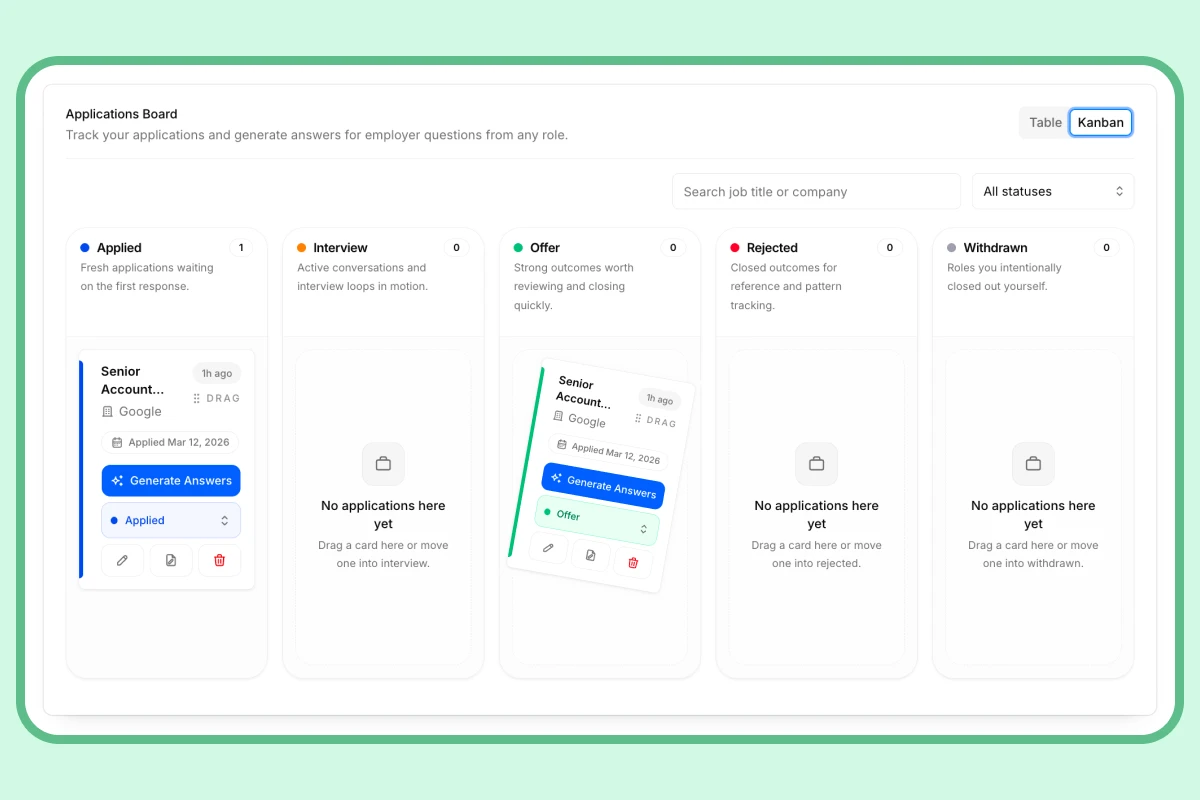
Application Tracker
Applying to 10+ jobs? You need a real system.
No more spreadsheets or lost threads. Track every role, stage, deadline, and follow-up in one dashboard — so you always know exactly where you stand.
What are common follow-up mistakes to avoid?
Here are the biggest mistakes candidates make when learning how to follow up on a job interview:
- Sending a generic copy-paste email
- Following up too quickly
- Sending too many messages in a short period
- Using an impatient or entitled tone
- Including typos or the wrong company name
- Forgetting to follow up at all after a rejection
A good follow-up should feel professional, not desperate.
How can you make your follow-up stand out?
If you want your message to be more memorable, focus on relevance rather than length.
Useful follow-up tips
- Refer to a specific challenge discussed in the interview
- Connect your experience to the team’s goals
- Use a clear and professional subject line
- Keep the message focused on next steps
- Match the tone of the company culture while staying formal
These simple adjustments can make your message feel more thoughtful and more useful to the reader.
FAQ: How to follow up on a job interview
How long should you wait after a job interview to follow up?
Send a thank-you email within 24 hours. For a status check, wait until after the interviewer’s stated timeline. If no timeline was shared, wait about 7 to 10 business days.
What should I include in a follow-up email after a job interview?
Include a thank-you, a short reminder of your interest, one specific detail from the interview, and a polite request for an update if appropriate.
Should follow-ups be emails or phone calls?
Email is usually the best first choice. A phone call may be appropriate for a final check-in if the process has gone quiet and you still want closure.
How do I personalize follow-up notes for multiple interviewers?
Write a separate message to each person and mention a different detail from your conversation with them.
What if I never hear back?
After one or two follow-ups, it is reasonable to stop reaching out and move on while keeping the relationship professional.
Final thoughts
Learning how to follow up on a job interview comes down to three things: timing, personalization, and professionalism. Send your thank-you note quickly, check in politely if you need an update, and always keep your tone respectful. Done well, follow-up communication can strengthen your candidacy and help you leave a lasting positive impression.
Explore this category
Interview Prep
Browse the full interview prep category for more related playbooks, examples, and tactical guides.
Browse Interview Prep articles →One workflow. Resume to offer.
Build ATS-ready resumes, track every application, and practice interviews — all in one place. Free to start, no credit card needed.
✓ Free plan forever · ✓ No card needed
Related articles
How to Respond to a Job Interview Email: A Practical Playbook
Learn the essential strategies for responding to a job interview email professionally. This guide provides clear templates and pragmatic advice for accepting, confirming, declining, and following up after an interview request to make a strong first impression.
How Do You Sell Yourself During an Interview: A Pragmatic Playbook
Selling yourself in an interview isn't about boasting; it's a strategic process of aligning your proven skills with the employer's needs. This playbook provides the concrete frameworks, scripts, and preparation tactics you need to communicate your value with confidence and authenticity.
How to Answer What Are Your Greatest Strengths in an Interview
Learn how to answer "What are your greatest strengths?" with a concise, tailored response that highlights relevant skills, proves them with examples, and shows fit for the job.