





Answer-First Summary
A chronological resume lists your work experience in reverse-chronological order, with your most recent job first. It is the most familiar resume format for recruiters and hiring managers because it makes your career progression easy to scan. It also works well with applicant tracking systems when you use standard section headings, relevant keywords, and a clean layout.
This format is best for job seekers with steady, relevant experience in one field, especially when recent roles support the job you want next. A strong chronological resume usually includes contact information, a concise professional summary, work experience, education, and a skills section. The most effective versions focus on achievements, use action verbs, and quantify results whenever possible.
What Is a Chronological Resume?
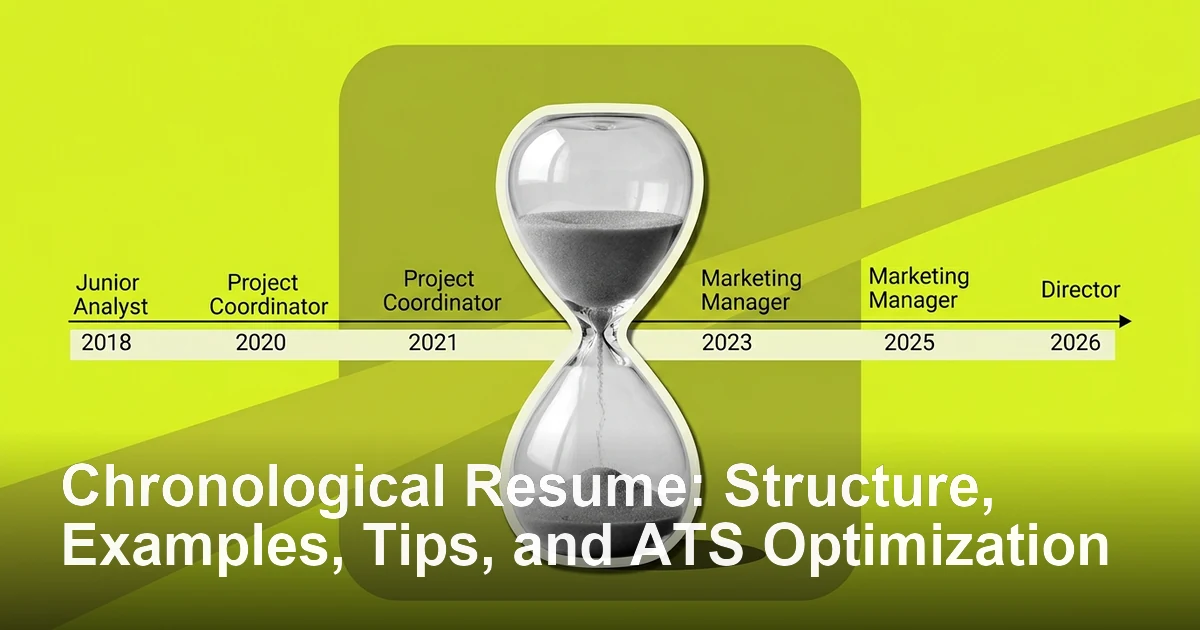
A chronological resume is a resume format that organizes your work history by date, starting with your current or most recent role and moving backward through previous positions. Because it emphasizes timeline and progression, it is also called a reverse-chronological resume.
This format highlights job stability, career growth, promotions, and relevant recent experience.
- Job stability
- Career growth
- Promotions and increasing responsibility
- Relevant recent experience.
For many industries, this is the default resume style. If your career path is straightforward and your most recent experience matches the role you want, the chronological resume is usually the strongest option.
When Should You Use a Chronological Resume?
Use a chronological resume when your background supports a clear professional story. It is especially effective if:
- You have several years of experience in the same field
- Your most recent role is relevant to your target job
- You have a steady work history without major unexplained gaps
- You want to show promotions, leadership growth, or increasing scope
- You are applying to traditional or established industries
A chronological resume is less effective when you need to hide gaps or shift attention away from dates and titles. In those cases, a functional or hybrid format may be more strategic.
Chronological Resume Examples: Who Does This Format Fit Best?
If you are looking for chronological resume examples, the strongest use cases usually include professionals who can show a consistent track record. Examples include:
- An accountant moving from staff accountant to senior accountant to accounting manager
- A software engineer progressing from junior developer to developer to senior engineer
- A teacher moving through classroom, department, or instructional leadership roles
- A marketing specialist who has advanced from coordinator to manager
In each case, the resume tells a story of growth over time. That narrative is exactly what hiring teams want to see when the next role builds on the last one.
Free ATS Score
Your resume might be invisible to recruiters
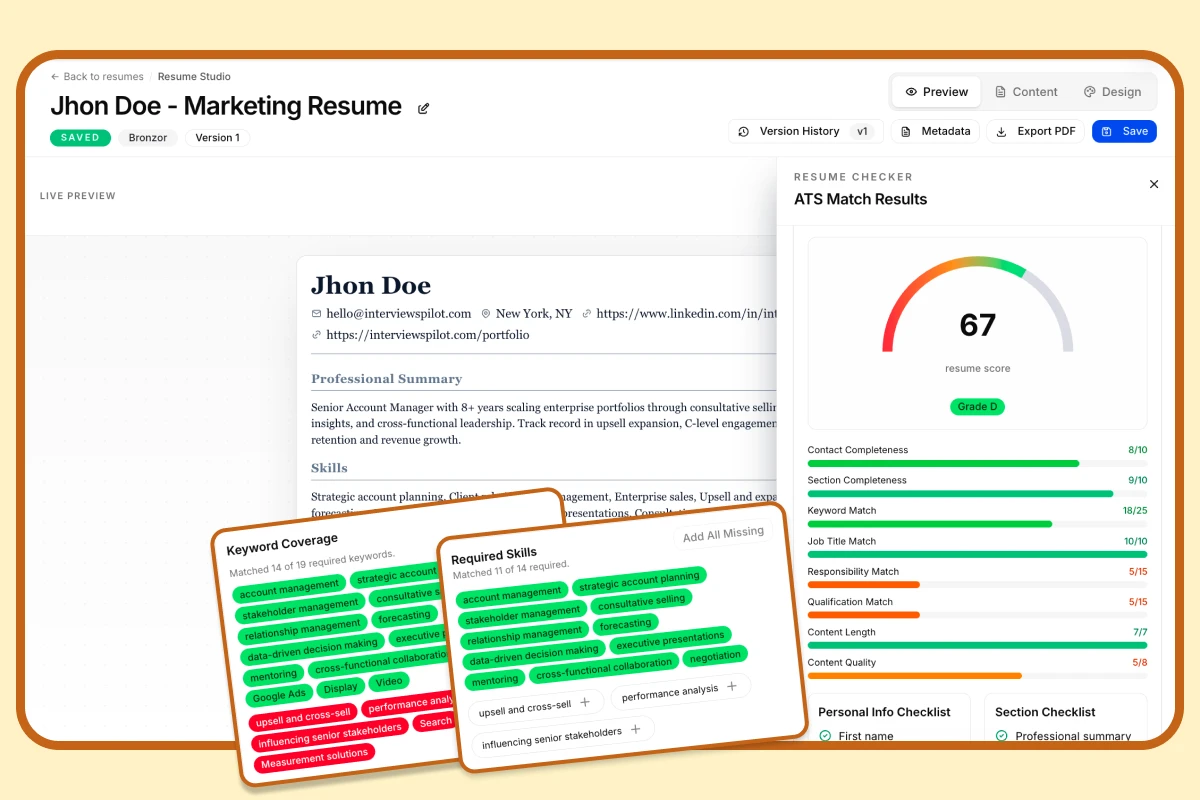
Most resumes are filtered out before a human ever sees them. Get your free ATS score and see exactly where your resume falls short — before you hit send.
How Does a Chronological Resume Compare to Functional and Hybrid Formats?
Understanding the other formats makes it easier to choose the right one.
| Format | Main Focus | Best For | Common Tradeoff |
|---|---|---|---|
| Chronological | Work history and career progression | Professionals with steady, relevant experience | Gaps and short tenures are visible |
| Functional | Skills and capabilities | Career changers, gaps, or early-career candidates | Can feel vague to recruiters |
| Hybrid | Skills plus work history | Candidates who need both skill emphasis and timeline context | Requires careful structure |
The chronological format is usually the safest and most recognizable choice. It is also easier for hiring teams to follow because it mirrors how most recruiters review candidate histories.
What Is the Standard Chronological Resume Structure?
A strong chronological resume follows a predictable structure that is easy for both humans and ATS software to read.
1. Contact Information
Include:
- Full name
- Phone number
- Professional email address
- City and state
- LinkedIn profile or portfolio link if relevant
Keep this section simple and accurate.
2. Professional Summary
Write a 2-3 sentence summary that includes:
- Your job title or target role
- Years of experience
- Core strengths or specialties
- One or two measurable achievements
This is not a full biography. It should quickly show why you are a strong fit.
3. Work Experience
This is the most important section in a chronological resume. For each role, include:
- Job title
- Company name
- Location
- Dates of employment
- 3-5 bullet points focused on achievements
Use a reverse-chronological order, with the most recent role first. Start each bullet with a strong action verb and include results when possible.
4. Education
List your degree, school, location, and graduation year. If you are a recent graduate, you may also include honors, coursework, or GPA if it is strong and relevant.
5. Skills
Add a concise skills section with a mix of hard and role-relevant soft skills. Tailor it to the job description instead of using a generic list.
What Are the Best Chronological Resume Tips for Work Experience?
The work experience section should show impact, not just responsibility. These chronological resume tips will make your bullets stronger:
- Start with a strong action verb
- Show the task you handled
- End with a measurable result when possible
- Use numbers, percentages, dollar amounts, and timeframes
- Repeat key terms from the job description naturally
Example of a weak bullet
Responsible for managing social media accounts.
Stronger bullet
Managed social media accounts across three platforms, increasing engagement by 38% over six months through a revised content calendar and audience targeting.
Achievement-based bullets help recruiters understand the value you brought to each role. They also give ATS software more relevant language to match against job descriptions.
How Do You Optimize a Chronological Resume for ATS Resume Optimization?
ATS resume optimization is the process of making your resume easy for applicant tracking systems to parse and rank. The goal is not to trick the system. The goal is to match the language and structure employers expect.
Follow these practical rules:
- Use standard headings like Work Experience, Education, and Skills
- Avoid tables, text boxes, images, and unusual formatting
- Use a clean single-column layout when possible
- Mirror keywords from the job posting where relevant
- Save and submit in a format requested by the employer, usually DOCX or PDF
For ATS-friendly writing, place important keywords in the summary, experience bullets, and skills section. Focus on skills, tools, certifications, and job titles that match the role.
What Keywords Should You Include in a Chronological Resume?
Keyword placement matters because ATS tools scan for exact or close matches. Review the job description and identify repeated terms related to:
- Required skills
- Software and tools
- Certifications
- Industry terms
- Job responsibilities
For example, if the posting mentions project management, Salesforce, budget forecasting, or Agile methodology, add those terms only where they are truthful and relevant. Overstuffing keywords can make the resume awkward and less effective.
AI Resume Builder
Stop sending the same resume to every job
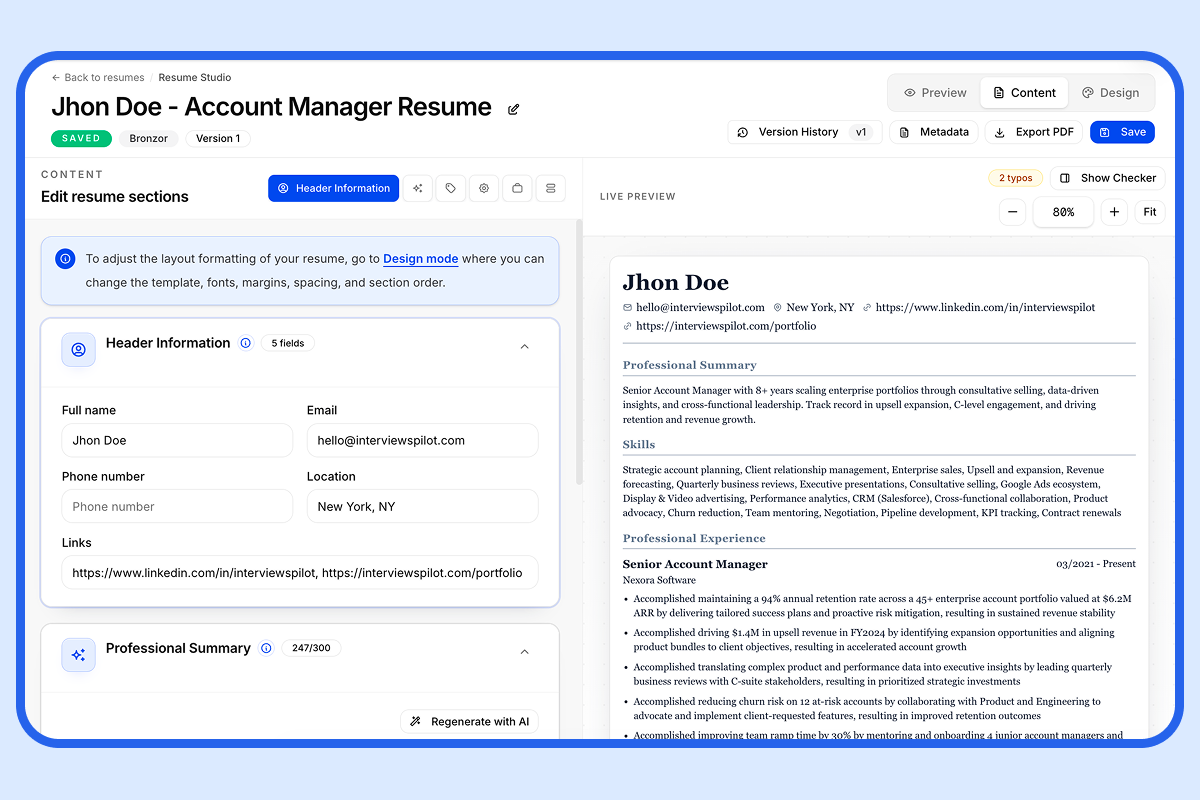
Paste any job description and InterviewsPilot rewrites your resume around it — keywords, bullets, and summary aligned to what recruiters are actually scanning for.
How Should You Handle Employment Gaps in a Chronological Resume?
A chronological format can make gaps more visible, but you can address them strategically.
Consider these approaches:
- Use years instead of months for older roles if appropriate
- Add brief context for a gap if it is relevant and positive
- Frame time away from work as education, caregiving, relocation, or a planned career break if true
- Focus on the value of your recent roles so the timeline is not the only thing readers notice
If you have a larger gap, be direct and professional. A short explanation in your cover letter may be enough.
Are There Industry-Specific Chronological Resume Tips?
Yes. The same format can be adapted based on your field.
Finance and Business
These resumes should emphasize results, metrics, and business outcomes. Hiring managers often expect a straightforward timeline and clear progression.
Technology and Engineering
Include a technical skills section with tools, languages, platforms, and certifications. If possible, align your bullets with the systems used in the target role.
Education and Nonprofits
Highlight teaching outcomes, program results, community impact, and leadership responsibilities. You may also want to include certifications or licenses.
Creative Fields
Add a portfolio link in the contact section or top header. The resume should still remain clear and ATS-friendly even if the design is polished.
Executive Roles
Use a more strategic summary that focuses on leadership scale, revenue impact, team size, and organizational outcomes.
What Should a Strong Chronological Resume Look Like in Practice?
A polished chronological resume should feel consistent from top to bottom. Here is a simple model:
Professional Summary Marketing manager with 8+ years of experience leading digital campaigns, content strategy, and performance reporting. Increased qualified leads by 42% in a previous role and managed cross-functional initiatives across sales and product teams.
Work Experience
- Marketing Manager, ABC Company, New York, NY, 2021-Present
- Senior Marketing Specialist, XYZ Inc., New York, NY, 2018-2021
- Marketing Coordinator, LMN Group, Boston, MA, 2016-2018
Each role should build the story of growth. That progression is the central strength of the format.
What Mistakes Should You Avoid?
Avoid these common chronological resume mistakes:
- Listing duties without results
- Using inconsistent date formatting
- Adding unnecessary graphics or decorative elements
- Writing a summary that is too generic
- Including every job you have ever had, even if it is no longer relevant
- Forgetting to tailor the resume to the job description
A chronological resume should be selective. The goal is not to document everything. The goal is to show a compelling fit for one role.
Frequently Asked Questions
What is a chronological resume and when should I use it?
A chronological resume is a resume format that lists work experience from most recent to oldest. Use it when you have a steady career history and want to emphasize growth and relevance.
How does a chronological resume differ from functional or hybrid resumes?
A chronological resume focuses on dates and job history, a functional resume emphasizes skills, and a hybrid resume blends both. Chronological is usually best for straightforward career paths.
What are the key sections in a chronological resume?
The standard sections are contact information, professional summary, work experience, education, and skills.
How can I optimize a chronological resume for ATS systems?
Use standard headings, relevant keywords, simple formatting, and job-specific language. Keep the layout clean so software can read it easily.
What are the best chronological resume tips for writing bullets?
Use action verbs, quantify results, and focus on achievements instead of responsibilities.
Are there chronological resume examples for different industries?
Yes. The format can be adapted for finance, tech, education, creative roles, and senior leadership positions.
Conclusion
The chronological resume remains the most widely used resume format because it is easy to read, easy to scan, and effective for showing career progression. If your background is steady and relevant, this format gives you the best chance to present a clear professional story.
To make it effective, keep the structure simple, tailor your content to the role, and focus on measurable achievements. When done well, a chronological resume does more than list your history. It shows why your next step should be the job you want now.
Explore this category
Resume
Browse the full resume category for more related playbooks, examples, and tactical guides.
Browse Resume articles →One workflow. Resume to offer.
Build ATS-ready resumes, track every application, and practice interviews — all in one place. Free to start, no credit card needed.
✓ Free plan forever · ✓ No card needed
Related articles
How to Optimize Your Resume for ATS: Tips, Examples, and a Practical Checklist
Use this ATS resume optimization guide to format your resume correctly, match keywords from job descriptions, and avoid common mistakes that prevent applications from being read properly.
How to Read a Job Description: Tips, Examples, and ATS Resume Optimization
Learn how to read a job description like a recruiter. This guide explains the key sections of a posting, how to judge whether you qualify, and how to use job description keywords to improve ATS resume optimization with real examples tips.
How to Write a Resume: A Practical 2025 Guide
Writing a resume is more than listing your work history. This guide shows you how to write a resume step by step, with examples, formatting tips, and ATS-friendly best practices that help your application stand out.